Dodoma urged to define 2050 economic share

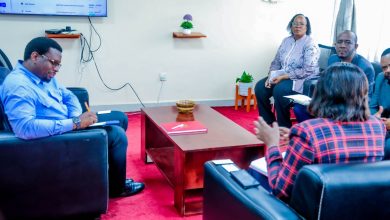
DODOMA: DODOMA Regional Commissioner, Rosemary Senyamule has directed the region’s stakeholders to determine how much the capital should contribute to the country’s one trillion-dollar economy target by 2050 through a comprehensive economic study.
Launching the new Dodoma Regional Business Council yesterday, Ms Senyamule said the national target should not remain an abstract ambition for the region.
Instead, she said Dodoma must develop a clear economic strategy backed by research and measurable targets to establish its expected contribution to the country’s long-term development vision.
“Dodoma, how much are we contributing to the one trillion-dollar?” she asked, urging stakeholders to leave the meeting with a plan to answer that fundamental question.
The RC said Dira 2050 places enormous responsibility on the private sector, which is expected to contribute 70 per cent to the country’s development efforts, compared with 30 per cent from the public sector.
She said this made it imperative for Dodoma’s busiFrom DAILY NEWS Reporter in Singida THE Tanzania Rural and Urban Roads Agency (TARURA) has trained its staff to strengthen implementation of the Community-Based Routine Road Maintenance (CBRM) Programme, which is expected to improve road maintenance while creating employment opportunities through community groups.
The weekend training brought together accountants, procurement officers, legal officers, internal auditors, economists, environmental and social welfare specialists, as well as engineers from the Singida Regional Manager’s Office.
Speaking during the training, CBRM Programme Consultant Engineer, Laurent Kyombo stressed the importance of cooperation and teamwork at every stage of project implementation.
“Strong coordination among all stakeholders would enable the implementation team to respond effectively to any challenges that may arise during the programme,” he said.
Eng Kyombo said the training would also help staff understand implementation timelines and the milestones required to ensure activities begin and end as scheduled.
TARURA Singida Regional Manager, Engineer Claver Mwinuka said the training was intended to strengthen monitoring of CBRM activities while giving staff an opportunity to revisit and discuss important issues that should be considered throughout implementation.
ALSO READ: Dr Samia orders the Energy Ministry to ensure JNHP power fully benefits all key economic sectors
He said the sessions had created a platform to address key issues, resolve differences in understanding and provide staff with clear guidance on implementation.
“The training has helped bring the team onto the same page and has provided an opportunity to find solutions to challenges that could affect the effective implementation of the programme,” Eng Mwinuka said.
Singida Regional CBRM Project Coordinator, Engineer Gisela Maro stressed the importance of cooperation between TARURA, wananchi and other stakeholders to ensure the programme is implemented successfully and achieves its intended results.
“Successful implementation of the programme would strengthen road infrastructure while improving livelihoods through employment opportunities and increased household incomes,” she said.
Eng Maro further said Singida Region would continue engaging all stakeholders to ensure the programme’s objectives are achieved efficiently and without obstacles.
The CBRM Programme involves community groups in routine road maintenance, with TARURA saying proper implementation will help deliver better roads alongside social and economic benefits for local communities.
ness community to understand its role, opportunities and expected contribution to the national economic transformation.
“Let us do research, or develop a strategic plan for our region, on how we will participate in achieving the 2050 vision and how much we will contribute,” she said.
According to the RC, the findings should become a practical working tool for both the private and public sectors, enabling them to determine the scale of the private sector’s expected contribution and the government’s corresponding role in driving Dodoma’s economy forward.
Ms Senyamule said Dodoma could no longer afford to be viewed merely as the country’s administrative capital, arguing that the region must now transform itself into a centre of both governance and economic production.
“The agenda for Dodoma now is to move from being a region of governance only to being a region of governance and economy,” she said, noting that the growth of the capital must also translate into greater prosperity for its residents.
She said government investment in infrastructure and the relocation of public institutions to Dodoma had created an enabling environment that should now be fully exploited by investors and entrepreneurs.
Ms Senyamule identified agriculture, tourism, logistics, industry, construction and mining as sectors with the greatest potential to drive the region’s economic transformation, saying the challenge was to convert those opportunities into jobs, incomes, investments and tax revenue.
In agriculture, she urged experts to publicise existing research on the region’s soil and production potential so that farmers and investors could make informed decisions on high-value crops and modern farming.
She also pointed to grape and wine tourism, wildlife, cultural attractions and conference tourism as opportunities that should now generate tangible economic returns, while improved roads, railways and air connectivity had positioned Dodoma to become a major logistics hub serving different parts of the country.
Ms Senyamule said the region’s central location made it attractive for industrial investment, while its mineral resources should be transformed into wealth for local communities rather than benefiting only a few players.
“The work of the private sector is to convert those opportunities into money,” she said.
She said the newly launched Dodoma Regional Business Council would strengthen dialogue between the government and the private sector by helping address barriers to investment and identify new opportunities for economic growth.