Dar Port expansion boosts Tanzania’s regional trade, logistics drive
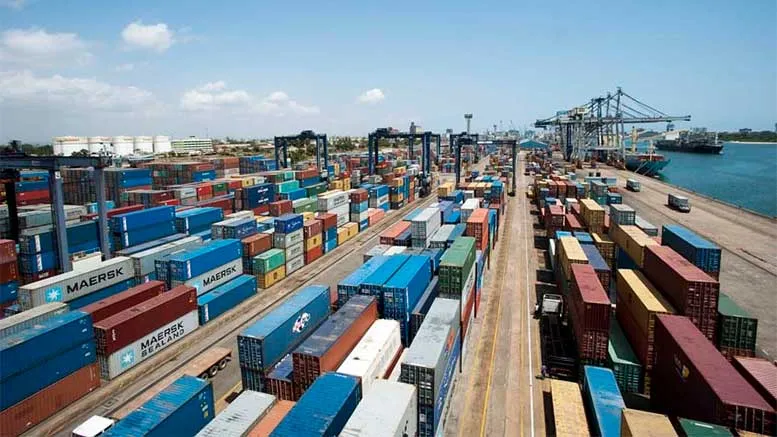
DAR ES SALAAM: LONG before a container reaches a warehouse, retail outlet or factory in Tanzania or another country, its journey begins where the Indian Ocean meets the mainland. At Dar es Salaam Port, that journey is measured in more than containers and tonnes of cargo.
It is reflected in the movement of businesses, industries, consumers and entire economies. Every vessel arriving at the port carries goods destined for markets. Every container leaving its gates represents another link in a supply chain connecting the Indian Ocean with cities and towns across Tanzania and the wider East and Central African region.
As trade volumes grow, however, the infrastructure supporting that movement faces increasing pressure. It is against this background that Dar es Salaam Port is entering another phase of modernisation, with EDECS Group expanding its partnership with DP World through a strategic project at Terminal 1.
ALSO READ: Zanzibar to host Chief Justices’ meeting
According to project information provided by EDECS Group, the initiative involves redeveloping seven operational cargo and material-handling yards covering approximately 90,000 square metres, together with associated gates and supporting utilities. But beneath the construction work lies a much larger economic story: Tanzania is seeking to convert its strategic position on the Indian Ocean into a stronger competitive advantage by making the movement of goods faster, safer and more efficient.
Dar es Salaam Port handles more than 90 per cent of Tanzania’s international maritime trade, making it one of the country’s most important links to the global economy. Its importance, however, extends beyond national borders. The port serves as a maritime gateway for several landlocked countries in East and Central Africa, connecting businesses and consumers in those markets with international trade through transport corridors extending deep into the continent.
For these countries, the efficiency of Dar es Salaam Port can influence far more than the amount of time a ship spends at berth. It can affect transportation costs, delivery times, supplychain reliability and the ability of businesses to compete in regional and international markets.
A more efficient port can therefore have consequences for manufacturers waiting for raw materials, traders importing goods, exporters seeking reliable routes and consumers depending on products brought through the port. This wider regional role explains why the modernisation of Terminal 1 carries significance beyond the port itself. The scale of demand is visible in the terminal’s container-handling figures.
In July 2026, Terminal 1 recorded its highest-ever monthly container throughput, handling 46,582 TEUs, according to the latest project information. That represented a substantial increase from the 13,779 TEUs handled in May 2024. A TEU, or twenty-foot equivalent unit, is the standard measure used internationally to describe container-handling volumes.
The rising figures illustrate how quickly activity at the terminal has expanded and the growing need for infrastructure capable of keeping pace. The latest redevelopment is intended to respond to that pressure.
EDECS Group is designing and constructing seven dedicated cargo and materialhandling yards, supported by infrastructure intended to improve cargo storage and handling as well as introduce modern digital yard-management systems.
Additional engineering solutions and supporting infrastructure are also being implemented to strengthen operational performance and prepare the terminal for future growth. Some of the most important changes taking place at the port may not be the ones most visible to visitors.
EDECS says it is implementing a comprehensive fireprotection network across the port, including areas beyond the original project scope. A port-wide high-mast lighting system is also being introduced to improve safety, security and operational efficiency.
Such facilities may receive less attention than cranes, ships and containers, but they are essential to a modern port. Ports operate around the clock, handling large volumes of cargo, heavy machinery and vehicles. Effective lighting, fire protection and safety systems are therefore critical to protecting workers, cargo and infrastructure while ensuring operations continue smoothly.
The modernisation is consequently about more than constructing new yards. It is about creating an operational environment capable of responding to increasingly complex demands. Technology is becoming an increasingly important part of modern logistics.
Ports are no longer defined solely by physical infrastructure such as berths, cranes, storage yards and gates. Digital systems are increasingly used to coordinate operations, track cargo, manage space and improve visibility across supply chains. The planned digital yardmanagement systems at Terminal 1 reflect this shift.
Better information flow can help operators make more efficient use of available space and coordinate cargo movement more effectively. When physical infrastructure and digital systems work together, the result can be a more predictable movement of goods from vessel to yard and eventually towards their final destinations. For businesses, predictability matters.
ALSO READ: “Do not full us”! resigning TOC official told
Delays can increase storage and transportation costs, disrupt production schedules and create uncertainty for companies planning their inventories. Improving efficiency at the port can therefore help strengthen the reliability of the wider logistics chain. Eng Hussein El Dessouky, Chairman and Managing Director of EDECS Group, said the company was proud to extend its partnership with DP World through the Dar es Salaam Port modernisation project.
“Our teams are actively progressing works on-site across the project’s key operational areas, delivering the critical infrastructure required to support safer, smarter and more efficient port operations,” he said.
For DP World Dar es Salaam, the project is similarly linked to the broader objective of strengthening regional trade connectivity and logistics efficiency. Chief Executive Officer Martin Jacob said the terminal’s modernisation remained central to efforts to improve trade connectivity and logistics efficiency across East and Central Africa. The partnership therefore brings together port operations, engineering and construction at a time when Tanzania is seeking to strengthen its position as a regional logistics centre.
The economic importance of Dar es Salaam Port becomes clearer when the movement of a single container is followed beyond the terminal gates. A container may carry raw materials for a factory, stock for a retailer, machinery for an agricultural enterprise or equipment for a construction project.
Once it leaves the port, it enters a network involving truck drivers, railway operators, clearing and forwarding agents, warehouses, logistics companies, traders and other service providers. Thousands of businesses depend on this system functioning effectively.
A more efficient port can therefore benefit a much wider economy. When cargo moves predictably, businesses can plan better, transport operators can manage schedules more effectively and manufacturers can reduce uncertainty surrounding supplies.
The port’s performance can also influence the competitiveness of countries that depend on Dar es Salaam as a route to international markets. Tanzania’s position on the Indian Ocean provides a natural geographical advantage, but geography by itself does not create a successful logistics hub. Infrastructure must transform that location into practical economic value.
That means cargo needs to move efficiently through the entire system from vessel to yard, from yard to truck or railway and ultimately to its final destination. This requires adequate capacity, effective management, reliable infrastructure, technology and coordination between the different actors involved in the supply chain.
The modernisation of Terminal 1 is therefore part of a broader challenge: ensuring that infrastructure keeps pace with growing trade while maintaining safety and operational efficiency. The transformation comes as Tanzania places increasing emphasis on infrastructure, connectivity, competitiveness and participation in regional and global value chains.
ALSO READ: TOWARDS TANZANIA 2050: The role of the National Commission for UNESCO in building future skills
The country’s Vision 2050 places strong emphasis on these areas, making efficient transport infrastructure an important component of longterm economic development. Dar es Salaam Port sits at the centre of this ambition. Its yards, gates, roads, warehouses and cargo-handling facilities may appear to be separate pieces of infrastructure, but together they create a vital connection between Tanzania and international markets.
The increase in Terminal 1’s container throughput illustrates the growing importance of that connection. From 13,779 TEUs in May 2024 to 46,582 TEUs in July 2026, the figures point to a substantial expansion in cargo activity. The challenge is now to ensure that infrastructure and systems continue to keep pace with that growth.
The true measure of the modernisation will not simply be the completion of new yards or the installation of new equipment. Its significance will ultimately be measured by what happens after construction. If cargo can move more quickly, safely and predictably, the benefits can spread far beyond the port.
They can reach manufacturers waiting for raw materials, farmers requiring equipment and inputs, exporters seeking dependable routes to overseas markets, traders moving goods across borders and consumers purchasing products transported through Tanzania’s maritime gateway.
The investment can also strengthen the country’s position in regional logistics by making Dar es Salaam more attractive as a route for neighbouring markets. That could support wider economic activity in transport, warehousing, manufacturing, trade and related services.
Dar es Salaam Port’s transformation is therefore not simply a story about concrete, yards, lighting systems or containers. It is a story about movement and economic connectivity. It is about Tanzania seeking to turn its Indian Ocean coastline into a stronger gateway for trade and opportunity. It is about building infrastructure capable of supporting a growing economy while serving neighbouring countries that depend on the port to reach international markets.
And it is about ensuring that rising cargo volumes translate into greater efficiency rather than greater congestion and pressure. Every container passing through the port represents more than a unit of cargo. It may carry the raw materials that keep a factory operating, the equipment that expands a business or the products that reach consumers thousands of kilometres inland.
As Terminal 1 undergoes its latest transformation, Tanzania has an opportunity to strengthen the infrastructure connecting its economy to the world. The ambition is straightforward but significant: make the movement of goods safer, smarter and more efficient and turn Dar es Salaam Port’s strategic location into lasting economic value for Tanzania and the wider region.