Dar Forum offers financial literacy to Tanzanian designers, models, tailors
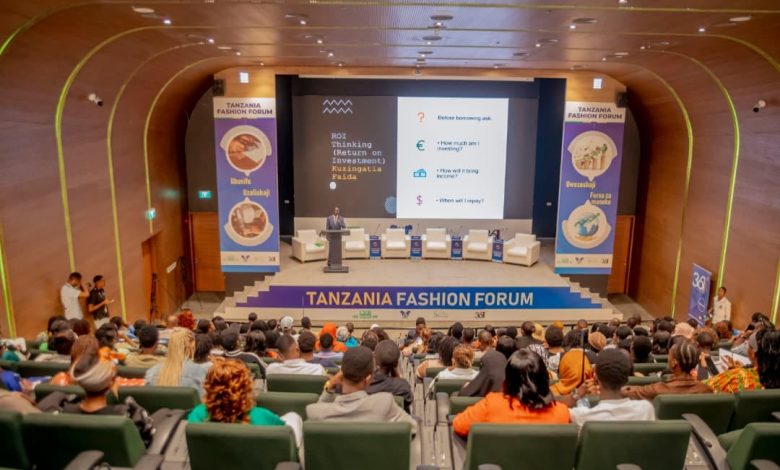
DAR ES SALAAM: FASHION designers, models, and tailors in Tanzania have received financial literacy training aimed at improving their businesses, creating jobs for young people, and contributing to national economic growth.
The training was conducted yesterday in Dar es Salaam during the Tanzania Fashion Forum, an event organized in collaboration with financial institutions and key stakeholders in the creative industry.
Speaking during the forum, CRDB Bank Customer Services Manager, Jafari Hassanali, said the fashion industry must transition from being talent- and entertainment-driven to becoming a sustainable business sector.
“The creativity we have must be supported by strong business systems in order to sustain and grow the national economy. Fashion is a fast-growing sector with great potential to create employment, especially for young people,” Hassanali said.
He urged designers to be cautious when taking loans, stressing that borrowing should be viewed as empowerment rather than a routine practice.
“When you take a loan, you must clearly understand its purpose. A loan should be used to complete orders or invest in the business, not for unproductive spending. Borrowing for luxury does not grow a business,” he emphasized.
ALSO READ: Dr Kijaji orders effective conservation of the NCAA ecosystem for tourism
Hassanali added that borrowing money to pay off other debts without investing in production ultimately destroys a business instead of helping it grow.
On his part, Fashion Association of Tanzania (FAT) Chairman and Swahili Fashion Week Founder, Mustapha Hassanali, said fashion is no longer just about aesthetics but a key driver of economic growth, employment and national identity.
“Fashion today is business, employment, national identity, and Tanzania’s position in the global market. Creativity without systems, factories, and infrastructure cannot go far,” Mustapha said.
He noted that for a long time, fashion in Tanzania and across Africa has been viewed mainly as fashion shows rather than a serious economic sector capable of supporting small and medium enterprises (SMEs), creating jobs, and increasing national revenue.
“The global experience shows us that fashion is a multi-billion-dollar industry. Countries such as Italy, Turkey and Morocco did not succeed by chance, but by treating fashion as a business and an industrial sector,” he said.
Mustapha said Tanzania has abundant creative talent, but the sector continues to face challenges such as weak production systems, limited access to markets and capital, and the absence of supportive policies.
He added that the discussions align with Tanzania’s National Development Vision 2050, which focuses on industrialization, productive youth employment and access to regional and international markets through AfCFTA and the Made in Tanzania initiative.
“The future of Tanzania’s creative industry will not be built by waiting. It will be built through action, by bringing together the government, private sector, financial institutions and education stakeholders,” he said.
He called on financial institutions to develop tailor-made financial products for the creative sector, stressing that this should be seen not as charity but as investment in a high-growth sector with strong job creation and economic diplomacy potential.
“Fashion is not a national decoration; it is a national economic strategy. Through fashion, we are not just selling clothes — we are building the Brand Tanzania and telling our story to the world,” he concluded.