Dar dialogue strengthens Iran–Africa diplomatic, intellectual ties
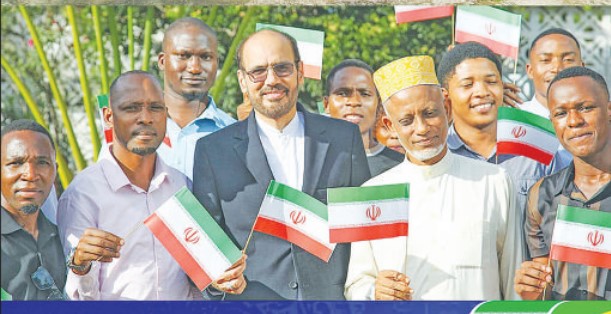
DAR ES SALAAM: ON 28th April, this year, the Iran Cultural Center in Dar es Salaam convened a landmark hybrid academic seminar that resonated far beyond the walls of its host institution. Under the theme “The Vision of Ali Khamenei on Independence, Dignity & Resistance: A Comparative Study of Iranian and African Struggles,” the gathering brought together a vibrant community of scholars, legal minds, professors, and students from across Africa and Iran.
What unfolded was not merely a scholarly exchange, but a profound intellectual encounter one that bridged continents, histories, and aspirations. At its core, the seminar was an exploration of shared human experiences: the pursuit of sovereignty, the defense of dignity, and the enduring resistance against domination. By weaving together Iranian and African perspectives, participants illuminated the parallels between two regions shaped by distinct yet converging struggles.
From colonial legacies in Africa to the revolutionary transformation of Iran, the discussions traced a common thread of resilience and an unwavering quest for selfdetermination. The seminar distinguished itself as a rare platform where academic reflection met lived political realities.
Through compelling presentations and an engaging question-and-answer session, participants were invited to critically examine not only the past but also the present challenges facing the Global South. Issues of neocolonial influence, economic dependency, and cultural identity were addressed with both urgency and depth, fostering a dialogue that was as thought-provoking as it was necessary.
Opening the discussions, Adv. Mahomed SC of South Africa offered a powerful comparative lens, drawing connections between the Islamic Revolution of Iran and South Africa’s anti-apartheid struggle. Despite their differing contexts, he underscored a shared moral foundation: resistance against entrenched systems of injustice.
His reflections highlighted Iran’s historical support for antiapartheid movements and reinforced the idea that even the most formidable systems of oppression can be challenged through collective will and principled resistance. Shifting the focus to economic sovereignty, Ms Amina Mohamed of Kenya delivered a timely analysis of Africa’s ongoing struggles with neo-colonial economic structures.
Referencing Kenya’s 2024 protests against tax policies linked to international financial institutions, she argued that political independence without economic autonomy remains incomplete. Drawing inspiration from Iran’s emphasis on technological innovation and domestic capacity-building, she urged African nations to invest in local industries and reclaim confidence in their indigenous resources.
From Nigeria, Mr. Mohammad Zubair deepened the discussion through a comparative study of independence movements. He presented the vision of Ayatollah Ali Khamenei as one that transcends political liberation, encompassing economic self-sufficiency and cultural integrity.
By connecting this framework to the philosophies of African leaders such as Kwame Nkrumah, Julius Nyerere, and Patrice Lumumba, he reinforced the enduring relevance of selfreliance and cultural preservation in the African context.
Adding a philosophical dimension, Sheikh Mulaba Swaleh of Tanzania examined the foundations of Iran’s governance model. He articulated the concept of divine-centered leadership as a synthesis of moral authority, justice, and national resilience. His analysis emphasized self-sufficiency, technological progress, and institutional strength as pillars of sustainable independence principles he argued are equally vital for Africa’s future.
Prof Adam Sebyala of Uganda offered a reflective perspective on the historical trajectories of both regions. Acknowledging Africa’s painful experiences of slavery and colonialism, he drew parallels with Iran’s resistance to foreign domination.
ALSO READ: Over 50,000 residents benefit from Mama Samia Legal Aid Campaign in Dodoma
His remarks highlighted a shared reliance on unity, cultural confidence, and perseverance. Iran’s endurance under decades of sanctions, he noted, serves as a testament to the power of national resilience an example with valuable lessons for Africa’s long-term development. Bringing the seminar to a thoughtful close, Dr. Mohsen Maarefi of Iran explored the principle of “Dignity, Wisdom, and Expediency” as articulated by Ali Khamenei.
He emphasized dignity as the cornerstone of Iran’s foreign policy, rooted in a historical struggle against external interference that culminated in the 1979 Islamic Revolution.
According to his analysis, true dignity in international relations can only be sustained through self-reliance, strategic resilience, and resistance to coercion. His vision pointed toward a more balanced global order one grounded in mutual respect and equality among nations.
As the seminar concluded, a unifying message emerged with clarity and conviction: independence is not a singular achievement, but an ongoing process. It demands more than political liberation; it requires economic sovereignty, cultural confidence, national unity, and the courage to resist all forms of domination.
Across diverse perspectives and disciplines, participants reaffirmed that the pursuit of dignity and self-determination remains central to shaping a just and equitable world. In bringing together voices from across continents, the Iran Cultural Center in Dar es Salaam succeeded in fostering not only academic dialogue but also intellectual solidarity.
The seminar stood as a testament to the power of ideas in bridging divides and inspiring collective action reminding all who attended that the struggle for independence and dignity, though rooted in history, continues to define the future.