Coffee farmers in Tanzania prepare for climate change with practical knowledge, tools and adaptation measures
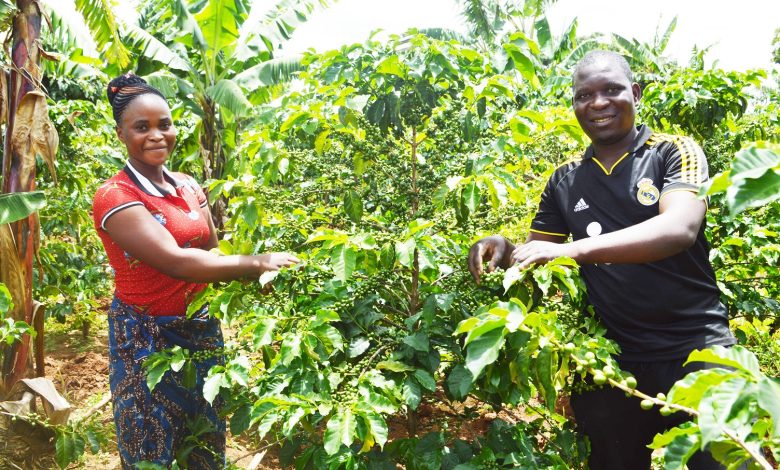
DAR ES SALAAM: Coffee farmers in Tanzania’s major coffee-growing regions are set to gain greater access to practical information and tools aimed at helping them protect their farms from the growing effects of climate change.
The initiative is being delivered through a new three-month awareness campaign launched by Hanns R. Neumann Stiftung (HRNS) Tanzania, with activities targeting coffee-growing communities in Ruvuma, Songwe and Mbeya.
The campaign seeks to equip coffee farmers, agricultural extension officers, trainers and other coffee-sector stakeholders with practical knowledge to identify climate-related risks and adopt measures that can strengthen the resilience and sustainability of coffee production.
At the centre of the initiative is the Coffee&Climate Toolbox, a collection of practical resources designed to help coffee-sector stakeholders understand climate risks and determine appropriate measures for adapting to changing weather and climatic conditions.
HRNS- non-profit foundation that works primarily to improve the livelihoods of smallholder farming families, particularly in coffee-growing communities is implementing the campaign in partnership with the Coffee&Climate Initiative, a long-standing partner in efforts to address the increasingly important relationship between coffee production and climate change.
The campaign comes as coffee farmers face mounting challenges linked to changing weather patterns. Unpredictable rainfall, rising temperatures, prolonged dry periods, pests, diseases and declining soil productivity are creating increasingly difficult conditions for coffee production.
These changes can have consequences throughout the production cycle. They can affect flowering, fruit development, yields and coffee quality, while also placing additional pressure on the incomes and livelihoods of farming households.
For coffee-growing communities, therefore, understanding these risks is no longer enough. Farmers and other sector stakeholders increasingly need practical knowledge that can help them respond effectively to changing climatic conditions.
Speaking about the campaign, HRNS Tanzania Country Manager, Mr Morgan Mkonyi, said the initiative is designed to bridge the gap between climate information and practical action at farm level.
“The Coffee&Climate Toolbox provides practical resources and approaches that can help coffee stakeholders identify climate-related risks and take appropriate measures to adapt to changing climatic conditions.
Through this campaign, HRNS seeks to bring these resources closer to coffee-growing communities and support farmers in turning climate knowledge into practical action,” he said.
The focus on practical action is particularly important because climate change affects farmers in ways that require decisions at the farm level. Access to relevant information can help farmers better understand the risks they face and consider appropriate responses based on their local circumstances.
According to Mr Mkonyi, the three-month campaign will use radio programmes, billboards, social media and newspaper stories as key communication channels for reaching farmers and other stakeholders.
The strategy is intended to broaden access to climate-smart information, particularly among farmers who may not have direct access to formal training programmes.
“Through radio discussions and media stories, farmers will be exposed to information on climate risks, practical adaptation measures and resources available through the Coffee&Climate Toolbox,” he said.
Using multiple communication channels also provides an opportunity to reach farming communities in different locations and encourage broader discussions about the effects of climate change and possible responses.
Radio, in particular, can help carry information beyond conventional training settings, while billboards, social media and newspaper stories can reinforce key messages and provide additional avenues through which farmers and other stakeholders can access information.
“Climate change is already affecting coffee farmers, and building resilience requires practical knowledge and collective action. Through the Coffee&Climate Toolbox, we want to make relevant climate-smart information easier to access and apply,” Mkonyi added.
Rather than concentrating only on the challenges created by climate change, the campaign places emphasis on practical solutions that can be applied at farm level.
The Coffee&Climate Toolbox is intended to support this approach by providing resources that help stakeholders assess climate-related risks and identify appropriate adaptation measures according to local conditions.
This is particularly relevant to coffee production because the crop depends heavily on environmental conditions, including rainfall, temperature and soil quality. Changes in these factors can directly influence the productivity and quality of coffee farms.
By improving access to practical information, the campaign is expected to encourage farmers to make more informed decisions and strengthen the capacity of farms and farming communities to cope with climate-related pressures.
The approach also recognises that building resilience within the coffee sector cannot be achieved by farmers working alone.
Agricultural extension officers, trainers, development organisations and other stakeholders have important roles to play in ensuring that relevant knowledge reaches farmers and can be translated into action.
According to Mr Mkonyi, collaboration among these groups will be critical to building a more resilient coffee industry.
The partnership between HRNS Tanzania and the Coffee&Climate Initiative forms part of broader efforts to connect coffee-sector stakeholders with knowledge, tools and practical solutions for addressing climate-related risks.
Such collaboration can help strengthen the link between climate information and the realities faced by farmers, ensuring that adaptation efforts remain relevant to the conditions in which coffee is produced.
The campaign is therefore not simply an awareness exercise. Its broader objective is to encourage a shift from understanding climate change as a growing threat to recognising the practical steps that can be taken to manage its effects.
For farmers, this means having access to information that can help them identify risks early, understand their implications and consider measures suited to their individual farms and surrounding environments.
Muddy Kimwery, Regional Communications Specialist at HRNS Tanzania, said the campaign is ultimately about moving from awareness to action.
“Building climate resilience is not only about understanding the challenges we face. It is also about taking practical action.
By increasing access to climate-smart information and encouraging its application at farm level, HRNS and the Coffee&Climate Initiative aim to contribute to a more resilient and sustainable future for coffee farming,” he said.
His remarks highlight the central objective of the campaign: ensuring that climate knowledge becomes useful at the point where farmers make decisions about their production.
As the campaign gets underway, Kimwery is encouraging coffee farmers, agricultural extension officers, trainers and other stakeholders to make use of the resources available through the Coffee&Climate Toolbox.
Greater use of such resources can help stakeholders strengthen their understanding of climate risks while supporting the adoption of measures designed to improve the resilience of coffee production.
The campaign is expected to contribute to wider awareness of climate-smart coffee production and strengthen the ability of farmers and other coffee-sector stakeholders to respond to changing climatic conditions.
“The three-month campaign is expected to contribute to wider awareness of climate-smart coffee production while strengthening the ability of farmers and other coffee-sector stakeholders — especially in Ruvuma, Songwe and Mbeya — to respond to the changing climate,” he said.
With coffee farmers increasingly confronting unpredictable weather, rising temperatures, prolonged dry periods, pests, diseases and declining soil productivity, access to practical climate information is becoming an important part of sustaining production.
Through its focus on awareness, practical tools and collaboration, the campaign seeks to ensure that farmers are better positioned to understand these challenges and take appropriate action.
Ultimately, strengthening climate resilience in Tanzania’s coffee sector will depend on how effectively knowledge can be translated into decisions and practices at farm level. By bringing the Coffee&Climate Toolbox closer to farmers and other stakeholders, HRNS Tanzania and the Coffee&Climate Initiative are seeking to make that transition from information to action more accessible across Ruvuma, Songwe and Mbeya.