Chijoriga urges youths to drive Tanzania’s unity, progress
KIBAHA: THE future of any nation rests firmly in the hands of its youths, an energetic and dynamic force with the potential to drive development and sustain the workforce upon which progress depends.
Yet, while young people possess immense strength and creativity, they require purposeful guidance from parents, guardians and elders to help channel their potential in constructive directions.
Historically, youths have stood at the forefront of transformative change, particularly in the economic sphere, driven by innovation, boldness and a willingness to challenge the status quo.
However, they also remain a vulnerable group, often susceptible to manipulation that can fuel conflict, division and social unrest, especially when influenced by individuals pursuing narrow personal interests.
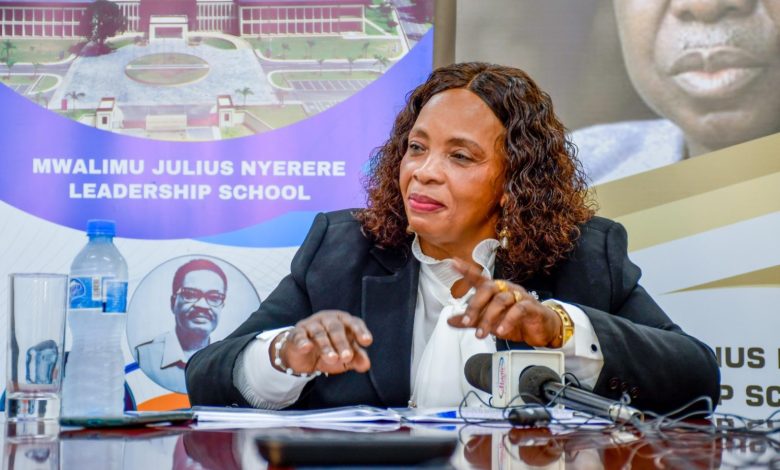
In a recent exclusive interview with the ‘Daily News’, the Principal of the Mwalimu Julius Nyerere Leadership School, Prof Marcelina Chijoriga explained that even in times of national difficulty, the role of young people must never be overlooked.
She told a media delegation from Tanzania Standard (Newspapers) Limited (TSN), including Daily News, Habari Leo and Daily News Digital, which visited her over the weekend at the institution in Kibaha, Coast Region, that youths remain central and indispensable in discussions on national unity, productivity, innovation and the protection of national resources.
“Young people have a very significant role in advancing our nation’s development. They are the primary workforce, and indeed the strength of any country largely depends on the contribution of its youth,” said Prof Chijoriga.
She further urged young people to embrace the enduring philosophies of Mwalimu Julius Nyerere, particularly the principles of unity and solidarity rooted in patriotism and a deep love for the nation.
Prof Chijoriga stressed that young people must understand that they have no other nation and should therefore focus on what unites them rather than what divides them.
Drawing on the ideals of Mwalimu Nyerere, she underscored that reconciliation becomes crucial and critical especially during periods of difficulties.
She described it as the most appropriate path for resolving differences, healing divisions and paving the way for a renewed national outlook.
She explained that reconciliation creates space for open dialogue, truth-telling and collective reflection.
It is not about apportioning blame or dwelling on past grievances, but about confronting difficult truths, embracing forgiveness, restoring unity and focusing on the country’s future.
Prof Chijoriga acknowledged that some young people may struggle to fully grasp the underlying causes of current challenges, and may feel marginalised or left behind.
However, she reassured them that their future holds far greater promise than they might perceive. Citing population trends, she noted that young people constitute the largest demographic group in the country.
As such, any pursuit of genuine and sustainable development must recognise that youths are not optional participants, but the very foundation of national progress.
Looking ahead to the next 25 years under the Development Vision 2050, she emphasised that youth participation must go beyond symbolism or experimentation.
Instead, it should be deliberate, strategic and inclusive across all sectors, without discrimination.
“When we say young people must be involved, we mean they should be included in decision-making, in the economy, in politics and in the overall development of society,” she said.
However, she acknowledged a persistent challenge: many young people continue to feel unheard and excluded from meaningful opportunities.
She cautioned that such concerns must not be ignored, as a nation that fails to listen to its youth denies itself fresh ideas and a dynamic workforce.
Prof Chijoriga emphasised that addressing this issue requires a balanced approach. Youth inclusion is not solely the responsibility of government or leaders, it is also a process that demands active participation from young people themselves.
She observed that a number of young people possess great potential but have yet to take initiative or fully utilise available opportunities.
She noted that it is not entirely accurate to claim that opportunities do not exist, in some cases, the issue lies in a lack of readiness among youths to seize them.
Prof Chijoriga therefore echoed Mwalimu Nyerere ’ s call for a culture of hard work, creativity and accountability among young people, highlighting selfreliance as a critical pillar that must be strongly revived.
Speaking from her perspective as a parent, she addressed the issue of upbringing, noting that it is impossible to discuss youth challenges without examining family and societal influences.
She candidly acknowledged that young people are a product of their environment.
“If we observe shortcomings today, we must acknowledge that, as parents and guardians, there were areas where we fell short,” Prof Chijoriga said.
She explained that, in striving to provide better lives for their children, many parents may have given them material comforts without equipping them with the skills necessary for independence.
Conse – quently, a portion of the current generation tends to rely more on support than productivity a trend that runs counter to the self-reliance principles championed in earlier national philosophies.
“This is the moment to return to strong African cultural values that emphasise proper upbringing,” she said.
“Such upbringing should shape young people into responsible individuals with sound moral character, self-awareness, and a clear understanding of their duties to family, society, and the nation.”
Prof Chijoriga emphasised that this responsibility does not rest solely with parents. It extends to society at large including schools, religious institutions, and government structures.
There is a pressing need to nurture a generation that values hard work, respects human dignity, and takes initiative rather than waiting for assistance.
From a governmental perspective, she acknowledged ongoing efforts, particularly the establishment of a ministry dedicated to youth development.
While a significant step, she cautioned that its success depends on translating policies into tangible actions at the grassroots level.
“We must ensure that programmes reach beyond national frameworks to regions, districts, wards, and villages,” she said.
ALSO READ: ‘Inquiry shows good governance’
She added: “The young person at the grassroots level is the true measure of our policy success. If they are not reached, our efforts remain incomplete.”
Prof Chijoriga also highlighted the importance of establishing effective systems for listening to youth and incorporating their perspectives. Participation should not remain theoretical but must be reflected in practical action.
She urged leaders to engage directly with young people, understand their challenges, and design programmes that respond to their real needs. Clear strategies with defined timelines, she added, are essential to ensure that youth inclusion delivers measurable results.
On economic empowerment, particularly in relation to youth loans, the don advised the need to improve systems for identifying the needy beneficiaries.
“Not every young person requires the same type of support, and not everyone who receives assistance uses it effectively. We need systems that can identify those with genuine need and those capable of creating positive impact for others,” she explained.
Prof Chijoriga suggested that youth groups can serve as effective platforms for fostering collaboration and accountability, provided they are properly managed to achieve their intended goals.
Furthermore, she encouraged the society to promote positive examples of successful young people who have utilised available opportunities, such as loans, to establish economic activities and support others.
She said: “These individuals, should be given platforms to share their experiences in order to inspire their peers and demonstrate that success is achievable.”
She added that by doing so, a culture of trust, cooperation and mutual support among young people can be cultivated.
Prof Chijoriga further stressed that in the face of various social and political challenges, it is essential to return to the principles of good leadership.
She said the nation requires leaders who listen, unite and prioritise public interest over personal gain.
“Young people need to see such examples in order to emulate and carry forward these values in their own lives. Without good leadership, even well-intentioned efforts can fail,” said Prof Chijoriga.
Prof Chijoriga reaffirmed for young people to fulfil their responsibilities, they must be adequately prepared, meaningfully included and effectively empowered.
She called for collective effort, from government, parents, communities and young people themselves noting that, if pursued with genuine commitment, it will lay a strong foundation for sustainable development, national unity and shared prosperity for generations to come.