Bunge demands higher returns from public institutions, SOEs
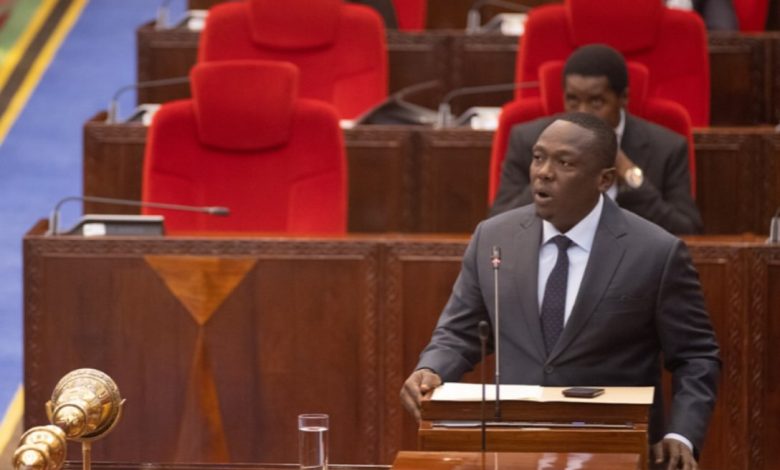
DODOMA: THE National Assembly has called for sweeping reforms in public institutions and State-Owned Enterprises (SOEs), citing concerns over their financial performance, accountability and the returns generated from government investments.
The concerns follow a 20.3 per cent increase in public investment capital to 92.27tri/- over three years, while returns grew by only two per cent during the same period, raising questions about the efficiency of public investments and the value delivered to taxpayers.
The Parliamentary Standing Committee on Public Investments (PIC) says the widening disparity calls for stronger oversight, accountability and improved management to ensure that growing government investments translate into higher returns, increased production, greater revenue and improved public services.
Presenting the committee’s report on public capital investment for the 2024/25 financial year in the National Assembly on Tuesday, PIC Chairperson Douglas Massaburi said the proposed reforms were intended to address persistent operational and financial challenges affecting public institutions and enterprises.
“Stronger supervision is necessary to ensure that growth in government investment delivers corresponding improvements in institutional performance and benefits to citizens,” he said.
Mr Massaburi said the committee wanted the Office of Treasury Registrar (OTR) to strengthen monitoring and supervision of public capital, ensuring that institutions receiving government investments demonstrate measurable improvements in productivity, financial performance and service delivery.
He said the committee had also recommended comprehensive assessments of underperforming public institutions and enterprises, particularly those facing inadequate project funding, insufficient capital, weak debt collection, persistent financial losses and difficulties in implementing procurement systems.
“The assessment should identify the underlying causes of poor performance and establish specific corrective measures to improve efficiency and productivity,” he said.
On financial accountability, the committee called for all public institutions and enterprises to make contributions to the Consolidated Fund in accordance with the law.
“The Treasury Registrar is expected to establish clear contribution criteria and rates based on the responsibilities, financial positions and capacities of individual institutions,” Mr Massaburi said.
He added that effective mechanisms should be introduced to monitor compliance and ensure that boards of directors and management are held accountable for failing to meet their statutory obligations.
The committee also expressed concern over the continued dependence on government subsidies by some public institutions and enterprises, including those with the potential to generate sufficient internal revenue to meet salaries and operational expenses.
To address the problem, it recommended that the OTR assess the extent of subsidy dependence and develop strategies to reduce it.
ALSO READ: Seven C-CEOs forum resolutions set new course for public institutions
Commercial public entities should prepare medium-term plans of no more than three years to eliminate reliance on government subsidies, while institutions whose internally generated revenue exceeds the subsidies they receive should adopt shorter-term plans to achieve financial self-sufficiency.
The proposed reforms also seek to increase private-sector participation in financing and implementing development projects, which the committee believes could attract additional investment, accelerate implementation and reduce pressure on the government budget.
Mr Massaburi cited the Tanzania Shipping Agencies Corporation (TASHICO), Tanzania Fisheries Corporation (TAFICO) and Tanzania Fertiliser Company (TFC) as public entities with opportunities to collaborate with private investors.
“The government should explore opportunities for private-sector participation to mobilise additional capital, improve operational efficiency and generate greater returns from public investments,” he said.
The committee further reported a significant increase in the value of government investments in institutions where the state holds less than 50 per cent of shares, which rose by 152 per cent over three years.
It urged the government to continue identifying and exploiting similar investment opportunities to expand its portfolio and generate greater financial returns and economic benefits.
On national development priorities, the committee recommended that all public institutions align their strategic plans with the Fourth Five-Year Development Plan (FYDP IV) and Dira 2050 before the end of the 2026/27 financial year.
Mr Massaburi said the plans should clearly outline activities, targets and measurable outcomes that contribute to national development priorities, warning that failure to align institutional strategies with broader development objectives could undermine the benefits expected from public investment.
The committee also expressed concern over the failure by some public institutions and enterprises to fully implement performance criteria established by the OTR under Section 10(2)(d) of the Treasury Registrar Act, Chapter 370.