A budget built for legacy, continental ambition
TANZANIA has made its clearest statement yet about the scale of its ambition ahead of the 2027 Africa Cup of Nations (AFCON).
With the Ministry of Information, Culture, Arts and Sports unveiling a 525.33bn/- budget for the 2026/2027 financial year and a staggering 87.22 per cent of it directed toward sports, the message from Dodoma is unmistakable: AFCON 2027 is no longer simply a football tournament; it is a national project.
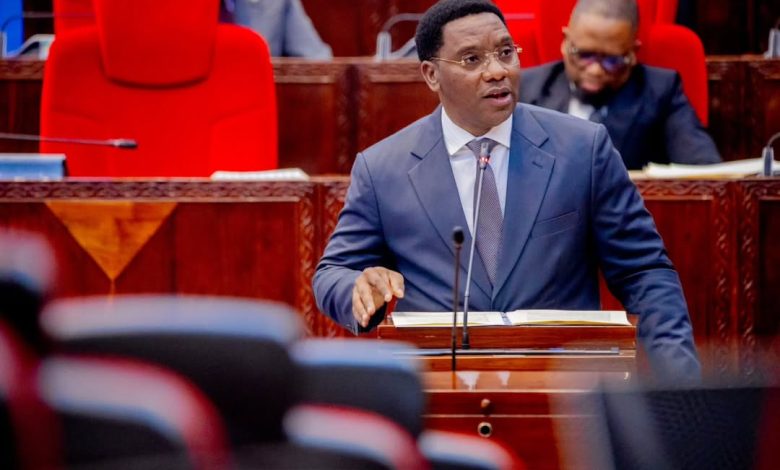
Presented by the Minister for Information, Culture, Arts and Sports, Paul Makonda, the budget marks the beginning of what could be the most decisive phase of Tanzania’s preparations for the continent’s biggest football spectacle. More significantly, it reflects a nation seeking to redefine its image through sport, infrastructure development and international visibility.
At the centre of the spending plan lies one overwhelming priority, sports infrastructure. Out of the total allocation, 458.19bn/- has been earmarked for development projects, with particular emphasis on upgrading stadiums and training facilities in Dar es Salaam and Arusha.
The government understands that hosting AFCON is not won through speeches or ceremonial launches. It is earned through efficient logistics, modern facilities and the ability to meet the rigorous standards demanded by the Confederation of African Football (CAF).
The progress report presented in the National Assembly paints a picture of urgency, but also cautious optimism. Renovation works at Benjamin Mkapa Stadium have reportedly reached 95 per cent completion, a significant milestone given the venue’s role as the symbolic and operational centrepiece of Tanzania’s AFCON campaign.
Equally critical are the training venues. Modern international tournaments extend far beyond the main stadiums. Participating teams require high-quality preparation grounds, recovery facilities and secure operational environments. In that regard, the completion of rehabilitation works at Dar es Salaam Gymkhana Club, Major General Isamuhyo and the Law School training grounds signals encouraging progress.
Three additional training venues Farasi, Leaders Club and Gymkhana II, remain at early stages of construction, underlining the magnitude of the task that still lies ahead. While time may still be on Tanzania’s side, large-scale infrastructure projects are rarely free from delays, budgetary pressures and logistical complications.
The challenge now is no longer about ambition alone; it is about execution under immense pressure. The significance of this budget becomes even more striking when viewed within the broader financial context.
The increase from last year’s 519.66bn/- allocation may appear modest at just 1.09 per cent, but the internal distribution tells a far more revealing story.
ALSO READ: How Tanzania’s inquiry heard a nation in pain
Sports has emerged as the ministry’s dominant priority, overtaking other sectors in a deliberate strategic shift toward AFCON readiness. That shift reflects an understanding that 2027 represents a once-in-a-generation opportunity.
For decades, East Africa has observed AFCON largely from the sidelines, while North and West African nations dominated hosting duties. Tanzania, together with its regional partners – Kenya and Uganda, now has a rare chance to showcase not only its football passion, but also its economic potential, tourism appeal and institutional capacity.
History has shown that successful major tournaments can transform nations far beyond the boundaries of sport. Improved transport systems, upgraded airports, expanded hospitality sectors and enhanced global visibility often become part of the long-term dividend. Tanzania appears determined to position AFCON 2027 as a catalyst for that transformation. A tournament of this scale brings both opportunity and scrutiny.
The coming months will determine whether Tanzania can convert financial commitment into operational success.
Completing facilities on time, meeting CAF standards and delivering a seamless tournament experience will ultimately define the country’s AFCON story. For now, though, one thing is clear: Tanzania is no longer preparing merely to participate in AFCON 2027, it is preparing to make a statement before the entire continent.