Why Chama’s derby masterpiece entered Puskás conversation
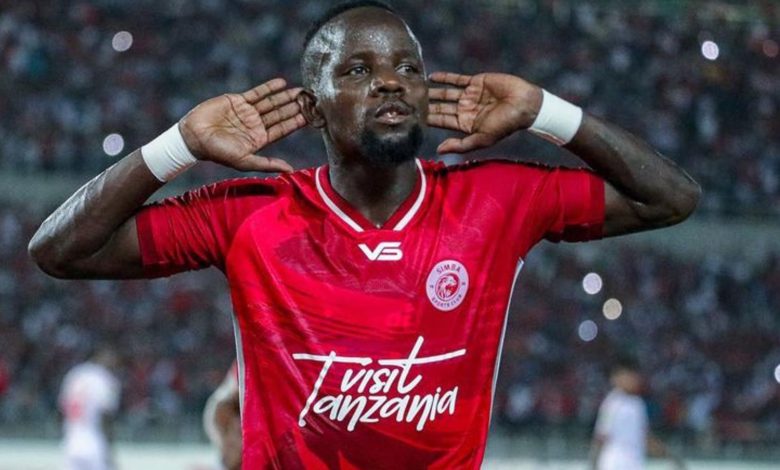
DAR ES SALAAM: THE Dar es Salaam derby between Simba SC and Young Africans SC ended 2-2, but the scoreline quickly became background noise.
Long after the final whistle, conversation continued to orbit around one moment, in the ninth-minute strike from Clatous Chama that seemed to suspend time before crashing into football history. Some goals arrive with force.
Others arrive with precision. This one arrived with instinct. Chama did not simply finish a move. He disappeared into it, beginning the attack before accelerating toward the penalty area as the ball travelled ahead of him. The return delivery from Elie Mpanzu hung briefly in the air, not inviting a shot so much as daring someone to imagine one. Most players would have tried to control it.
Others might have stretched awkwardly for contact. Chama chose flight. His body twisted above the grass, one movement balancing risk and calculation and the outside of his right foot met the ball with a kind of confidence that made the impossible look rehearsed.
Yet that is precisely why the goal stunned so many people. It did not feel trained. It felt discovered in the moment.
When Clatous Chama reflected on the goal afterwards, even he struggled to describe it as something planned. Listening to him explain the moment, there was no attempt to present it as genius or intention. Instead, he spoke about instinct, reaction and the speed at which football sometimes forces decisions upon a player.
Chama admitted the movement began with the nature of Elie Mpanzu’s pass and the flow of the attack itself. According to him, the delivery and his position inside the move shaped the decision in a split second, even before he fully realised what he was attempting.
“The nature of the pass itself from Mpanzu, the move, was the reason behind my decision to strike it like that.” What stood out most in his reflection was the honesty of it. He revealed that he did not expect to strike the ball in that manner at all. The action, he explained, simply happened in the moment.
“I did not even expect to do so. It just happened. It’s my first time scoring a goal of that kind. I have never scored such a goal.” He also acknowledged the uniqueness of the finish in his own career, saying he had never scored a goal of that kind before.
Even the contact with the ball, he noted, felt unusually soft and delicate rather than powerful, the type of touch that depends more on timing than force.
Chama suggested the movement of Djigui Diarra also influenced his reaction. He recognised the goalkeeper had already rushed forward and instinct told him that taking an extra touch would invite a challenge. In that instant, his body responded before thought could fully catch up.
“I knew the keeper had already charged, and I understood that if I took more touches, Djigui Diarra would challenge me.” That explanation perhaps makes the goal even more remarkable. Because the beauty of the strike was not only in its execution, but in its spontaneity.
It was not a rehearsed masterpiece. It was a footballer responding to space, pressure, movement and imagination all at once. Football analyst Edo Kumwembe understood that immediately when he said there is no training session designed for such a finish.
The goal belonged to improvisation, to that rare territory where football escape’s structure and enters intuition. That is often where Puskás moments are born. The FIFA Puskás Award has never been reserved only for famous players or elite European stadiums.
At its core, the award recognises something more universal: a goal that forces people to stop what they are doing and watch again, not because they missed it, but because they cannot fully believe it happened. Chama’s strike carries the qualities that usually separate memorable goals from award-winning ones.
The first is imagination. Great goals are not measured only by difficulty, but by the courage to attempt something others do not even see. Before the finish itself, there is always a split-second decision where the player chooses invention over safety. Chama saw a possibility hidden inside chaos. The second is execution. Spectacular ideas mean little without precision.
The timing of his leap, the body control in mid-air, the angle of contact and the clean connection transformed an ambitious attempt into a complete finish. There was no rebound, no deflection, no fortune softening the moment. The technique carried the entire act. Then there is context.
Beauty changes weight depending on where it happens. A bicycle kick in an ordinary league match can trend for a day. A goal like this in the emotional furnace of the Dar derby carries different energy. Every movement inside Simba versus Yanga is already amplified by rivalry, pressure, noise and expectation.
Chama produced his moment while East Africa’s biggest football occasion burned around him. That matters in award conversations because football remembers emotion as much as aesthetics.
The reaction after the goal revealed that instantly. Players across clubs responded almost as fans before professionals. Feisal Salum reacted with fire emojis. Khalid Aucho compared Chama to Jackie Chan, capturing the acrobatic absurdity of the finish.
Former Simba striker Meddie Kagere called it the goal of the season before the season itself had fully settled. Social media did the rest. Clips spread beyond Tanzanian football circles because extraordinary goals travel without translation.
ALSO READ: TMRC targets housing crisis with new bond
Supporters in countries unfamiliar with the Mainland Premier League still understood what they were seeing. The language of technique is universal. That global spread is important for any serious Puskás push. Viral reach does not decide the award, but visibility shapes momentum. Once a goal enters international timelines, it gains a second life beyond the stadium where it was scored.
And there is another reason Chama’s strike lingers in conversation: it looked impossible even in replay. Most great goals become explainable after several angles. You eventually identify the space, the mistake, the opening. But certain finishes continue to resist logic no matter how many times they are slowed down. Chama’s goal carries that quality.
Each replay raises the same question: how did he think of that so quickly? That mystery gives a goal longevity. Whether the strike ultimately receives official nomination for the Puskás Award remains uncertain. Awards depend on exposure, voting patterns, timing and global football politics.
But nomination alone is not what validates a goal. Sometimes football decides first. And football has already decided this one belongs in rare company. From control to chaos: How the derby changed direction For all the attention surrounding Clatous Chama’s spectacular strike, the derby itself unfolded like a match unwilling to follow a single script.
What initially looked like a controlled afternoon for Simba SC quickly turned into another chapter of volatility in the history of the Dar es Salaam rivalry. Simba stormed into the contest with intensity and precision.
The breakthrough arrived through Libasse Gueye, who finished from Chama’s assist to give Simba the early advantage. Moments later came Chama’s acrobatic masterpiece and suddenly Simba were two goals ahead before the match had properly settled.
At that stage, the game appeared to be drifting firmly towards the red side of the city. But derby football rarely allows comfort. Young Africans SC slowly recovered their composure and began to push Simba deeper. The response arrived through Prince Dube, whose goal shifted both the mood inside the stadium and the rhythm of the match itself. What had looked calm for Simba suddenly became tense.
Then, early in the second half, Bakari Mwamnyeto struck to level the score at 2-2, completing a comeback that transformed the contest from domination into survival. The pattern felt strangely familiar. The drama echoed another unforgettable derby on 4 January 2020, when Simba also surrendered a twogoal lead against Yanga in remarkable fashion.
On that occasion, former Simba striker Meddie Kagere opened the scoring from the penalty spot before Deo Kanda doubled the lead shortly after the interval. Yet within minutes, the match turned completely.
Mapinduzi Balama pulled one back for Yanga with a powerful long-range strike before Mohamed Banka equalised almost immediately afterwards. In the space of three minutes, Yanga had erased a 2-0 deficit and dragged the derby back into balance.
Long before the latest 2-2 draw added another dramatic chapter to the Kariakoo rivalry, there was the unforgettable afternoon of 20 October 2013, a match still spoken about whenever discussions turn to the most chaotic and emotional derbies Tanzanian football has produced.
The meeting between Simba SC and Young Africans SC ended 3-3, but the score alone barely explains the emotional swing of the contest.
For much of the first half, Yanga looked unstoppable. Mrisho Ngasa struck first in the 14th minute, rewarding the confidence he had shown before the match by delivering exactly what he promised, a goal against Simba.
The early strike unsettled Simba’s defence and Yanga continued to attack with growing authority. By the 35th minute, Hamis Kiiza doubled the advantage with ruthless efficiency, exposing a Simba side struggling to recover composure. Just before the interval, Kiiza struck again, turning anxiety into disbelief among Simba supporters as Yanga walked into halftime leading 3-0. The match appeared finished.
Some Simba supporters had already begun leaving the stadium, convinced there was nothing left to witness except humiliation. But the second half became one of the most extraordinary reversals in derby history. Betram Mwombeki pulled one back in the 54th minute, a goal that changed more than the scoreline. It shifted belief. Suddenly, the noise inside the stadium returned.
Three minutes later, Joseph Owino rose to head home from a corner, reducing the deficit to a single goal and throwing the match into emotional chaos. What had been a comfortable Yanga procession became a survival test. Then came the moment that sealed the match’s place in derby folklore. In the 83rd minute, Burundian defender Gilbert Kaze reacted quickest to a set-piece delivery from Nassor Masoud, driving in the equaliser that completed Simba’s improbable comeback.
For Yanga, it felt like a collapse. For Simba, it felt like victory disguised as a draw. More than a decade later, that 3-3 encounter still survives because it captured the true nature of the Dar Derby, a fixture where momentum can disappear without warning, where despair can become hope within minutes, and where no lead ever feels completely safe.