Professor spends four years mastering Tea Art
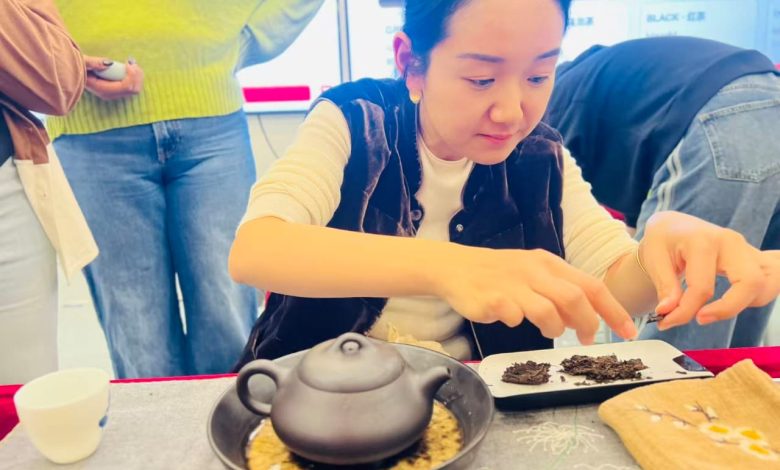
BEIJING, China: FOR four years, Professor Liu Wen devoted herself to studying the art of Chinese tea, returning to the classroom despite already having an established career in journalism, communication and university teaching.
Her journey began in 2012, when she was already three years into her media career. What started as an interest in a familiar part of Chinese daily life gradually developed into a serious pursuit of knowledge, professional training and a dream of opening her own tea space.
Liu is a communication and journalism scholar at the Communication University of China (CUC). Beyond her academic career, she is also a Chinese language teacher, painter, choreographer and practitioner of music and dance. She is a mother of one, balancing her professional interests with family life.
Despite her academic qualifications, Liu chose to become a student again, driven by curiosity and a desire to explore a field beyond her main profession.
“I wanted to begin studying a new field, to broaden myself and give myself a different space for my mind and spirit,” she said.
A journey of learning
Liu said her interest in tea developed gradually. As a child, she watched older family members drink tea every day, making it a familiar part of her upbringing.
As she grew older, she encountered more cultural practices associated with tea and became interested in studying them systematically.
Between 2012 and 2014, she studied at a teahouse that served tea, sold tea and offered professional training in tea preparation.
During this period, she learned about the six major categories of tea, their characteristics and the techniques used to brew them.
After completing the programme, she obtained an Intermediate Tea Artist certificate.
In 2014, Liu independently searched online for another institution specialising in tea art training and enrolled in an advanced course.
The programme introduced her to more detailed tea processing techniques, professional tasting and evaluation methods.
She completed the course and obtained an Advanced Tea Artist certificate in 2016.
A dream of her own tea space
Liu clarified that opening a tea room was not a childhood dream. The idea emerged after she began studying tea and developed a deeper love for its culture.
After obtaining her advanced certificate in 2016, she wanted to establish a tea space where people could enjoy tea, learn its preparation techniques and understand its cultural significance.
However, her academic journey took another turn.
She was admitted to a postdoctoral programme at CUC and, after completing it in 2019, remained at the university to teach.
The tea room idea was therefore put on hold.
Yet the dream has never disappeared.
“I hope to have a tea space of my own, and to use tea as a medium to share tea culture,” she said.
Liu wants the future space to reflect her knowledge, life experiences and personal reflections, rather than simply operate as an ordinary tea restaurant.
For her, tea represents a connection with nature and an opportunity to find calm in a world often filled with noise and pressure.
“It is a way of life I long for: to nourish the spirit in the world of tea, and to stay continually connected with nature,” she said.
A field that never stops teaching
Despite her academic qualifications, Liu said studying tea presented its own challenges because it is an interdisciplinary field.
It involves botany, chemistry, medicine, literature and the arts, among other subjects.
Understanding tea requires knowledge of plant varieties, processing techniques, geography and climate. The preparation of tea also involves understanding teaware, water quality, tea composition and the design of tea spaces.
She described tea as a field that can never be fully exhausted, making continuous learning part of its appeal.
And the learning process is not always easy.
“I often burn my hands when brewing tea,” she said with a laugh.
Returning to the classroom also changed her understanding of education.
Liu said she previously viewed education mainly as the transmission of knowledge from teachers to students.
She now sees it as a process of shared growth, in which teachers and students explore possibilities together and learn how to connect their professional knowledge with life and the wider world.
At its heart, she believes, education should help people become better individuals and contribute to building a better society.
Sharing tea culture with international students
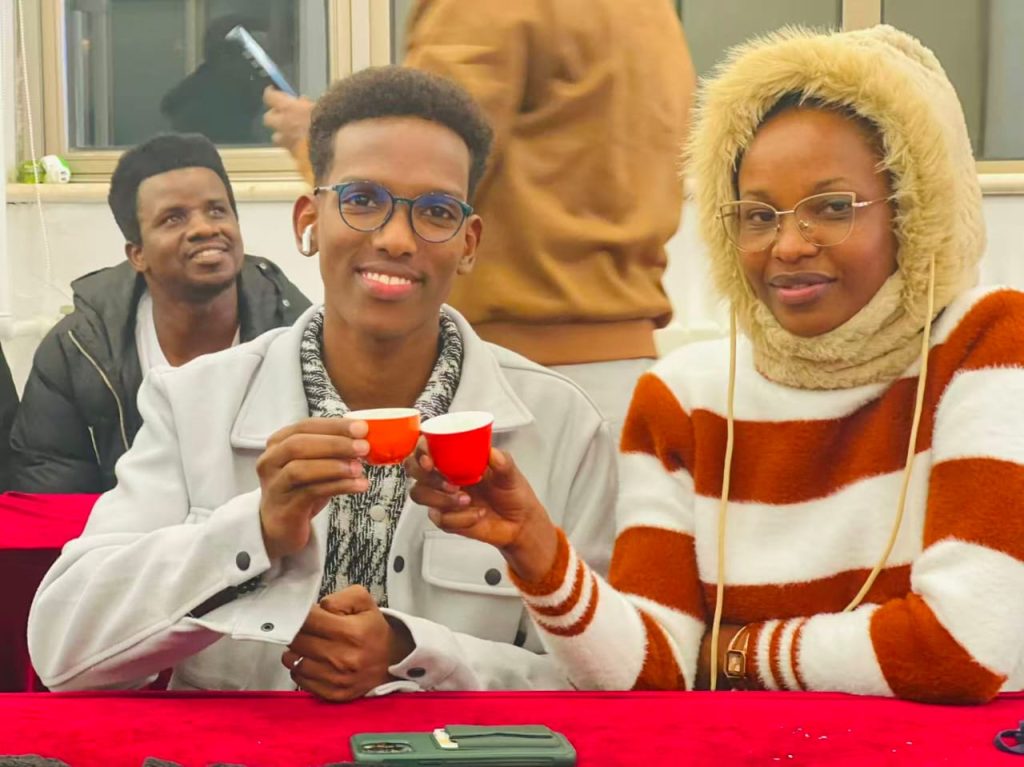
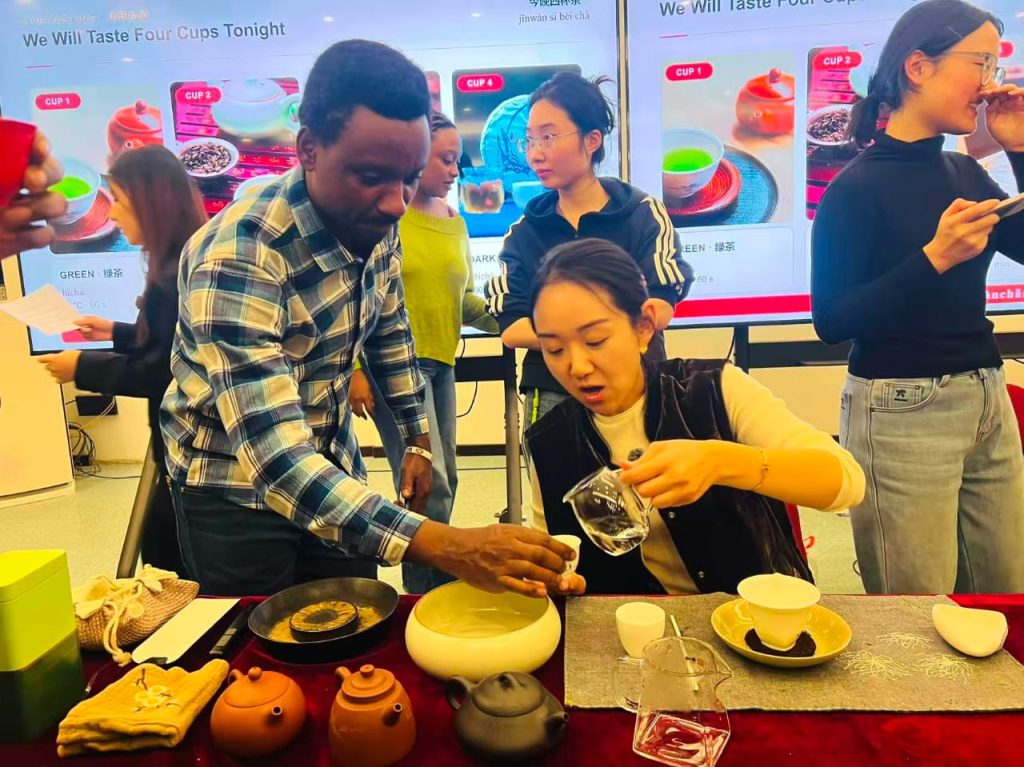
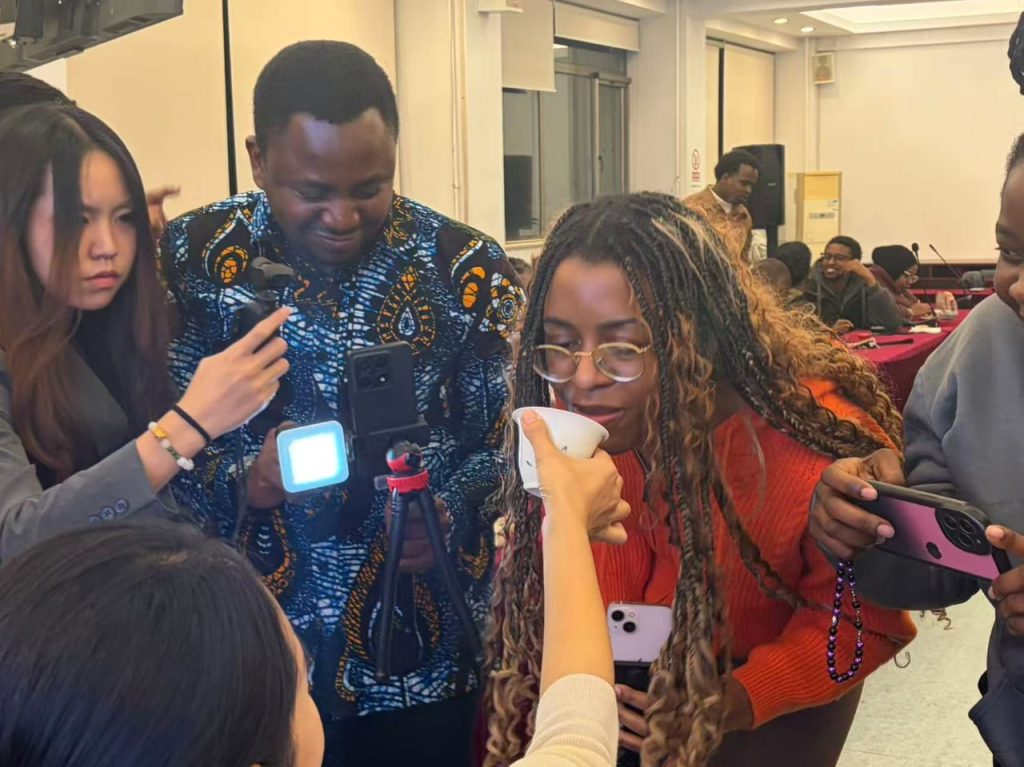
Liu’s knowledge of tea was also demonstrated during a tea culture seminar she organised and presented at CUC, attended by more than 30 international students from Africa and Asia.
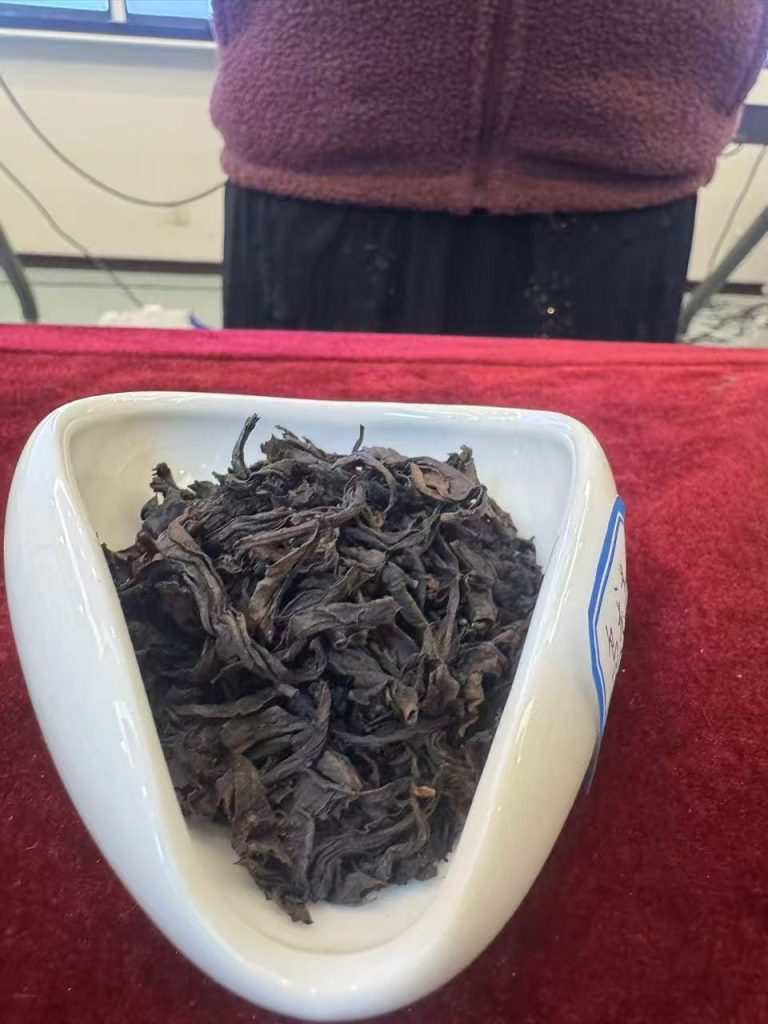
During the seminar, she introduced six major categories of Chinese tea: green tea (Lucha), white tea (Baicha), red tea (Hongcha), yellow tea (Huangcha), oolong tea (Wulongcha) and dark tea (Heicha).
She explained that the differences among the teas are largely shaped by how the leaves are processed, including the methods and duration of processing, which influence their colour, aroma and taste.
Chinese red tea, known as Hongcha, is internationally referred to as black tea because of the colour convention used in English.
The seminar offered participants an opportunity to explore tea not merely as a beverage, but as an important part of Chinese culture, knowledge and history.
Lisa Maria Getrudis, a content creator from Equatorial Guinea, said she was impressed by Liu’s presentation of the six tea categories and her personal journey into tea culture.
Mariana Kanduma from Mozambique said the seminar broadened her understanding of culture, which she had previously associated mainly with music, dance and food.
She also admired Liu’s decision to continue learning in a field different from her main academic profession.
Tanzanian journalist and CUC student Anna Mwikola said it was unusual to see someone with such a high level of education pursue another area of expertise with the dedication of a beginner.
She said Liu’s experience demonstrated that learning should not be limited by academic qualifications or professional titles.
Meanwhile, Somali participants Mohammed Musse and Mahad Abdikafi said they enjoyed the different tea flavours, particularly green tea.
Learning has no deadline
For Liu, the message to people who believe they are too old to pursue their dreams is simple: age should not become a barrier to possibility.
“I don’t think ‘too late’ really exists; it is only a conceptual constraint we place on ourselves,” she said.
She acknowledged that pursuing dreams requires balancing personal aspirations with everyday responsibilities, as well as developing the wisdom and strength to make meaningful choices.
Her own journey reflects that balance.
A professor, communication scholar, Chinese language teacher, painter, choreographer and tea artist, Liu Wen continues to explore new possibilities while nurturing the dream of creating a tea space of her own.
And when she eventually retires from university teaching, she hopes to turn that dream into a place where tea, culture, learning and life come together.