Women’s voices shape peacebuilding
DAR ES SALAAM: WHEN communities face conflict, tension or uncertainty, women are often among those helping families cope, bringing people together and finding ways to restore peace.
Yet the same women who contribute to peace in their communities do not always have an equal voice when decisions about peace and security are made.
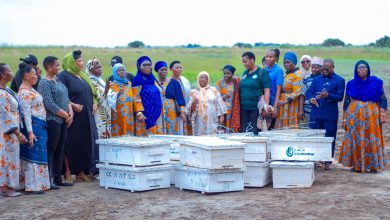
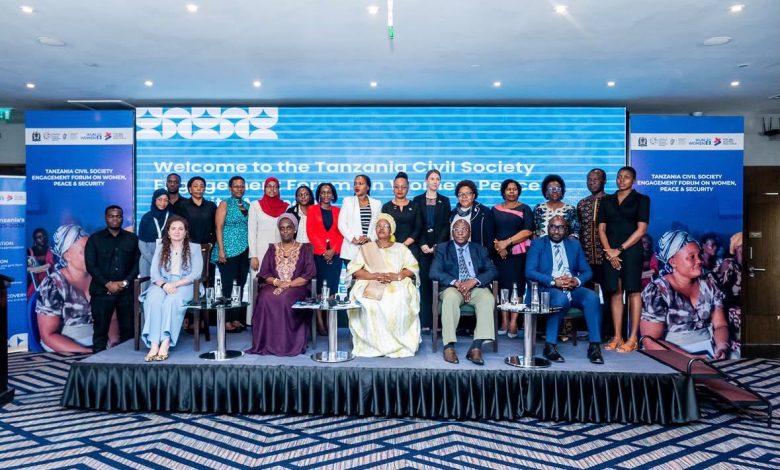
That is why more than 60 representatives of civil society organisations, women’s rights groups, youth-led organisations, government, academia and development partners gathered in Dar es Salaam to discuss how women can play a stronger role in shaping Tanzania’s peace and security agenda.
The Tanzania Civil Society Engagement Forum on Women, Peace and Security, held on September 8, came one year after Tanzania adopted its National Action Plan on Women, Peace and Security (TNAPWPS) 2025–2029.
The plan provides a framework for strengthening women’s participation and leadership, preventing conflict, protecting women and girls, supporting relief and recovery, and improving coordination around Women, Peace and Security.
For Idil Absiye, UN Women Regional Policy Advisor on Women, Peace and Security for East and Southern Africa, the next step is making sure those commitments are felt beyond policy documents.
“The priority now is ensuring that the commitments in the National Action Plan make a tangible difference in the lives of women, girls and communities across Tanzania,” she said.
She said localisation could help make this possible by allowing local governments, women’s organisations, community leaders and women peacebuilders to identify the issues that matter most in their communities and translate them into action.
But turning a national plan into results requires more than individual organisations working separately.
Global Peace Foundation Tanzania Country Director, Mr Hussein Sengu said stronger coordination was needed among civil society organisations already working on peacebuilding and related issues.
“Our goal is to bridge the coordination gap and initiate the establishment of the Tanzania 1325 CSO Network,” he said.
The proposed network would provide a platform for organisations to exchange knowledge, strengthen collaboration and contribute to monitoring and reporting on implementation of the national plan.
At government level, the responsibility for implementation also extends to ensuring that experiences from communities inform national decision-making.
Director of Gender and Women Development at the Ministry of Community Development, Gender, Women and Special Groups, Mr Timotheo Mgonja, said every stakeholder had a role to play.
“Every stakeholder has an important role to play in ensuring that the commitments outlined in the National Action Plan translate into tangible results for our communities,” he said.
For Mr Mgonja, stronger links between community-level actors and national coordination structures are important because women’s voices and experiences need to inform implementation and decision-making.
The discussion also brought a wider African perspective. Pan-African Women’s Organisation Secretary General, Dr Grace Kabayo, who delivered a keynote address on behalf of the African Union Special Envoy on Women, Peace and Security, challenged stakeholders to look beyond the adoption of policies.
“The real test of a National Action Plan is not its adoption; it is its implementation,” she said.
Her message placed accountability at the heart of the agenda, while highlighting the role civil society can play in bringing community experiences and evidence from women peacebuilders into national and continental processes.
For women’s organisations, that space is particularly important because many already work directly with communities on peacebuilding, mediation, prevention and response to gender-based violence, youth engagement, social cohesion, access to justice and community resilience.
But such work also requires sustained support. Representing the Embassy of Ireland in Tanzania, Ms Danai Lazaris said investment in civil society was important because organisations working at community level often have close relationships with the people they serve.
ALSO READ: Ending FGM through women’s voices
“Sustainable peace requires inclusive participation across society. Investment in civil society is essential, as organizations working at the community level bring unique experience, local knowledge and trusted relationships that help promote inclusion and support sustainable solutions,” she said.
Her message added another dimension to the discussion: women’s participation in peacebuilding requires not only policies and coordination, but resources to turn ideas into sustained action.
The forum therefore brought together several pieces of the same picture women’s participation, community voices, government responsibility, civil society coordination, accountability and investment.
The proposed Tanzania 1325 CSO Network is expected to provide another platform through which organisations can work together and contribute to implementation of the TNAP-WPS.
Ultimately, the goal is bigger than establishing another network or holding another forum.
It is about creating space for women to move from being affected by decisions on peace and security to helping shape those decisions.
And as Tanzania moves into the implementation of its 2025–2029 National Action Plan, the voices gathered in Dar es Salaam point to one message: women’s participation must be part of how peace is built, sustained and measured