Tanzania women pursue greater control of mineral wealth
GEITA: THE government is stepping up efforts to create an enabling environment for women to participate fully in Tanzania’s mineral value chain, from exploration, mining and processing to trading, value addition and the provision of services at mining sites.
The drive places women at the centre of the country’s efforts to ensure that mineral wealth generates wider economic opportunities. Rather than limiting women’s involvement to participation in mining activities, the government says it wants more women to become mine owners, producers, traders, investors and competitive service providers.
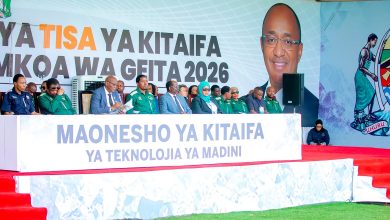
The message was delivered by Deputy Minister for Minerals, Dr Steven Kiruswa during the 2026 Mining Queens Awards Ceremony held recently in Geita Region.
The event also highlighted the role of the State Mining Corporation (STAMICO) in facilitating the Mining Queens Awards Night and supporting initiatives aimed at empowering women miners to participate more fully in the exploitation and development of mineral resources.
According to Dr Kiruswa, the Government’s approach goes beyond increasing the number of mining licences issued to citizens. The broader objective is to ensure that licences translate into productive mining operations, growing businesses, employment opportunities and income for wananchi.
This distinction is important because owning a mining licence does not automatically guarantee a successful operation.
Women and other smallscale miners require appropriate technology, business knowledge, access to markets and capital, as well as safety awareness and the capacity to manage mining activities sustainably.
Dr Kiruswa said the government’s decision to set aside mining areas and issue licences to women was intended to help move them from being participants in the sector to becoming owners of mining operations, producers, traders and investors.
Progress is already evident in Geita, where 714 women have joined different groups and received smallscale mining licences, according to Dr Kiruswa.
The development provides an important opportunity for women to take a more direct role in the ownership and development of mineral resources. It also demonstrates how access to mining areas and formal licences can create a pathway for women to participate more meaningfully in the mineral economy.
However, Dr Kiruswa stressed that licensing is only the beginning. He said the government was continuing to build the capacity of women and small-scale miners in areas essential to successful and responsible mining, including technology, business management, occupational health and safety, environmental management, value addition and access to markets.
Such support is intended to help women turn mining opportunities into productive and sustainable businesses.
Technology can improve operational efficiency, while business management skills can help miners plan, manage and expand their enterprises. Safety and environmental knowledge are equally important in protecting workers and surrounding communities.
Dr Kiruswa urged women who have received mining licences to properly develop their mining areas in accordance with the law, regulations and appropriate technologies.
He stressed that mining activities must be conducted safely and sustainably, noting that the opportunities created through licensing also come with a responsibility to comply with legal, safety and environmental requirements.
The government is also looking beyond immediate participation. Through the Mining for a Brighter Tomorrow (MBT) programme and other initiatives, it aims to increase women’s involvement in the ownership and development of mineral resources.
Dr Kiruswa said the government would continue working to provide women with appropriate opportunities in the mining sector, with the ambition of seeing them advance from participants to mine owners, large-scale producers, investors, traders and competitive service providers both in Tanzania and beyond.
For STAMICO, supporting this transformation remains an important part of its engagement with women in mining.
The corporation’s Executive Director, Dr Venance Mwasse, said STAMICO would continue empowering women to participate fully in the mining sector by providing the knowledge, technology and support needed to improve productivity and expand their activities.
As an institution supporting small-scale miners, STAMICO also intends to work with the Government and other stakeholders to create a conducive environment for women to develop their mining operations.
Dr Mwasse said such collaboration would help women increase production and benefit more from opportunities across the mineral value chain.
The value chain encompasses several stages, meaning opportunities for women extend well beyond extracting minerals. They can participate in exploration, extraction, processing, trading, value addition and the provision of services to mining operations.
Expanding participation across these areas could create additional opportunities for women to build sustainable businesses around the broader mining economy.
Dr Mwasse also called on other women’s groups in the sector to emulate the Tanzania Women Miners Association (TAWOMA), which has played a role in bringing women miners together and promoting their interests.
TAWOMA, in turn, has acknowledged the importance of Government and institutional support in opening more opportunities for women.
TAWOMA Chairperson, Semeni Malale, thanked the Government, through the Ministry of Minerals, and STAMICO for measures taken to empower women to own and operate mining activities. She said the initiatives had continued to open opportunities and increase women’s participation in the sector.
At the same time, Malale stressed the need to strengthen cooperation among the Government, STAMICO and TAWOMA so that more women could benefit from opportunities related to mining areas, technology, capital and markets.
These areas remain critical because access to a mining area or licence is only the starting point. For mining businesses to grow, women need the practical means to operate efficiently, increase production and connect their products and services to markets.
The partnership between the government, STAMICO and TAWOMA, therefore, provides a framework for women miners to pursue greater participation across the mineral value chain.
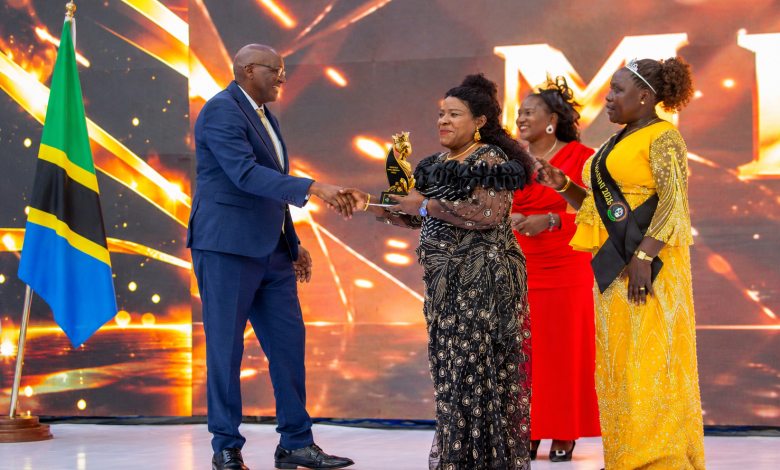
STAMICO has supported TAWOMA in coordinating the Mining Queens Awards Night for three consecutive years. The awards provide a platform to recognise women’s participation and achievements in the mining sector while highlighting opportunities available to them within the industry.
At the 2026 awards ceremony, Asha Msangi was announced the overall winner and crowned Mining Queen 2026.
Her recognition came as the government, STAMICO and women miners push for a broader role for women in Tanzania’s mineral economy.
The central message emerging from the event is that empowering women in mining requires more than issuing licences. It requires access to knowledge, technology, safe working conditions, environmental management practices, business skills, capital and markets.
With 714 women in Geita already organised into groups and issued small-scale mining licences, the focus now shifts to turning those opportunities into productive and sustainable mining enterprises.
ALSO READ: Miners urged to use new mining regulations
The Government’s stated objective is to see women move further along the mineral value chain from participants to owners, producers, investors, traders and service providers.
For Tanzania’s women miners, the challenge and opportunity now lie in transforming access to mining opportunities into sustainable enterprises that contribute to production, employment and income while operating within the law and protecting workers and the environment.