Beyond literacy: Tanzania seeks to give adult education new role in development
DAR ES SALAAM: FOR decades, adult education has largely been associated with teaching adults to read, write and count.
But as Tanzania marks International Literacy Day and prepares for Adult Education Week, the sector is being repositioned as a broader pathway to skills, employment, entrepreneurship, lifelong learning and fuller participation in society.
The shift comes as Tanzania continues to face a literacy challenge.
The Education Sector Development Plan 2025/26– 2029/30, citing the 2022 Population and Housing Census, puts the country’s illiteracy rate at 18 per cent, with women recording a higher rate than men.
Against this backdrop, the government is placing greater emphasis on Adult and NonFormal Education (ANFE) to reach people who missed formal schooling, dropped out of education or need alternative opportunities to acquire knowledge and skills.
The government’s broader 2026/27 education budget amounts to 2.394tri/-, of which 697.8bn/- is for recurrent expenditure and 1.697tri/- for development projects.
At the centre of this effort is the Institute of Adult Education (IAE), whose mandate covers basic education outside the formal system as well as higher education programmes.
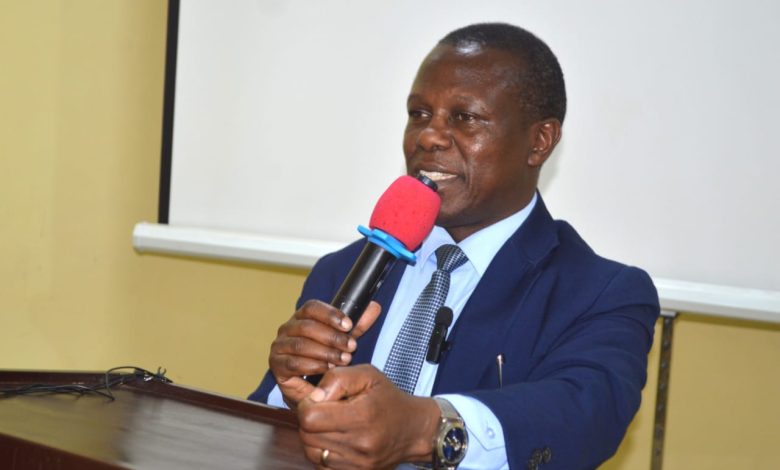
IAE Rector, Prof Philipo Sanga, says adult education should no longer be viewed simply as a literacy programme, arguing that it can provide people with knowledge and practical skills to improve their livelihoods.
“Adult education is not only about teaching people how to read and write. It is also about creating opportunities for people to acquire knowledge and skills that can help them improve their lives and become self-reliant,” Prof Sanga says.
He says adult education offers a second chance to people whose educational journeys have been interrupted by economic circumstances, family responsibilities, health challenges or other factors.
Rather than forcing such learners back into the same educational route they left behind, adult education can provide flexible opportunities designed around their circumstances and immediate needs.
This flexibility is increasingly important as communities face changing economic and social demands.
An adult learner may require knowledge in agriculture, business, health, technology or other areas that can be directly applied to everyday life.
The Ministry of Education, Science and Technology is also working to strengthen alternative secondary education and programmes targeting out-of-school adolescents.
Government plans show that enrolment in alternative secondary education is expected to increase from 14,765 learners in 2025/26 to 16,000 in 2026/27.
Meanwhile, beneficiaries of the Integrated Post-Primary Education Programme for Outof-School Adolescents (IPOSA) are projected to rise from 16,732 to 22,500.
ALSO READ: 13,000 Tanzanians return to school under the adult education programme
The figures underline a wider policy question: adult education is not simply about how many people can read and write, but whether learning enables citizens to make informed decisions, earn incomes, participate in their communities and continue learning throughout their lives.
The issue will receive renewed attention during this year’s Adult Education Week celebrations, scheduled for September 21 to 25 in Simiyu Region.
Coordinator of the Adult Education Week Preparations Committee at the Ministry of Education, Science and Technology, Mr Frank Angus, says the celebrations will provide an opportunity to assess the sector’s progress and future direction.
“The celebrations will provide an opportunity to look at where adult education has come from, where we are today and where we want to go in the future,” he says.
The celebrations will also include exhibitions from September 21 to 25 at CCM Bariadi Grounds, where government institutions, non-governmental organisations and development partners will showcase programmes, services and skills acquired by beneficiaries.
Representatives from all 26 Mainland regions are expected to participate. For local government authorities, their involvement is crucial because adult education is often implemented close to communities.
Ms Godliver Nkala, from the President’s Office–Regional Administration and Local Government and Vice-Chairperson of the preparations committee, says the celebrations are intended to change public perceptions of adult education and make citizens aware that learning opportunities exist beyond formal schooling.
“The main objective is to make citizens understand that adult education exists and that it is much broader than reading and writing. It also provides opportunities for entrepreneurship, income-generating activities, life skills and other forms of learning,” she says.
Ms Nkala identifies inadequate public awareness as one of the major challenges facing adult education. Many people, she says, remain unaware of the opportunities available through adult and non-formal education programmes.
She has therefore called for greater media involvement in informing citizens about available programmes and encouraging potential learners to take advantage of them.
Development partners also argue that expanding adult education requires stronger systems and institutions rather than focusing only on individual learners.
Mr Godfrey Kweyamba , Program Officer from DVV International said the organisation supports inclusive education, capacity building, institutional strengthening and sustainability.
“Our focus is on inclusive education, capacity building, institutional strengthening and sustainability. We believe adult education has to be supported by strong systems and institutions if it is to respond effectively to the needs of communities,” he says.
The support operates at community, institutional and policy levels, with the aim of ensuring that programmes can continue delivering benefits beyond individual projects and external funding.
Adult education’s flexibility also makes it particularly relevant to a rapidly changing society. Unlike rigid educational pathways, it can adapt to the needs of learners and communities.
The benefits can extend beyond education itself. Acquiring relevant skills can improve a person’s ability to find employment, establish an income-generating activity or strengthen an existing livelihood.
Literacy therefore becomes a foundation for wider economic empowerment rather than an end in itself. The benefits are also social.
People who can access information, understand official communication and express themselves confidently are better positioned to participate in community affairs and make informed decisions.
This has made adult education increasingly important to social inclusion and citizenship.
Advocacy and Communication Officer from DVV International, Mr Joseph Masonda said that public advocacy is therefore central to promoting the sector.
The organisation is using digital platforms, including its MOJA platform, to connect adult education stakeholders across Africa and showcase programmes from different countries.
“This year, we deliberately decided to engage journalists so that they can better understand the activities, programmes and stakeholders involved in adult education and help bring these issues to the wider public,” Mr Masonda says.
DVV International will also participate in the Adult Education Week exhibitions, where beneficiaries from supported districts will demonstrate skills acquired through adult education programmes.
The organisation plans further media engagements with the Ministry of Education and IAE to discuss the year’s theme and its relevance to Tanzanians and national development.