When Africa brings deals, not just talk, to Washington
WASHINGTON has heard the pitch on African economic potential many times over.
Later this month, a delegation of African governments, institutional investors, and project sponsors will test whether the U.S. capital market is ready for a fundamental shift in the conversation: moving from development assistance to riskadjusted returns.
On August 27 and 28, the Africa Business Investment Summit (ABIS) 2026 convenes at MGM National Harbor, just outside the District of Columbia.
Organizers are arriving with a curated $4 billion pipeline of African investment opportunities aimed directly at global institutional capital. Yet the primary metric to track is significantly smaller— and far harder to deliver.
Organizers have set a concrete benchmark: generating at least $500 million in structured capital commitments between African project originators and U.S. institutional and private investors. That distinction is central to the summit’s premise.
A project pipeline is merely a menu; a commitment is an executed transaction.
The shift from aid to returns For much of the modern relationship between Washington and the continent, the framing has been development and assistance.
The question was usually what Africa needs. ABIS is asking a different one: where can capital earn a return by financing what Africa needs. That reframing matters more than it might sound.
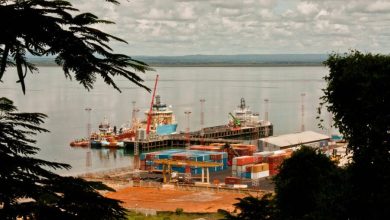
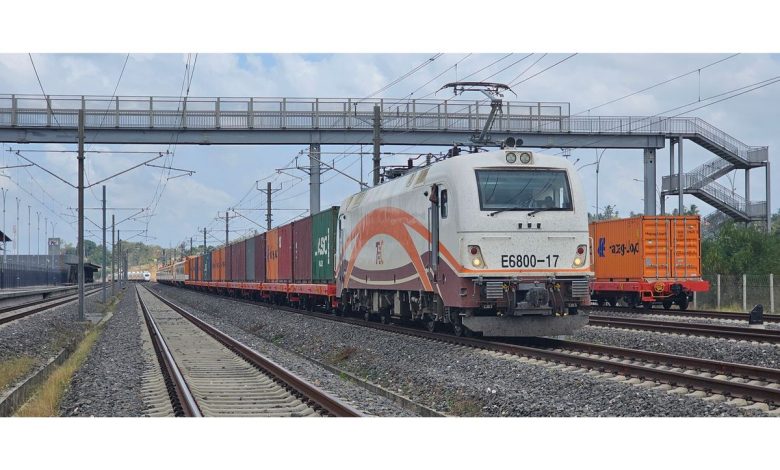
Africa’s electricity shortfall is a development problem and an energy investment opportunity. Weak transportation networks are an economic constraint and a case for investable assets in ports, rail and logistics.
Food insecurity demands policy and creates commercial demand for storage, processing and distribution.
The need and the opportunity are frequently the same equation viewed from two sides. The people organizing the summit are direct about the ambition.
Ashim Morton, president of the Millennium Excellence Foundation, framed it as a commitment to action rather than another conversation about what the continent could someday become.
The program reflects that. Alongside main-stage panels, participants will move through private bilateral deal rooms, ministerial roundtables, an MOU signing ceremony and a diaspora investment launch, structures meant to shorten the long road between a project idea and a financial close.
Why the location is the point Holding this in the Washington region is a deliberate choice, and a revealing one.
Few places concentrate as many types of capital in one metro area: the federal government, multilateral finance and development institutions, private investors, diplomatic missions, and a sizable African diaspora carrying its own money, networks and market knowledge.
That concentration is not just symbolic. Large African transactions often require several parties to move at once.
A single project might need commercial equity, debt, a guarantee, government incentives and a development finance institution willing to absorb earlystage risk before larger investors will step in.
Getting those players into the same room is how a deal that might otherwise stall gets financed. Organizers expect more than 40 percent of attendees to hold C-suite or ministerial rank, the kind of decision-makers who can actually make those pieces line up.
The summit also carries an unusual ceremonial weight. It proceeds under the royal patronage of Otumfuo Osei Tutu II, the Asantehene, who is set to deliver a keynote on August 27.
In African dealmaking, where trust, access and relationships have always shaped outcomes in infrastructure and natural resources, that mix of traditional authority and private finance is less incongruous than it first appears.
Why the timing favors Africa Omar Ben Yedder, managing director of IC Publications, which has partnered with the foundation to produce the summit, places the moment inside a broader global realignment.
His argument is worth sitting with: the world is not simply reconsidering Africa, it increasingly needs things the continent has.
Critical minerals are the clearest example, given how much the energy transition depends on resources African countries hold in quantity. But the logic runs wider.
Companies are rebuilding supply chains. Governments are chasing energy security. Food security has become strategic.
ALSO READ: TZ: Rising protagonist in African economic outlook 2025
And Africa’s share of the world’s population, workforce and consumers keeps rising. The older investment case leaned on demographics alone.
The newer one casts Africa not only as a market but as a supplier, producer, energy partner and geopolitical counterpart. What actually tells us it worked None of this erases the risks.
Currency volatility, regulatory uncertainty and political instability remain real, and Africa is not one market but 54 with sharply different conditions. Investors do not need markets to be risk-free, though.
They need returns that compensate for the risk, which is why blended finance, political-risk insurance, guarantees and stronger domestic institutions carry so much weight.
They can change the math of a deal. Three things will signal whether ABIS delivered.
The first is commitments: how much of that $500 million target moves past expressions of interest into structured deals.
The second is the investor mix, specifically whether pension funds, insurers, private credit and family offices show up alongside the development finance institutions that have long carried these projects.
The third, and most important, is repeatability. One financed energy project is useful.
A financing structure that can unlock twenty is what changes the continent’s trajectory, because Africa’s capital problem cannot be solved one deal at a time. Next week, about $4 billion in projects will make their case a short drive from the Capitol.
If even $500 million of it hardens into real commitments, the summit will have done something rarer than producing another round of optimistic speeches.
It will have moved capital. That, in the end, is the only measure that counts.