

Security-development nexus: A strategic imperative for Tanzania, Mozambique
MOZAMBIQUE: FOR many years, security and development have been treated as two separate policy areas. Security has traditionally been associated with the military, police, border management and other security institutions, while development has been associated with roads, schools, hospitals, investment, trade and employment.
Today, however, that distinction is becoming increasingly difficult to sustain. Security enables development, while inclusive development can strengthen security and social resilience. This relationship is commonly described as the Security-Development Nexus.
The concept is particularly relevant to Tanzania and Mozambique, given their shared border, historical ties, close people-to-people relations and growing economic interests in trade, energy, transport and regional connectivity.
The situation in northern Mozambique, particularly Cabo Delgado, provides an important context in which this relationship can be understood.
Security as a foundation for development
Where insecurity persists, development is inevitably affected. Conflict and instability can disrupt trade, discourage investment, damage infrastructure, interrupt the delivery of public services and force communities to abandon their homes and livelihoods.
Cabo Delgado illustrates this reality. Years of insecurity have affected communities and economic activity, creating challenges that extend beyond the immediate security environment.
For Tanzania, the consequences cannot be viewed in isolation. Cabo Delgado shares a border with Tanzania, and communities on both sides of the Ruvuma River have longstanding social, cultural and economic connections.
This means that stability in northern Mozambique is not only a Mozambican concern. It has implications for Tanzania and the wider southern African region.
Security measures are therefore necessary to protect communities, maintain territorial integrity and create conditions in which normal economic and social life can resume. However, security operations alone cannot address all the factors that influence longterm stability.
Development as part of the security equation
The other side of the nexus is equally important: development itself can contribute to security.
Access to education, healthcare, employment, markets, infrastructure and economic opportunities can strengthen communities and enhance their resilience.
This is particularly important for young people. Where young people can see realistic opportunities to earn a livelihood, acquire skills and participate meaningfully in the economy, the social foundations of stability are strengthened.
This does not mean that poverty or unemployment automatically cause insecurity. Rather, it recognises that inclusive development can reduce vulnerabilities and create stronger relationships between communities, institutions and the state.
For this reason, development should not necessarily wait until every security challenge has been completely resolved. Where conditions permit, development and recovery should progress alongside efforts to strengthen security.
The Tanzania-Mozambique border should not be viewed simply as a line separating two countries. For generations, communities on both sides of the Ruvuma River have shared family ties, languages, cultural traditions, markets and social relationships. The Makonde and Makua communities, among others, demonstrate the depth of these historical connections.
A secure border is important. But a secure border should also facilitate legitimate movement, trade and interaction. This is where border development becomes part of the security agenda.
An efficient border crossing can facilitate legitimate commerce, while stronger border management can help address smuggling, trafficking and other forms of cross-border crime. These objectives are not contradictory. A border can be open to legitimate economic activity while remaining firm against illicit activities.
The proposed One Stop Border Post at Mtambaswala-Negomano is therefore potentially more than an infrastructure project. Properly implemented, it could facilitate the movement of people and goods, reduce unnecessary delays, stimulate border economies and strengthen coordinated border management.
Building a Mtwara-Ruvuma-Cabo Delgado economic and security corridor
There is a strong case for viewing Mtwara, Ruvuma and Cabo Delgado as part of a wider interconnected economic and social space.
Such an approach would encourage cooperation in transport, trade, agriculture, fisheries, energy, tourism, health, education and youth employment, while maintaining effective security and border management.
The logic is straightforward.
Infrastructure enables connectivity. Connectivity facilitates trade. Trade creates economic opportunities. Economic opportunities strengthen livelihoods. Stronger livelihoods contribute to resilient communities and resilient communities are better positioned to withstand social and security pressures.
This is the security-development nexus in practical terms. Mtwara has the potential to serve as an important gateway linking southern Tanzania with northern Mozambique, while Cabo Delgado possesses significant economic potential, including natural gas and other resources.
Realising this potential, however, requires more than investment. It requires a stable environment, reliable infrastructure, effective institutions and meaningful participation by local communities.
Natural resources and inclusive development
The natural gas resources of the Rovuma Basin have placed northern Mozambique firmly on the international investment map. For Tanzania, developments in the region also have strategic relevance because of geographical proximity and Tanzania’s interests in the wider energy economy.
The central question should therefore not only be how natural resources are protected, but also how they can contribute to broader development.
Large-scale investments can have a greater long-term impact when they create opportunities for local businesses, skills development, employment, infrastructure and social services.
In other words, resource security should go hand in hand with resource-based development.
When communities see tangible benefits from economic activity in their areas, confidence in development processes can be strengthened.
Health, education and youth: The human dimension of security
Security should not be understood only in terms of soldiers, police officers, borders and intelligence.
A functioning hospital, a good school, vocational training and opportunities for young people are also components of a secure and resilient society.
Tanzania’s initiative to support healthcare delivery in northern Mozambique through medical professionals, including the involvement of Benjamin William Mkapa Hospital in Dodoma, provides an example of how humanitarian cooperation can complement broader diplomatic and development objectives.
There is considerable scope for Tanzania and Mozambique to explore further cooperation in health, education, vocational training, agriculture, fisheries, youth development and entrepreneurship, particularly in communities along the border.
Such initiatives can strengthen not only bilateral relations but also the human foundations of regional stability.
From security first to security and development together The experience of Tanzania and Mozambique suggests that the question should not be whether security or development comes first.
The more useful question is how the two can reinforce each other.
Security institutions have the responsibility to protect people and territory. Development institutions have the responsibility to expand infrastructure, services and economic opportunities. The private sector creates investment and employment, while communities are essential partners in shaping sustainable development.
The objective should, therefore, be coordination rather than institutional overlap. A road is an economic asset, but it also improves access for emergency services and strengthens connectivity while a hospital is a health facility, but it can also build trust between communities and institutions.
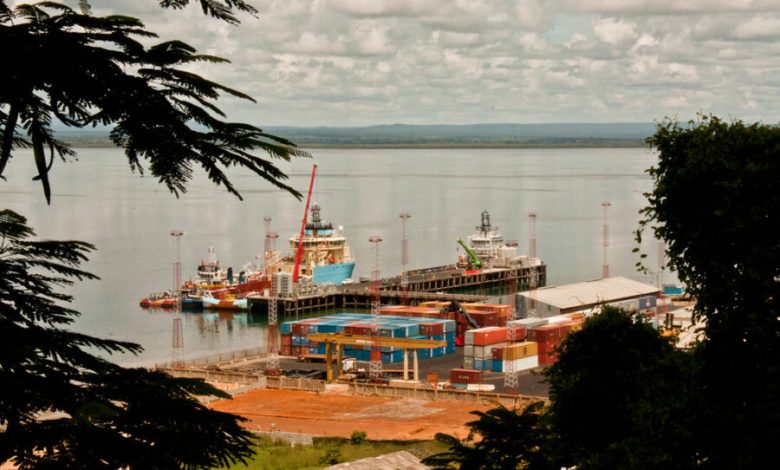
A border post facilitates trade, but it can also strengthen immigration, customs and security cooperation and a port supports commerce, but it also contributes to regional connectivity and economic resilience.
This is why security and development should be viewed as mutually reinforcing rather than competing priorities.
For Tanzania, the SecurityDevelopment Nexus provides an opportunity to connect diplomacy, regional security and economic diplomacy.
Tanzania can continue to contribute through stronger border cooperation, support for legitimate cross-border trade, investment in borderregion development, peopleto-people relations and cooperation in health, education, agriculture, energy and youth development.
At the regional level, the Southern African Development Community (SADC) provides an important framework for linking peace and security with regional economic integration and development.
The relationship between Tanzania and Mozambique has a particularly strong foundation. The two countries share a history of solidarity dating back to the liberation struggle. The opportunity before them today is to translate that historical solidarity into a broader partnership centred on peace, connectivity, trade, investment and shared prosperity.
Towards a shared securitydevelopment vision
The next phase of TanzaniaMozambique relations could benefit from a more integrated approach to the Mtwara-Ruvuma-Cabo Delgado space.
This does not necessarily require the creation of a new institution. It requires better coordination of existing initiatives and a common understanding that security, infrastructure, trade, energy, health, agriculture, youth and community relations are interconnected.
The objective should be to create a corridor where security enables economic activity, economic activity creates opportunities and development strengthens social resilience.
Such an approach would also give practical meaning to the long-standing principle of people-centred regional cooperation.
The Security-Development Nexus is not merely an academic concept. For Tanzania and Mozambique, it reflects realities experienced by communities along their shared border.
Northern Mozambique demonstrates that insecurity can undermine development. At the same time, inclusive development, economic opportunity and accessible public services can strengthen community resilience.
The strategic opportunity, therefore, is to move beyond the idea that security must be achieved first and development can follow later.
A more sustainable approach is to pursue both together security that enables development and development that strengthens security.
For Tanzania and Mozambique, this approach offers an opportunity to transform their shared border from a line of separation into a corridor of peace, connectivity, trade and shared prosperity.


I do not even know how I ended up here, but I thought this post was good. I don’t know who you are but certainly you’re going to a famous blogger if you aren’t already 😉 Cheers!
I likewise believe so , perfectly composed post! .
Hmm is anyone else experiencing problems with the pictures on this blog loading? I’m trying to find out if its a problem on my end or if it’s the blog. Any suggestions would be greatly appreciated.
Hello! This is my first comment here so I just wanted to give a quick shout out and say I really enjoy reading your posts. Can you suggest any other blogs/websites/forums that cover the same topics? Appreciate it!
I have recently started a site, the information you offer on this site has helped me tremendously. Thanks for all of your time & work.
I really appreciate this post. I have been looking all over for this! Thank goodness I found it on Bing. You have made my day! Thank you again
Thanks a bunch for sharing this with all of us you actually know what you’re talking about! Bookmarked. Kindly also visit my site =). We could have a link exchange agreement between us!
I really like your writing style, fantastic information, regards for putting up :D. “Every moment of one’s existence one is growing into more or retreating into less.” by Norman Mailer.
Howdy would you mind stating which blog platform you’re working with? I’m looking to start my own blog soon but I’m having a hard time selecting between BlogEngine/Wordpress/B2evolution and Drupal. The reason I ask is because your layout seems different then most blogs and I’m looking for something completely unique. P.S My apologies for getting off-topic but I had to ask!
It is truly a great and useful piece of info. I am happy that you just shared this helpful information with us. Please keep us informed like this. Thanks for sharing.
Can I just say what a relief to find someone who actually knows what theyre talking about on the internet. You definitely know how to bring an issue to light and make it important. More people need to read this and understand this side of the story. I cant believe youre not more popular because you definitely have the gift.
You made various fine points there. I did a search on the matter and found a good number of persons will go along with with your blog.
It’s laborious to search out educated individuals on this matter, however you sound like you know what you’re speaking about! Thanks
강남구구단 방문을 준비하고 있다면 가격 구성, 이용 방식, 예약 절차와 위치 확인사항을 살펴보세요. 인원·시간에 따른 상담 항목과 자주 묻는 질문을 한곳에 정리했습니다.
Thank you for another wonderful post. Where else could anybody get that type of information in such an ideal way of writing? I’ve a presentation next week, and I’m on the look for such information.
This design is spectacular! You obviously know how to keep a reader entertained. Between your wit and your videos, I was almost moved to start my own blog (well, almost…HaHa!) Fantastic job. I really enjoyed what you had to say, and more than that, how you presented it. Too cool!
hello!,I like your writing so much! share we communicate more about your post on AOL? I need an expert on this area to solve my problem. May be that’s you! Looking forward to see you.
Very interesting subject, regards for posting. “To have a right to do a thing is not at all the same as to be right in doing it.” by G. K. Chesterton.
I genuinely enjoy reading through on this website, it has great content. “The living is a species of the dead and not a very attractive one.” by Friedrich Wilhelm Nietzsche.
Very interesting information!Perfect just what I was searching for!
Hi, just required you to know I he added your site to my Google bookmarks due to your layout. But seriously, I believe your internet site has 1 in the freshest theme I??ve came across. It extremely helps make reading your blog significantly easier.
I do enjoy the way you have presented this particular matter plus it does indeed provide us some fodder for thought. On the other hand, through what I have observed, I just simply wish when the feedback pack on that folks continue to be on point and not start on a soap box regarding the news of the day. Yet, thank you for this superb piece and while I do not go along with this in totality, I value the viewpoint.
Do you have a spam issue on this blog; I also am a blogger, and I was wondering your situation; we have developed some nice procedures and we are looking to exchange methods with others, why not shoot me an e-mail if interested.
I’d should check with you here. Which isn’t something I often do! I enjoy studying a put up that may make individuals think. Also, thanks for permitting me to comment!
What i do not understood is actually how you’re no longer actually much more smartly-favored than you may be now. You are very intelligent. You realize thus considerably when it comes to this topic, produced me in my opinion consider it from numerous various angles. Its like women and men are not fascinated until it’s something to accomplish with Girl gaga! Your personal stuffs great. At all times maintain it up!
It’s actually a great and useful piece of info. I’m glad that you shared this helpful information with us. Please keep us up to date like this. Thanks for sharing.
Hmm is anyone else encountering problems with the images on this blog loading? I’m trying to find out if its a problem on my end or if it’s the blog. Any suggestions would be greatly appreciated.
you’re really a good webmaster. The web site loading speed is incredible. It seems that you are doing any unique trick. In addition, The contents are masterwork. you have done a great job on this topic!