Tanzania’s people-to-people links at centre of China Africa exchange
DAR ES SALAAM: A CHINESE worker arriving in Tanzania more than a century ago, a family maintaining contact across the Indian Ocean through letters, a community coming together to restore a cemetery and a modern company building a commercial network in Tanzania may appear to belong to different eras.
But they are connected by one story, the continuing people-to-people relationship between Tanzania and China.
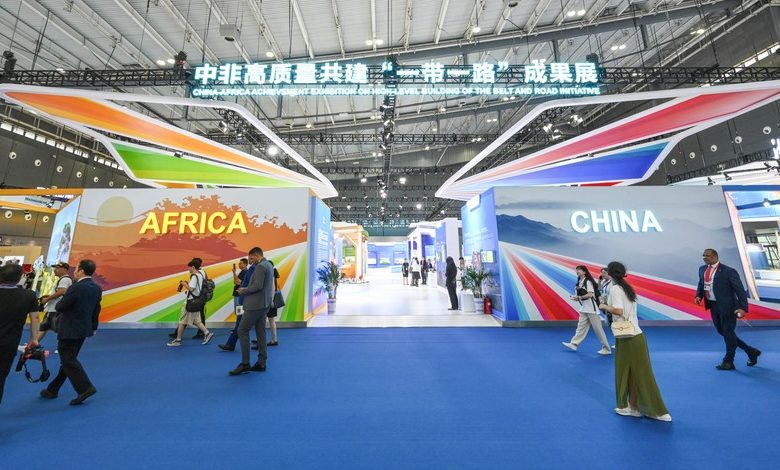
That history is being brought into focus in Dar es Salaam through the “Africa and Jiangmen Overseas Chinese Special Exhibition”, which is presenting the experiences of overseas Chinese in Africa alongside the historical and contemporary links between Tanzania and Jiangmen in China’s Guangdong Province.
The exhibition, being held at the East Africa Commercial and Logistics Centre (EACL) from August 26 to September 25 this year, comes as China and Africa mark the 70th anniversary of the establishment of diplomatic relations between China and African countries.
The year has also been designated by Chinese and African leaders as the “ChinaAfrica People-to-People Exchange Year”.
For Tanzania, the exhibition provides an opportunity to examine people-to-people relations not simply through official diplomatic engagements, but through migration, families, culture, education and business.
The Tanzania-Jiangmen connection has particularly deep roots. According to the exhibition, Chinese labourers were recruited in the early 20th century during the construction of the Central Railway when Tanzania was under German colonial rule.
Many of those workers came from Kaiping, a countylevel city under Jiangmen. Their arrival formed part of the wider movement of Chinese people into Africa, where communities gradually developed around employment, trade and other economic activities.
The legacy of that period remains visible in Dar es Salaam. Many of the early Chinese people buried in the Chinese cemetery in the city were reportedly from Kaiping.
The cemetery later became an important point of connection between Tanzania and the families of those migrants in China. In 2014, the cemetery was found in a severely deteriorated condition.
The exhibition says a Tanzanian woman identified as Ms Fatuma helped bring the situation to public attention, after which African Chinese Weekly reported on the matter.
Members of the Chinese community in Tanzania subsequently mobilised funds and materials for the cleaning and restoration of the cemetery.
The effort later attracted wider attention.
In 2018, Mr Zhu, head of the Tanzania Chinese Assistance Centre, publicised the cemetery’s condition through media platforms including CCTV’s Chinese World.
The exhibition says this helped draw the attention of the Jiangmen municipal government and the Overseas Chinese Affairs Office.
The Kaiping Overseas Chinese Affairs Office then began tracing the families of some of the people buried in Tanzania and successfully located relatives of several overseas Chinese, including Lao Chaoyu.
The story illustrates one of the defining features of people-to-people exchange: Relationships can continue through generations even when the individuals who created them are no longer alive.
The relationship between Tanzania and China has also developed through commerce.
Jiangmen’s Heshan city has developed a motorcycle industrial chain that has established connections with African markets.
In 2025, Guangdong Shiwang Motorcycle Co Ltd invested 147 million yuan in a 40-mu production base in Yayao Town, Heshan.
According to the exhibition, the company has established a network of more than 150 dealers in Tanzania, while its KINGLION brand ranks first in market share.
The commercial relationship represents a newer form of people-to-people interaction, involving manufacturers, distributors, traders, workers and consumers.
It demonstrates how historical connections can evolve as economic circumstances change. The exhibition also presents education and culture as important parts of the China-Africa relationship.
Following China’s reform and opening-up, Chinese communities in Africa became increasingly diversified, with people involved in trade, manufacturing, infrastructure and services.
Chinese-language education also expanded. Confucius Institutes were established in several African countries, while Chinese was introduced into some primary and secondary school curricula.
Weekend Chinese classes and tutoring schools also emerged. Cultural activities have provided another avenue for interaction.
Chinese martial arts, traditional Chinese medicine and Spring Festival celebrations have gained visibility in different African communities. The exhibition’s focus on Jiangmen’s culture provides another layer to these exchanges.
Visitors are introduced to Diaolou watchtowers, Lu villas and Qilou arcade buildings, architectural forms associated with the city’s overseas Chinese heritage.
The exhibition also features Qiaopi, letters and remittance correspondence exchanged between overseas Chinese and their families.
For a Tanzania-China relationship that began, in part, through the movement of people, such correspondence provides an important reminder that migration is also about maintaining relationships.
A migrant may leave home, but family ties can continue through letters, financial support and communication.
In Tanzania, the same people-to-people dimension can be seen through the Chinese cemetery and the efforts to trace the families of those buried there.
It can also be seen in the Chinese community’s involvement in preserving the cemetery and in the modern commercial relationships between Tanzanian businesses and Chinese companies.
These links give the China-Tanzania relationship a social dimension that exists alongside formal government relations.
The exhibition therefore offers more than a historical account of Chinese migraon. It provides a way of understanding how relationships between Tanzania and China have developed through the movement of people and ideas.
From early Chinese workers associated with the Central Railway to contemporary investors and traders, the relationship has changed with time.
From family letters to language classes and cultural celebrations, people have continued to create channels of communication between the two countries.
And from the restoration of a cemetery in Dar es Salaam to modern business networks, historical ties continue to find new expressions.
As China and Africa mark the People-to-People Exchange Year, the Tanzania experience offers a local perspective on a much broader relationship.
It shows that international relations are not shaped only in diplomatic meetings.
They are also built through the everyday experiences of people who travel, work, trade, communicate, preserve heritage and maintain connections across borders.
For Tanzania, the exhibition provides a reminder that its relationship with China has a history reaching well beyond the present generation, and that people remain an important part of that continuing story.