Selander: The only bridge in Tanzania with the best public relations ever
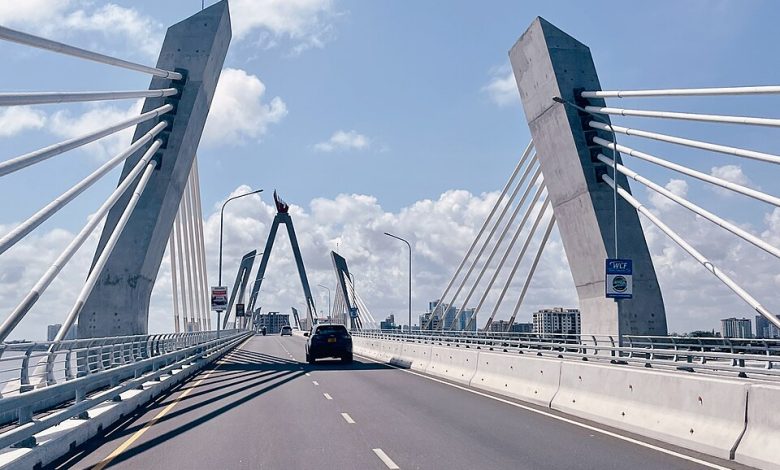
DAR ES SALAAM: NO bridge in Tanzania has managed to sneak itself so comfortably into public affection quite like the good old Selander Bridge in Dar es Salaam.
Long before drone operators discovered they could make ordinary infrastructure look like scenes from a Netflix documentary and before every government brochure began using phrases like “world-class connectivity” with the confidence of a man selling plots in the ocean, Selander had already achieved something much rarer. It became national emotional property. Not through politics. Not through engineering awards.
Not even through ribbon-cutting ceremonies where officials clap like they personally mixed the cement. But through music. The late maestro Marijani Rajabu together with Dar International Band accomplished something no urban planner, colonial administrator or transport engineer could ever have predicted when they immortalised the bridge in the timeless love song Zuena.
Suddenly, a concrete crossing entered Tanzanian folklore with all the elegance of a melody floating through a humid Dar es Salaam evening while somebody nearby argues over change for roasted maize. The genius of Zuena was its simplicity.
The singer receives a terrifying phone call informing him that his beloved Zuena has been involved in a motor accident at Selander Bridge. Panic instantly consumes him. His thoughts spiral wildly. One can picture the entire era perfectly. The landline telephone rings loudly. The man rushes toward the bridge fearing tragedy.
But upon arrival, he discovers Zuena alive, conscious and safe, carrying only minor bruises. The relief inside the song is almost tangible. No melodrama. No revenge. No mysterious uncles appearing to fight over inheritance. No plot twist involving a secret twin from Morogoro. Just human emotion.
Fear, love and gratitude. And perhaps that is precisely why the song survived while hundreds of supposedly “important” songs quietly retired into dusty cassette shelves beside broken VCRs and forgotten wedding photographs.
For years now, Tanzanian Muziki wa Dansi bands have sat around looking deeply concerned while wondering why younger audiences continue drifting toward Bongo Fleva, Afrobeats and Amapiano while many classic dance orchestras struggle to attract Gen Z enthusiasm beyond nostalgic family gatherings and government events where everybody claps politely while secretly checking WhatsApp.
The answer may have been hiding quietly inside Zuena the whole time. People want entertainment. They want storytelling. They want songs that feel alive. Somewhere along the way, too many dance bands stopped behaving like musicians and started behaving like exhausted secondary school guidance counsellors who accidentally wandered onto a stage. Every song became a lecture. One track warns about alcoholism.
Another explains morality. Then comes a song advising married couples. Then another discussing betrayal, corruption, irresponsible parenting, fake friends and occasionally even national economic discipline. Meanwhile, some of the same musicians offering these life lessons were themselves living lives chaotic enough to frighten professional therapists.
The contradiction became unintentionally magnificent and young listeners quietly escaped. And honestly, one cannot blame them. Zuena succeeded because it never attempted to reform society. It simply captured life.
That is what great music often does best. The song humanised a location millions of Tanzanians already recognised. Selander Bridge was not merely mentioned casually. It became emotionally charged.
Every resident of Dar es Salaam instantly understood the anxiety inside the storyline because Selander had long been one of the city’s busiest and most recognisable crossings. Even those who had never crossed it themselves could visualise the scene perfectly. And behind the music itself stood the remarkable history of the bridge.
Constructed in 1929 during British colonial administration in Tanganyika, Selander Bridge was named after John Einar Selander, Tanganyika’s first Director of Public Works. At the time, Dar es Salaam was still relatively compact, clustered around its harbour, railway station and colonial administrative quarter.
The northern side of the Msimbazi Creek felt distant and underdeveloped, accessible mainly through inconvenient routes guaranteed to test both patience and suspension systems. The bridge transformed the geography of the city almost overnight.
ALSO READ: Tanzania plans to construct 1,360 classrooms in efforts to implement the 10-year education policy
Suddenly, Oyster Bay and surrounding northern areas became practically accessible. Over time, these neighbourhoods evolved into some of the city’s most important residential and commercial districts. What had once been a modest colonial crossing slowly evolved into one of Dar es Salaam’s defining arteries.
Following independence under Baba wa Taifa Mwalimu Julius Kambarage Nyerere in 1961, himself a daily user of the bridge on his way to Ikulu from his Msasani home and back, the city expanded rapidly. Population growth surged. Cars multiplied. Roads became busier.
The once-quiet northern corridor connected by Selander transformed into a restless urban spine carrying commuters, diplomats, school buses, daladalas and endless streams of motorists all convinced they had discovered a “shortcut” already known by three million other people.
By the 1970s, the original bridge had become painfully overstretched. Congestion intensified daily, forcing authorities to rethink the crossing entirely. Then came Japan. In 1980, with support from JICA, Selander Bridge underwent major reconstruction, becoming Tanzania’s first road infrastructure project financed by Japan.
The rebuilt four-lane bridge modernised one of Dar es Salaam’s most important transport routes and quietly strengthened a partnership between Tanzania and Japan that continues today. For many residents who grew up during the 1980s and 1990s, Selander became woven naturally into everyday urban life. It was the road toward Coco Beach.
The route to Oyster Bay. The crossing where evening ocean breeze occasionally rewarded motorists trapped inside traffic jams so permanent they practically deserved postal addresses. And what traffic jams they were. Dar es Salaam traffic has always possessed a strangely communal character.
On Selander Bridge, engines overheated together. Drivers sighed together. Passengers collectively accepted fate together. Selander was never merely infrastructure. It became atmosphere. In that sense, Zuena became an accidental archive of Dar es Salaam.
It preserved not merely a bridge, but an era. The age of landline telephones. Crowded roads. Emotional storytelling. And the social dominance of Dar International Band during the golden years of Tanzanian dance music when every uncle believed he could also sing if “given proper opportunity.” Then, decades later, Mr Paul revived it for an entirely different generation. By remixing Zuena with modern Bongo Fleva production, he extended the bridge’s cultural relevance beyond nostalgia.
Younger listeners who barely remembered old Dar es Salaam suddenly encountered Selander Bridge through rhythm and melody rather than history books and exhausted geography teachers. Very few infrastructure projects survive culturally across multiple generations.
Most roads eventually become invisible. People use them without thinking. Flyovers rise. New highways appear. Cities move on. But Selander Bridge somehow remained emotionally recognisable even as Dar es Salaam transformed around it.
By the 2010s, however, the city had once again outgrown the bridge’s capacity. Traffic volumes exploded alongside rapid urban growth, eventually forcing construction of the modern cable-stayed Tanzanite Bridge beside it. Supported by South Korean financing, the futuristic structure quickly became one of Tanzania’s most visually striking landmarks. Today, tourists photograph the Tanzanite Bridge.
Engineers admire it. Government officials proudly reference it in speeches with the excitement of people unveiling a new spaceship. Yet emotionally, somewhere deep within the city’s cultural bloodstream, Selander still owns the soundtrack. Because modern bridges may dominate skylines, but very few ever become songs, and fewer become love stories remembered across generations.
Somewhere in Dar es Salaam tonight, perhaps from an old radio in Kariakoo, a roadside bar in Mwenge or a passing car window drifting through humid evening traffic, Marijani Rajabu’s voice will rise once again above the noise of the city. A worried lover racing toward Selander Bridge. Praying Zuena is alright. Thankfully, she was.