New measures to end sugar, edible oil shortages
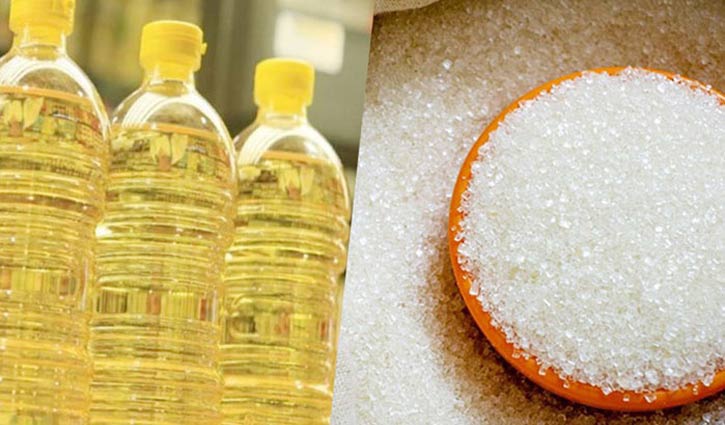
DODOMA: THE government has outlined measures to curb recurring shortages of edible oil and sugar, with a comprehensive production strategy set for implementation in the 2026/27 financial year.
Presenting the budget estimates for his docket before the National Assembly yesterday, Minister for Agriculture, Mr Daniel Chongolo, said the government will complete and roll out the National Edible Oil Strategy aimed at increasing domestic production and reducing dependence on imports.
He said national demand for edible oil stands at about 731,974 tonnes annually, against local production of 305,906 tonnes, leaving a deficit of 426,068 tonnes that forces the country to spend significant foreign exchange on imports.
To close the gap, the ministry will mobilise farmers to increase production of oilseed crops from 2.24 million tonnes in 2024/25 to 2.3 million tonnes in 2026/27. The ministry will also train farmers on good agricultural practices.
As part of broader efforts, the government will establish 48,000 hectares of block farms for palm and sunflower in Kigoma, Morogoro, Singida and Dodoma.
“The ministry will distribute 120 tonnes of improved sunflower seeds through subsidies and supply two million oil palm seedlings to farmers,” he added.
He said the government will further coordinate the supply of quality groundnut seeds (20.1 tonnes) and sesame seeds (100 tonnes).
On sugar production, Mr Chongolo said output is expected to rise significantly as the ministry boosts national sugarcane production from 4.35 million tonnes, which produced 410,979 tonnes of sugar in 2025/26, to 5.5 million tonnes expected to yield 550,000 tonnes in 2026/27.
He said the government will proceed with the establishment of two new sugar factories in Coast and Kigoma regions.
“In Tanga Region, investment arrangements are underway for three factories, one for industrial sugar and two for table sugar that will also supply raw materials for industrial-grade production,” he noted.
To ensure reliable cane seed supply, the Tanzania Agricultural Research Institute (TARI) will establish a 10-acre cane seed farm in Kilosa capable of producing 400 tonnes of seed cane, while another 200 tonnes will come from a fiveacre farm in Mvomero.
The Sugar Board will also prepare investment zones in the Pangani Basin (Korogwe, Muheza, Handeni and Pangani), covering 146,704 hectares, and in the Wembere Basin (Uyui and Igunga), covering 15,218 hectares.
Mr Chongolo requested a total of 1.105tri/- for the ministry’s 2026/27 programmes, with 876.76bn/- allocated for development projects and 229.18bn/- for recurrent expenditure.
ALSO READ: Dar Port Oil Tanks set to end fuel shortages
He said the ministry will deepen collaboration with financial institutions to expand access to affordable agricultural loans.
Through TADB, the government will work with 22 financial institutions using the TADB guarantee fund, unlocking 330bn/- for low-interest agricultural financing.
It will also channel 21.47bn/- in loans through the Agricultural Inputs Trust Fund (AGITF), including credit guarantees and farmer loans.
“Agriculture is a business, and the farmer is an investor. Through the Mali Shambani campaign, the sixth-phase government is transforming agriculture into a productive and profitable sector,” he stressed.
The ministry further aims to increase agricultural exports from 3.54 billion US dollars in 2023/24 to nearly 4 billion US dollars by 2026/27, while opening 15 new export markets.
On food security, he said the National Food Reserve Agency (NFRA) will continue expanding storage infrastructure with a capacity of 165,000 tonnes under projects in Songea, Makambako, Dodoma, Shinyanga and Songwe.
It will also construct new facilities with a capacity of 85,000 tonnes and begin developing additional storage of 65,000 tonnes in Arusha, Sumbawanga, Songea, Makambako, Songwe, Kipawa, Shinyanga and Dodoma.
Upon completion, the expanded infrastructure is expected to significantly boost national food reserves and position Tanzania as a regional food hub.