How stability defines Tanzania’s path
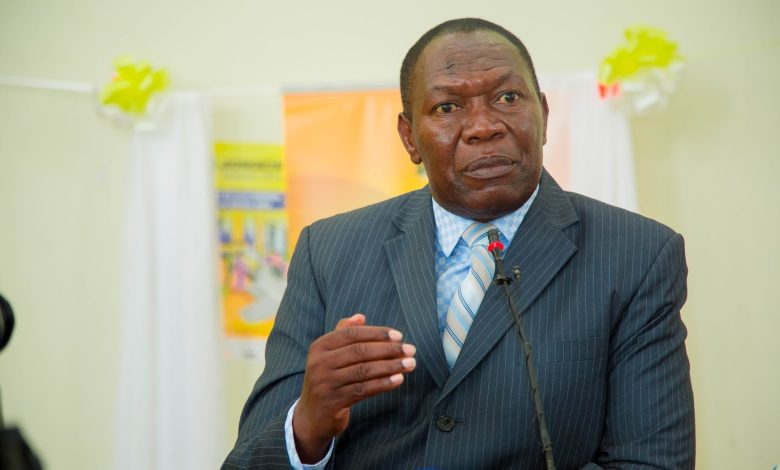
- Mwanri reflects on history, leadership and the enduring role of cohesion in shaping national development
DAR ES SALAAM: IN the evolving landscape of Tanzanian politics, conversations about stability, unity and governance often extend beyond formal institutions into reflective discussions among leaders who have served the nation in different capacities.
For former Tabora Regional Commissioner and Tanzania Cotton Ambassador, Mr Aggrey Mwanri, such reflections are anchored in history, experience and a firm belief that political stability remains the backbone of national development.
Speaking in a wide-ranging conversation with the ‘Daily News’, Mr Mwanri commended the government for its continued efforts to address issues that directly affect the lives of citizens.
He emphasised that peace and stability are not optional elements of governance but essential foundations upon which every aspect of development is built.
“Without stability, no country can meaningfully move forward, no matter how strong its policies or resources may be,” he implied.
For Mwanri, understanding Tanzania’s present political environment requires a deliberate return to history.
He argues that meaningful analysis of national development must begin by acknowledging where the country has come from and the struggles that shaped its identity.
He often recalls the contributions of Julius Kambarage Nyerere and Abeid Amani Karume, whom he credits with laying the foundation of national unity after independence.
According to him, their leadership was not only about liberation but also about constructing a unified political and social identity for Tanzanians.
Looking further back, Mr Mwanri reflects on the colonial era, when Tanzania, then Tanganyika and Zanzibar, was under foreign administration through systems linked to the League of Nations.
During this period, governance structures were designed to serve external interests, rather than the aspirations of the local population.
It was in that environment, he explains, that a unique form of unity emerged, one driven not by prosperity, but by resistance.
This “unity of struggle,” as he describes it, was born out of a shared recognition of a common external authority.
“The people were united because they all understood who the opponent was. That clarity made it easier for them to come together,” he reflected This unity of resistance, he adds, played a critical role in mobilizing citizens towards independence.
The shared objective was clear, to end colonial rule, achieve self-determination and build a society where citizens could access basic services such as education, healthcare, food security, clean water and infrastructure.
However, Mr Mwanri notes that independence brought with it a new and more complex challenge, the need to transform unity from resistance into nation-building.
Following independence, Tanzania transitioned from a colonial administrative system to a sovereign state, adopting its own national symbols, including a flag, anthem and governance structures.
Political parties such as the Tanganyika African National Union and the Afro-Shirazi Party played a central role in shaping this transition.
Eventually, these parties merged to form the Chama Cha Mapinduzi, a move Mwanri describes as a significant step in strengthening national cohesion and consolidating political stability.
With this transformation, Tanzania moved from what he calls “unity of opposition” to “unity of nationhood.”
Unlike the colonial period, this new form of unity was not based on confronting an external enemy, but on building a shared national future.
He said, “this was a unity based on internal development. A unity that required us to focus on building one country with shared goals and responsibilities.”
ALSO READ: Unity is Tanzania’s path to progress – Chijoriga
In this new phase, the nation began to prioritise development, institutional strengthening, and economic growth.
Citizens were no longer united by resistance, but by the shared responsibility of shaping the country’s future. Yet Mwanri cautions that this form of unity also comes with challenges.
Without a common external pressure, societies can sometimes experience internal differences, political, economic, or social, which must be managed carefully to avoid division.
This is where, he argues, the concept of national unity becomes even more important. Unity, in his view, does not mean the absence of disagreement, but the ability to manage differences constructively while keeping national interests at the centre.
He draws comparisons with other countries that underwent similar historical transitions, noting that nations such as Kenya, the United States and the United Kingdom also faced complex nation-building challenges after major political transformations.
In all cases, unity and institutional strength played a central role in development.
At the core of Tanzania’s governance system, Mwanri highlights the importance of the Constitution of the United Republic of Tanzania of 1977, which provides the legal framework for governance, rights and institutional responsibilities.
It establishes structures such as Parliament, the judiciary and local government authorities that ensure representation and accountability.
Beyond institutions, Mwanri also emphasises the importance of political participation through elections.
He describes elections as a democratic mechanism through which citizens choose leaders and influence the direction of national development.
“Elections give citizens the power to decide who should lead them and what ideas should guide the country,” he noted.
He further explains that political competition should not be seen as division, but rather as a healthy democratic process that allows ideas to be tested, refined and improved for the benefit of the nation.
In recent years, Mwanri observes, Tanzania has also witnessed increased efforts to strengthen political dialogue and engagement among leaders.
He points to initiatives led by President Samia Suluhu Hassan, particularly engagements involving political actors across the spectrum following the October 29, 2025 incident, reflect a growing commitment to inclusive governance and national peace, unity and stability.
He said that President Samia has been seen frequently engaging in dialogue with opposition leaders, with the main aim of strengthening national unity, peace and cohesion.
Recently, she has also been seen speaking with all presidential candidates who participated in the general election and this is all a sign of political maturity.
He said, “when leaders sit together after elections, it shows maturity. It shows that we value the country more than differences in political opinion.”
Mr Mwanri also acknowledges the role of legal and constitutional experts such as Judge Othman Chande and his commission, saying, “we must be careful in our discussions and respect the views of others, especially those who have conducted research and in-depth analysis.
Even when someone holds a different opinion, they still have the right to be heard.”
He said that there is an important opportunity that Tanzanians should fully utilise.
He said, “this is a chance to provide opinions, suggestions and contributions on various national issues. Everyone can participate in their own way, regardless of political or social differences.”
Mr Mwanri said that it is important to use the opportunity to present ideas that can help address existing challenges and improve governance systems.
These ideas can be incorporated into reform processes and eventually become part of national decision-making.
He said Tanzania’s political stability is the result of deliberate efforts by leaders, institutions and citizens to prioritize unity over division and peace over conflict.
However, he stresses that this stability must be continuously protected through dialogue, participation and mutual respect.
For Mwanri, the future of Tanzania lies not only in strong institutions, but also in the willingness of its people to engage in constructive political discourse that strengthens, rather than weakens, the fabric of the nation.