Experts urge patience on inquiry report
DAR ES SALAAM: LEGAL, political and social development analysts have urged the public to remain patient as the nation awaits the Commission of Inquiry’s report on the 29 October election incidents, stressing that a careful and thorough process is essential to produce credible findings and meaningful recommendations that ensure justice is served.
Speaking in an exclusive interview with ‘Daily News’, a legal and social development analyst based at a law firm in Dar es Salaam, Mr Zuberi Ahmadi, said awaiting the commission’s findings is not merely a matter of patience, but a fundamental legal requirement known as due process.
He explained that under the Constitution of the United Republic of Tanzania (1977), particularly Article 13, every individual has the right to be heard before judgment is made, a principle known in law as audi alteram partem, meaning “hear the other side as well.”
Mr Ahmadi outlined three key reasons why it is crucial to allow the commission to complete its work. First, he said, is the need to establish the full truth. He noted that the commission has legal powers to summon witnesses and examine documents that are not accessible to ordinary citizens.
He warned that rushed decisions risk producing “judgments based on emotion” rather than “judgments based on facts.” Secondly, he said allowing the process to unfold helps prevent further unrest, as decisions made without proper investigation can fuel resentment and division.
Waiting, he added, gives the nation time to “breathe” while enabling an official body to establish an accurate record. Thirdly, he stressed accountability, describing the commission’s report as a “roadmap for justice.” He explained that without such a report, even where wrongdoing is suspected, it would be difficult to prove cases in court. On public trust in the commission, Mr Ahmadi said it rests on two pillars: competence and legality.
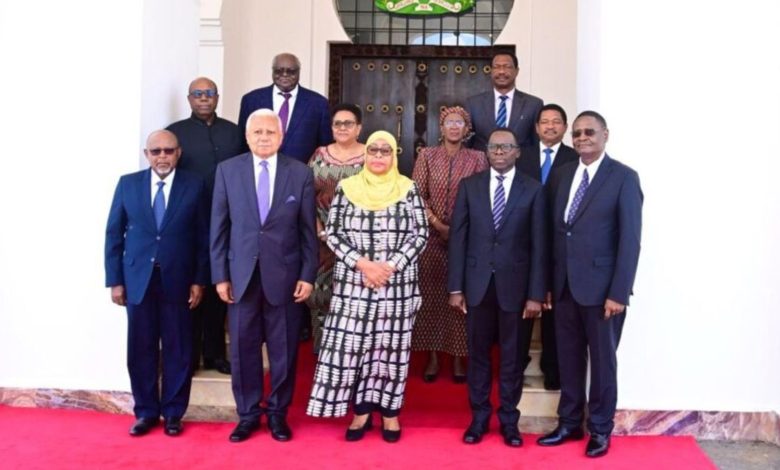
He pointed out that the commission is led by highly experienced legal professionals, including retired Chief Justices Mohamed Chande Othman and Professor Ibrahim Juma, who have dedicated their careers to upholding justice.
He noted that the commission does not operate arbitrarily but it is established under the Commissions of Inquiry Act (Cap 32), which empowers the President to constitute such a body in matters of public interest. As such, he said, the public should have confidence in it as a constitutional mechanism aimed at addressing national grievances through legal means.
Regarding evidentiary standards, Mr Ahmadi explained that the commission is not a criminal court and therefore applies the threshold of “reasonable grounds to believe.”
However, if the report recommends prosecution, the evidence must then meet the stricter judicial standard of “beyond reasonable doubt.” He added that the commission operates under the Evidence Act (Cap 6), meaning that all evidence must be credible, impartial and verifiable.
The report, he stressed, cannot rely solely on hearsay without supporting documentation or eyewitness testimony.
Mr Ahmadi also urged the public to act as “guardians of the report” once it is released, invoking the legal maxim vigilantibus non dormientibus jura subveniunt the law assists those who are vigilant, not those who neglect their rights. He encouraged citizens to read and understand the report calmly, use it to advocate for peaceful reforms where necessary, and allow the government time to implement its recommendations.
ALSO READ: Kabudi calls for discipline, efficiency in public offices
He emphasised that the commission’s report carries far greater legal weight than public speculation, noting that hearsay evidence generally has little value in law.
By contrast, the report is an official public document prepared under legal authority and may be relied upon in Parliament, courts of law, and even international forums. On the need to avoid premature judgment, Mr Ahmadi said this protects two fundamental principles: the presumption of innocence and the doctrine of sub judice, which discourages public discussion that could interfere with ongoing legal processes.
He warned that rushing to judgment risks creating disorder and unjustly damaging reputations, stressing the importance of allowing “the scales of justice” to operate free from social media pressures. According to Mr Ahmadi, the report will also serve as a key instrument of accountability, noting that under Section 21 of the Commissions of Inquiry Act, the President may direct the Director of Public Prosecutions (DPP) to pursue further investigations, initiate prosecutions, or facilitate compensation for victims.
Drawing on international examples, he cited South Africa’s Zondo Commission (2018–2022), which investigated state capture and led to legal action against senior officials and the recovery of public funds. He also referred to Tanzania’s Nyalali Commission (1991), which paved the way for multiparty democracy, and Kenya’s Waki Commission (2008), which informed constitutional and police reforms following post-election violence.
He reiterated that a commission of inquiry is not the end of the process but rather an “engine” that initiates accountability, with expectations that the report will deliver systemic recommendations rather than focus solely on individual blame. Meanwhile, social and political analyst and Senior Lecturer at the Mwalimu Nyerere Memorial Academy (MNMA), Dr Ahmadi Sovu, underscored the importance of waiting for the commission’s findings, noting that it is uniquely positioned to provide comprehensive and reliable answers.
He observed that information circulating among the public is often distorted, whereas the commission is able to verify facts through structured inquiry. Dr Sovu added that the commission serves as a representative body capable of gathering views from diverse groups across the country, something individuals cannot achieve on their own.
Supporting Dr Sovu’s sentiments, Social and political analyst based in Mwanza Yonah Mapury expressed confidence that the report will usher in a new national direction by strengthening peace, unity and cohesion among Tanzanians. However, he cautioned that failure to hold those responsible accountable in line with the findings could generate underlying public frustration, underscoring the need for impartial application of the law.