Shaping Global Legal Futures: Lessons from China-Africa BRI collaboration
DAR ES SALAAM: “IT doesn’t matter whether a cat is black or white, as long as it catches mice,” Deng Xiaoping July 1962 and that is exactly what I membered when the Airbus A350 XWB began taxiing from Addis Ababa, it marked a momentous first-hand experience of travelling from Dar es Salaam to Beijing, transiting through the heart of Africa.
As an African participant, I had studied China on many fronts, guided first and foremost by my all-time favourite teacher, Msemembo S.B, on history paper three, topic: “Rise of the People’s Republic of China.”
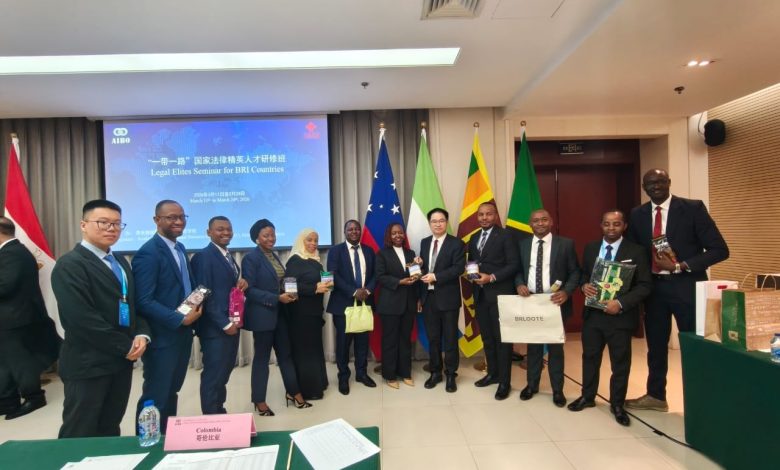
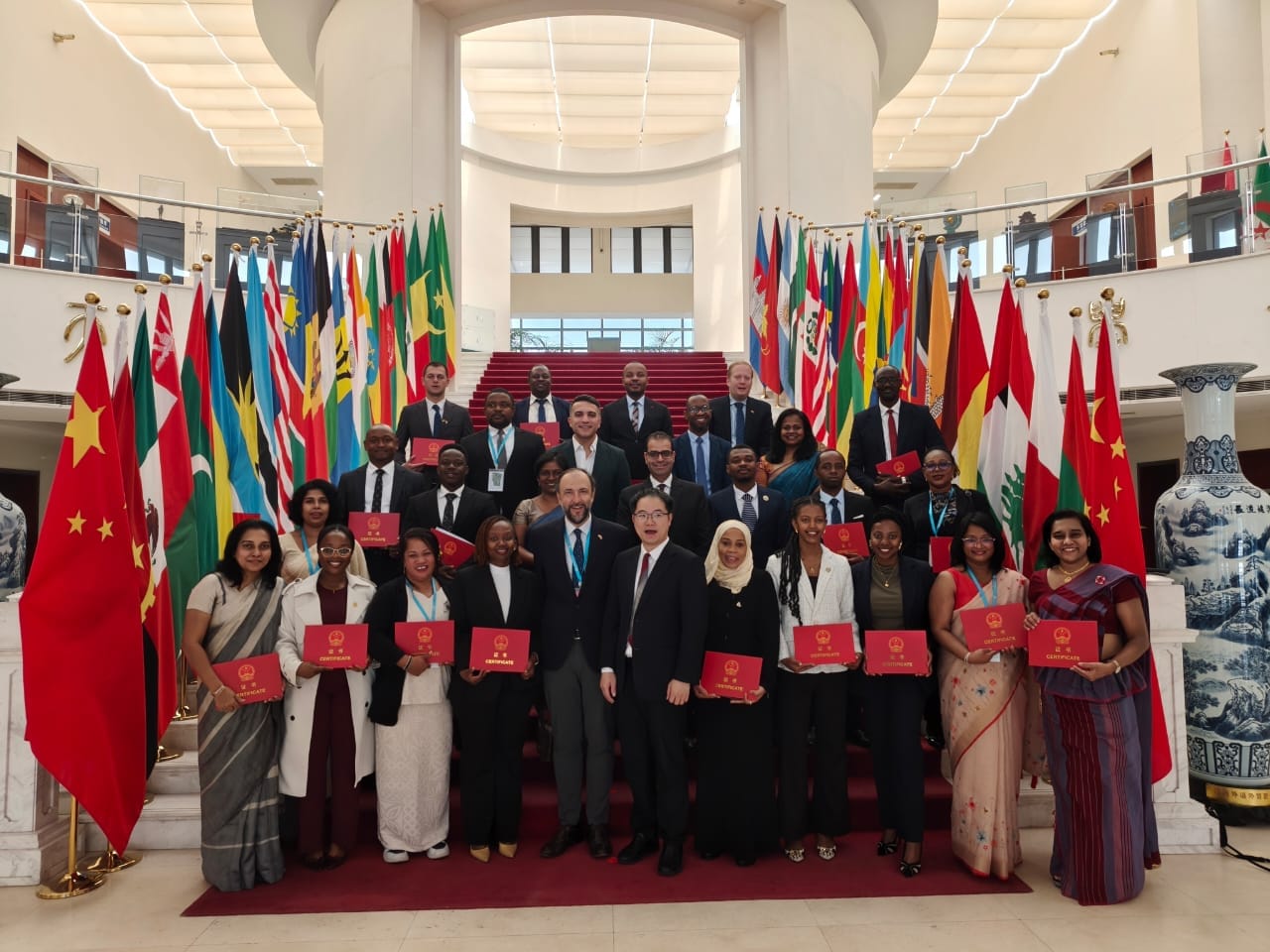
Unlike many Tanzanians who travel to China the world’s second-largest economy for commercial purposes, I was journeying for official reasons: attending a programme organised by the Academy for International Business Officials (AIBO), under the coordination of the Ministry of Commerce of the People’s Republic of China.
The symposium, titled “Legal Elite Talent Seminar for Professionals from BRI Countries,” brought me to Beijing, a capital that has long inspired the imagination of historians, diplomats, presidents and academics.
I wanted to witness the Msemembo prophecy come alive and to meet professionals from across the globe, particularly Chinese colleagues.
Delegates came from Samoa, Sri Lanka, Sierra Leone, Colombia, Egypt, the African Union and, of course, the United Republic of Tanzania, including officials from both Zanzibar and the mainland.
China through the eyes of a lawyer
One who holds the microphone tells the story and controls the narrative. We have to build our own microphone.” Professor HE Wengping AIBO For me, China is a nation of profound resilience, strength, and innovation or what lawyers would term in Latin, “Concordia per progressionem”, meaning harmony through progress.
The Academy for International Business Officials serves as a vital bridge for institutional connection, knowledge sharing and learning about China.
Professor He Wengping, pronounced “Her” in Chinese, a senior research fellow, reminded us: “One who holds the microphone tells the story and controls the narrative. We have to build our own microphone.”
She emphasised the importance of building four pillars in political orientation, the Four Confidences: Confidence in the development path, confidence in theory, confidence in the system and confidence in national culture.
Professor He’s approach was not purely theoretical; she lived her words. Most of her lecture was delivered in Chinese, with simultaneous English translation for international participants.
Later, she spoke fluently in English, ready for live interviews on CGTN. She reminded us that in the early 1970s, China was among the poorest nations globally, even poorer than Malawi. Life expectancy averaged 45 years and bicycles were luxury items.
By 1978, per capita GDP was only 158 US dollars. Yet, the nation embarked on a resolute anti-poverty journey that transformed its economy and society.
Legal Elite Seminar: Beyond law to governance and leadership
“The people and the people alone, are the motive force in the making of world history” Chairman Mao Zedong.
The Legal Elite Seminar was essential for the Global South, going beyond discussions of legal systems to explore governance, leadership and vision.
Professor He (pronounced her) highlighted a central challenge; not merely participation in global affairs, but authorship of one’s own narrative.
Too often, global discourse has been shaped elsewhere, framing development, governance and identity through external lenses.
The Belt and Road Initiative is not just an infrastructural or economic programme; it is profoundly intellectual and strategic.
It provides a platform for Global South countries to articulate shared visions rooted in their histories, priorities and aspirations.
Building “our own microphone” means investing in thought leadership, media ecosystems, academic exchange and policy coordination that reflect indigenous perspectives.
It is about moving from being subjects of global narratives to becoming confident, coherent and collectively heard authors. Understanding Chinese Democracy: “No one size fits all” Dr Luyao Che Associate professor CUPL Understanding democracy today requires moving beyond rigid definitions.
Democracy is not a fixed formula, but a contested idea shaped by history, power and perspective.
Western nations have long promoted a universal model, yet in a world unsettled by the Russo-Ukrainian War and rising tensions around Iran, those certainties are increasingly fragile, therefore in true democracy, no one size fits all.
The ancient Silk Road connected civilisations through trade. Today’ s BRI connects them through law not by making everyone the same, but by creating frameworks where different systems can work together.
China’s system, often oversimplified as single-party rule, reflects a unique political logic. Alongside the ruling Communist Party of China (CPC), eight other recognised parties participate in a consultative framework distinct from, but not detached from, broader democratic theory.
In the U.S, political dominance rests with the Democratic and Republican parties despite the existence of others.
The key question is not who is democratic, but who defines democracy and whether, in a multipolar world, that definition can remain monopolised.
Understanding Chinese Democracy: “No one size fits all” Dr Luyao Che Associate professor CUPL
Understanding democracy today requires moving beyond rigid definitions. Democracy is not a fixed formula, but a contested idea shaped by history, power and perspective.
Western nations have long promoted a universal model, yet in a world unsettled by the Russo-Ukrainian War and rising tensions around Iran, those certainties are increasingly fragile, therefore in true democracy, no one size fits all.
The ancient Silk Road connected civilisations through trade. Today’ s BRI connects them through law not by making everyone the same, but by creating frameworks where different systems can work together.
China’s system, often oversimplified as single-party rule, reflects a unique political logic. Alongside the ruling Communist Party of China (CPC), eight other recognised parties participate in a consultative framework distinct from, but not detached from, broader democratic theory.
In the U.S, political dominance rests with the Democratic and Republican parties despite the existence of others. The key question is not who is democratic, but who defines democracy and whether, in a multipolar world, that definition can remain monopolised.
President Xi Jinping thought on the rule of law and development Landing in Wuhan, one realises the remarkable transformation under President Xi Jinping a leader whose policies have lifted millions out of poverty and inspired Global South partners.
Wuhan, globally recognised during the COVID-19 pandemic, stands as a dynamic metropolis where tradition meets innovation at the heart of the Yangtze River Economic Belt.
The positive impact that has strongly benefited the global south BRI partners are beyond modern infrastructure projects, in Wuhan I gained some perspectives that the mega city stands as a powerful symbol of modern China’s resilience and intellectual vitality, including the Hubei University of technology where I was honoured to give remarks on behalf of all participating countries six countries.
During my participation in the BRI legal seminar, I was particularly inspired by the academic excellence of both Hubei University of Technology and Wuhan University School of Law, whose rigorous scholarship and global outlook reflect China’s growing leadership in international legal discourse.
In the era of Xi Jinping, Wuhan embodies the spirit of the “China Dream” a vision of national rejuvenation driven by openness, cooperation and shared prosperity under initiatives like the Belt and Road.
Xi Jinping’s excellence in leadership not only in the capabilities of his leadership, but his strategic vision which pushes the development of global partners to enjoy the benefits of a new strong multilateral order.
The belt and road initiatives will eventually be the center of both financial and development of global market patterns in the next three to four decades, but being in China you realise the Xi Jinping thought in development is not only an international imperative thought, but a domestic development vision for China, including in Asia especially at times when the global economy is either weak or undergoing tumultuous events including oil prices and unpredictable markets.
This was also evident in Beijing during shopping activities, the renminbi (RMB), has very powerful purchasing power, with about 3000 RMB it is possible to get quality standard electronics, like 4 smart watches, one mobile phone, one tablet and lots of clothes for a home shopper like me.
Simply called the people’s currency but Chinese nationals in Beijing or simply referenced as the yuan by we international visitors, at the end what benefits does the symposium bring to BRI countries especially the United Republic of Tanzania.
Benefits of attending AIBO Symposium for legal elite talents seminar for BRI countries Undoubtedly any scholarship exchange benefits both countries.
It can strengthen and deepen cooperation with China on a range of issues.
As a country we can obtain more investment and strategic projects both in roads and railways which are in demand as the country is growing.
As an economic powerhouse of the global south China will enhance the global south right to speak up in global international financial sectors.
Before setting foot here, our understanding was shaped by secondhand narratives pages of books, headlines and distant portrayals that only hinted at reality.
But presence in Beijing, changed everything. We learned negotiations, consultation skills, mediation in international commercial dispute resolutions and understanding different legal systems of the participating countries, particularly the China legal system and civil legal system how it works in China.
People to people diplomacy, connections and leadership foundations
To walk the streets, to step inside institutions, to exchange words and laughter with local people and to share meals across cultures these moments dissolve assumptions and replace them with lived truth.
It is in these human encounters, not in any lecture hall, that perception is truly reshaped and a deeper, more enduring connection to the world is forged.
It was a China beyond the SB Msemembo topic, rise of the people’s Republic of China, it was a China beyond, the image pronounced by other microphones, it was a China that Jullius Kambarage Nyerere, Salim Ahmed Salim, Dr Jakaya Mrisho Kikwete, Dr John Pombe Magufuli and her excellency President Samia Suluhu Hassan believed, a belief in strong bilateral relations through thick and thin.
It is time now to create forums and platforms that are essential to bring in Chinese technology and factories and not stand as a mere beneficiary of the great Chinese manufacturing industry.
I hope our leaders through vision and negotiations shall be able to send Tanzania’s best and brightest to China to learn what it takes to build industrial knowhow and new innovative skills at home.
In the next era of SinoTanzania Pan-Africanist vision
One of the deepest memories I will cherish is the spirit of the Chinese people. My presence at AIBO in Beijing and in Wuhan allowed me to interact with people of all types, from warm friends at convenient stores, professors, taxi drivers, chefs, shopkeepers, scientists at Hubei University, to the barber who cut my hair.
Chinese people were friendly, disciplined and grounded in dignity and integrity. From a Pan-Africanist perspective, the evolving partnership between China and Tanzania reflects more than strategic cooperation.
It echoes a shared aspiration for dignity, self-reliance and collective progress. The noble spirit of the Chinese people, humility, discipline and genuine kindness, gives human depth to this relationship, turning diplomacy into a lived experience of solidarity.
This solidarity, spanning from the Mao–Nyerere era to Xi Jinping and President Samia, creates new meaning in diplomacy for the benefit of the people of both countries, especially Tanzanian and Chinese citizens, for a better modern world.
Further Pan-African reflections
From the lens of Pan-Africanism, China’s engagement with Tanzania symbolises a model of partnership grounded in mutual respect and shared vision.
It affirms that African nations can pursue development without dependency or compromise of dignity, leveraging historical solidarity with China to accelerate infrastructural, educational and legal growth
The warmth, discipline and civility of the Chinese people reinforce a moral dimension to this partnership, reminding us that international relations are not only transactions they are human experiences that cultivate trust, respect and collective ambition across continents.
Foundations of a harmonious tomorrow The future of the Belt and Road will not be measured solely in kilometres of railways or billions in trade, but in the strength of legal systems, the clarity of shared visions and the courage of nations to define their own destinies.
The true infrastructure of tomorrow is not only steel and concrete it is trust, law and mutual understanding.
If the Global South is to rise not just as a participant but as an architect of the international order, forums like these are not mere exchanges; they are foundations of a new era.
In that emerging order, the voices of Africa and China, speaking not past each other but with each other, will shape global norms, redefine development and cement a century of cooperation grounded in dignity, law and shared prosperity.
For the Global South, this is not just opportunity it is authorship, empowerment and legacy it is the new cause of history in the changing multilateral order, for a better modern world.