Youth ministry puts Tanzania’s biggest workforce at the heart
TANZANIA: YOUNG people are set to play a defining role in delivering Dira 2050 ambitions, with the government rolling out programmes designed to transform the country’s demographic advantage into a powerful engine of growth, innovation and national development.
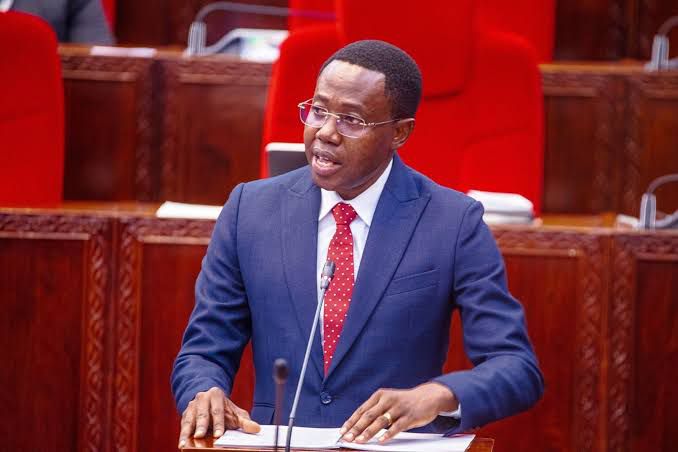
The strategy, outlined in the ministry’s 2026/27 budget speech presented to the National Assembly by the Minister of State in the President’s Office – Youth Development, Dr Joel Arthur Nanauka, places youth employment, skills development, entrepreneurship and civic participation at the heart of the country’s long-term transformation agenda.
The programmes are closely aligned with Dira 2050 and the Fourth FiveYear Development Plan (2026/27–2030/31), both of which identify productivity, innovation and job creation as key pillars of inclusive growth.
Dr Nanauka said the creation of the ministry reflects President Dr Samia Suluhu Hassan’s commitment to ensuring young people play a central role in shaping the nation’s future.
“This demonstrates the government’s genuine commitment to recognising the position and major contribution of young people in national development,” he told Parliament. The emphasis reflects the important role young people are expected to play in the country’s future development.
Dira 2050 identifies Tanzania’s youthful population as one of the nation’s greatest assets and a key force in driving economic and social transformation.
According to the 2022 Population and Housing Census, Mainland Tanzania has 20.6 million people aged between 15 and 35 years, equivalent to 34.4 per cent of the population.
Young people also account for more than 55 per cent of the labour force, according to the 2020/21 Labour Force Survey.
“These statistics clearly show that young people form the largest part of the workforce participating in economic activities in the country,” Dr Nanauka said.
Dira 2050 charts an ambitious path towards a prosperous, inclusive and self-reliant nation, underpinned by a one trillion-dollar economy and a per capita income of 7,000 US dollars by 2050.
Achieving these aspirations will depend significantly on building a skilled, innovative and productive generation capable of competing in a rapidly evolving global economy.
The government acknowledges that challenges remain, including unemployment, skills gaps and access to finance and has introduced a range of initiatives aimed at addressing them.
Youth unemployment currently stands at 12.2 per cent, while unemployment among young women is 16.1 per cent compared to 8.1 per cent among men.
The ministry also highlighted the need to strengthen skills development. Only 3.2 per cent of the workforce possesses high-level skills, compared to the 12 per cent benchmark commonly associated with middle-income economies.
Dira 2050 places strong emphasis on aligning education and training with labour market needs, while expanding access to market-relevant skills that will prepare young people for future opportunities.
Other areas receiving attention include access to finance, entrepreneurship, mentorship, mental health support and responsible use of digital platforms.
One of the ministry’s major interventions has been expanding opportunities for youth economic empowerment through affordable financing and entrepreneurship support.
During 2025/26, the Youth Development Fund provided equipment loans worth 824.4m/- to 126 beneficiaries in Mwanza, Mtwara, Mbeya, Rukwa and Arusha regions. The support was aimed at enabling young people to establish businesses and create employment opportunities.
The ministry has also introduced reforms to improve access to financing. Both groups and individuals can now apply for loans, grace periods have been extended and interest rates reduced to five per cent. To strengthen accountability and sustainability, the programme has shifted from cash disbursements to equipment financing, while partnerships with financial institutions have expanded entrepreneurship training for beneficiaries.
A major milestone came with the launch of a 200bn/- fund linked to President Samia’s 2025 election commitment to improve access to capital for young entrepreneurs, small businesses and start-ups.
The ministry is coordinating implementation across a wide range of sectors, including agriculture, mining, livestock, fisheries, industry, arts, education, ICT and finance. The initiative supports Dira 2050’s broader objective of building a vibrant private sector capable of generating employment, encouraging innovation and attracting investment.
By April 2026, the ministry had received more than 30,000 loan applications from youth projects across the country. The first phase of implementation released 48.6bn/- to projects in agriculture, livestock, fisheries, trade, manufacturing, innovation and digital services, benefiting about 10,000 young people.
A second phase has already allocated a further 2.5bn/- to support 36 projects expected to create more than 4,400 jobs. Young people are also benefiting from the four per cent local government youth loan allocation. During 2025/26, some 5,199 youth groups received loans worth approximately 52.1bn/-.
Skills development remains another major priority. Working with the Prime Minister’s Office and the Ministry of Education through Vocational Education and Training Authority (VETA), the government expanded apprenticeship, internship and specialised training programmes during the year.
More than 5,700 young people completed apprenticeship programmes, while thousands more received internship and specialised training designed to improve employability and competitiveness.
The focus is consistent with Dira 2050’s commitment to building a highly skilled workforce capable of supporting industrialisation, innovation and economic transformation.
Particular emphasis is being placed on science, technology, engineering and mathematics, digital literacy, research and entrepreneurship. The government is also reviving youth development centres at Sasanda, Ilonga and Marangu.
Once rehabilitated, the centres are expected to enrol around 1,200 young people annually in agriculture, ICT and entrepreneurship programmes. Youth participation in national development is another important pillar of the ministry’s strategy.
Consultations conducted in six regions reached more than 8,000 young people and generated valuable feedback on issues affecting youth development. Officials say the consultations have helped shape programmes aimed at strengthening civic education, patriotism and participation in national development.
The government has also expanded youth engagement platforms across the country. Events held in six regions attracted 7,500 participants and more than 20 million online viewers through social media platforms.
At the same time, customer service centres established by the ministry had received more than 1,600 suggestions, ideas and proposals from young people by April 2026.
Looking ahead, the ministry plans to strengthen youth entrepreneurship, expand participation in social, economic and political affairs and enhance youth welfare services. Planned initiatives include a National Youth Coordination System, a national youth database and a review of the National Youth Council Act.
The government also intends to develop a National Youth Peace and Security Strategy and expand youth participation in regional and international peacebuilding initiatives. Mental health is also receiving increasing attention.
Plans are under way to develop a national youth welfare programme, establish psychological support guidelines and strengthen psychosocial support services.
The ministry further plans to establish innovation centres known as VIJANA Hubs to support business incubation, technology transfer and market access for young entrepreneurs.
ALSO READ: Building one transport system for Dira 2050
The hubs align with Dira 2050’s emphasis on science, technology, research and digital transformation as drivers of future growth and competitiveness. Meanwhile, authorities are conducting a feasibility study on establishing a dedicated Youth Bank to provide financing tailored to the needs of young entrepreneurs.
“The government sees young people not as a liability, but as a major asset for national development and implementation of Vision 2050,” Mr Nanauka told Parliament.
“To move our nation forward, we need the innovation of young people, the ideas of young people and the energy of young people.” For 2026/27, the President’s Office – Youth Development is seeking parliamentary approval for a budget of 35.95bn/-, including 30.1bn/- for recurrent expenditure and 5.85bn/- for development projects.
As Tanzania embarks on the implementation of Dira 2050, the government views investment in youth empowerment, skills development, entrepreneurship and innovation as essential to building a competitive, inclusive and industrialised economy.
With the population expected to exceed 118 million by 2050, young people are set to play a defining role in shaping the country’s future prosperity.