Tanzania calls on Africa to adopt curriculum that keeps pace with scientific advances, labour-market demands
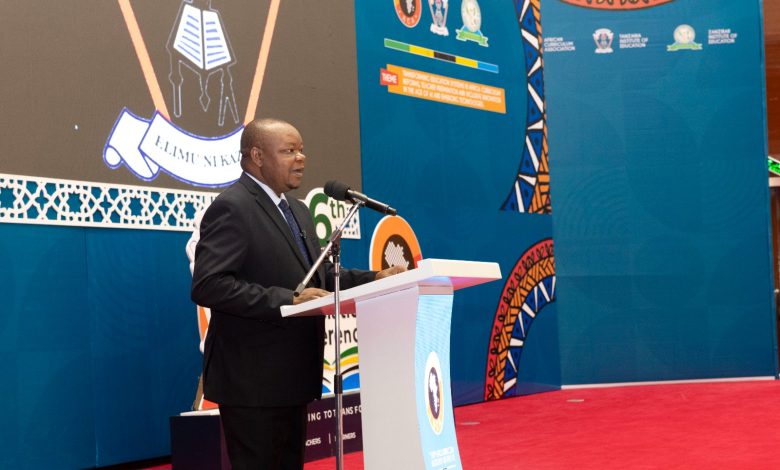
DAR ES SALAAM: TANZANIA has called on African countries to strengthen cooperation in integrating technology and innovation into education to ensure curricula keep pace with scientific advances, changing labour-market demands and the needs of future generations.
Minister of State in the Prime Minister’s Office responsible for Regional Administration and Local Government (PO-RALG), Prof Riziki Shemdoe said curriculum transformation is essential in equipping learners with skills to solve problems, innovate, collaborate and use technology effectively.
Prof Shemdoe made the remarks yesterday in Dar es Salaam while opening the sixth African Curriculum Association Conference, which brought together policymakers, curriculum experts, lecturers, researchers, teachers, educational institutions, development partners and other stakeholders from 22 African countries.
“Although each country has its own context and priorities, many of the challenges we face are shared. We need curricula that respond to technological changes, teachers who can apply innovative teaching approaches, assessments that measure competence rather than merely report information, and policies that enable innovation, inclusion and the safe use of technology,” Prof Shemdoe said.
He said Tanzania’s curriculum reforms are being implemented in line with the country’s National Development Vision 2050, the African Union Agenda 2063 and Sustainable Development Goal Four, which calls for inclusive, equitable and quality education for all.
“Education transformation cannot be achieved without curriculum reform, and curriculum reform cannot succeed without a well-prepared workforce, appropriate technology, inclusion of all learners and strong collaboration,” he said.
Prof Shemdoe said the ongoing reforms are competency-based and aimed at developing learners capable of solving problems, innovating, working with others, using technology effectively and pursuing self-employment opportunities.
He said the government is continuing to develop, review and improve curricula, teaching and learning materials, teacher guides and other educational resources, while strengthening mechanisms for monitoring implementation.
Prof Shemdoe challenged participants to share not only successes but also challenges and lessons from curriculum implementation, saying such exchanges could help build long-term partnerships among governments, universities, research institutions, the private sector and development partners.
Deputy Principal Secretary in Zanzibar’s Ministry of Education and Vocational Training, Ms Mwanakhamis Adam Ameir said Zanzibar and mainland Tanzania are strengthening cooperation in education reforms, particularly in curriculum development, to ensure learners acquire the knowledge and skills needed to meet changing national and global demands.
Ms Ameir said the two sides are working through their respective education institutions, including the Tanzania Institute of Education TIE) and Zanzibar Institute of Education, in developing and implementing curricula and other education interventions.
She said the cooperation reflected a shared goal of developing citizens with relevant knowledge and skills, while calling for continued exchange of experiences among African countries to strengthen education systems.
Tanzania Institute of Education (TIE) Director General, Dr Aneth Komba, said the conference brought together curriculum institutions from across Africa to discuss key issues and strengthen the development of relevant, responsive and future-focused curricula for the continent.
She said a major focus is developing African curricula that reflect the continent’s realities, history, values and aspirations.
“For many years, African education systems largely adopted curricula inherited from colonial systems. We now have an opportunity to develop curricula that nurture patriotic, confident Africans who are proud of their identity, uphold strong values and understand their role in shaping Africa’s future,” Dr Komba said.
She said the conference is expected to produce three key outcomes including the Dar es Salaam Declaration on African curricula, a guide for curriculum developers across the continent and recommendations to strengthen curriculum development and implementation.
Dr Komba said the conference will also include a school visit to showcase Tanzania’s progress in implementing the improved and inclusive curriculum.
UNICEF Representative in Tanzania, Ms Elke Wisch said artificial intelligence and other technologies should be used to make education more inclusive and effective rather than replace teachers.
Ms Wisch said technology could support teachers to personalise learning and make educational materials more accessible to children with disabilities through tools such as audio, text-to-speech, Tanzanian Sign Language and adaptable digital content.
She said UNICEF is working with TIE to convert national textbooks into accessible digital textbooks, with AI helping to accelerate the process while human expertise remains essential in developing and validating the materials.
“Curriculum specialists, teachers, persons with disabilities and learners themselves remain essential to co-creating and validating the materials and ensuring they are accurate, accessible and appropriate,” she said.
Ms Wisch said the success of education technology should ultimately be measured by whether children, including those in remote schools and those with disabilities, could access quality curriculum and learning opportunities on an equal basis.