World Bank leaders reflect on Tanzania’s development journey, future opportunities

DAR ES SALAAM: ON May 18th, this year, President Samia Suluhu Hassan, received the outgoing World Bank Country Director, Mr Nathan Belete, at State House in Dar es Salaam, where he paid a farewell call on the president and introduced his successor, Mr Firas Raad.
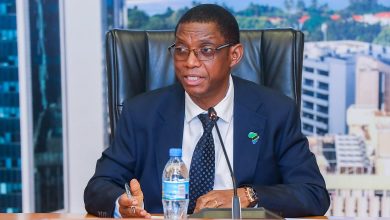
Following their discussions, the outgoing Director for Tanzania, Malawi, Zambia and Zimbabwe, who has since been promoted to serve as the World Bank’s Regional Programmes Director for Africa and Mr Raad reflected on Tanzania’s development journey, its future prospects and the continued partnership between the country and the Bank.
In the following interview, Mr Belete shares his experiences, key lessons and perspectives on Tanzania’s potential going forward, while Mr Raad outlines his expectations and priority areas as he begins his tour of duty.
Questions for outgoing World Bank Director Mr Nathan Beleke
• As you conclude your four-year tenure as World Bank Country Director for Tanzania, which achievements and milestones stand out most to you as you transition into your new continental role for Africa?
I’m honored to have had the opportunity to work in beautiful Tanzania with the beautiful people of Tanzania, both in mainland and in Zanzibar. It’s been one of the highlights of my life. I’m very proud of the work that we have done with the government, with the people and all stakeholders in Tanzania. We have a very large programme in Tanzania that covers almost all the sectors.
Obviously, the sectors where we have placed primary focus over my tenure has been in the human development sectors, mainly in education, health, social protection. Those programmes have advanced really well. We’re very proud of the engagement on the reforms in the health sector, universal health insurance, on education and the reform into bringing into the different curriculum, improving the curriculum at primary and secondary and the establishment of the emphasis on vocational education curriculum and development.
I’m also quite happy about many of the reforms that have been undertaken in the infrastructure spaces, notably in energy at the top. The investments, what we’ve seen in energy access rates over the last several years has been very profound. Likewise, what we’ve seen in rural water supply and sanitation and we hope that these will continue to expand.
• As Tanzania prepares to begin implementing Vision 2050 in July 2026, how can the World Bank support efforts to position youth and the private sector as central drivers of that transformation agenda?
So, I think the Tanzania Vision 2050 is an excellent opportunity and the government’s focus on youth, jobs and private capital is central to the achievement of the Tanzania Vision 2050.
And we, from our side, think that this is an important opportunity to see how to draw in more private capital to support the large-scale infrastructure visions of the country, such as the Central Corridor, the SGR, the development of the port or the different ports.
We believe that all of this is very possible and we believe that it’s very possible because Tanzania has one of the most stable macroeconomic fundamentals in the continent, which can be a good basis for which private sector can come in and play.
ALSO READ: EAC strengthen preparedness for Ebola outbreak in DRC
And so, for this reason, the continued reforms on the business environment are critical. I think that a lot has happened, but a lot more can be done to ease support for private sector coming in and invest.
I think the natural resources that Tanzania has makes it uniquely positioned to really not just serve the economic growth of Tanzania, but also the sub-region and the region as a whole. And the connectivity that Tanzania can provide to its neighbours, its eight countries that border it, is a huge asset to be built on.
And so, I think that this is really fundamental. I think also the fact that we’re thinking about the importance of youth and the role that youth play, this is a primary objective of the World Bank in Africa and the creation of jobs for youth.
So, I think these economic corridors can provide a platform by which jobs can be created and the curriculum reform on vocational training that Tanzania has put in place will train and provide better job opportunities and training for the youth of this country, which is absolutely fundamental for the stability of Tanzania and also the stability of the continent.
• Beyond its natural resources and macroeconomic stability, what other qualities or strengths distinguish Tanzania within the region?
When you look historically at the fundamentals of macroeconomic management in the continent, Tanzania has positioned itself as one of the leaders. It’s got stability. It’s very diligent on debt management. It’s very prudent on spending. But more can be done and more is being done.
I can see in the discussions that we’ve had with the financing from the World Bank, how diligently the debt department is looking at how best to utilise its resources. And now the emphasis on moving away from public sector-funded programmes to private sector-funded programmes, I think, is fundamental.
I think the continued effort on this, on ensuring the governance of projects, both public sector and private sector projects, is fundamental and we appreciate the fact that there’s an effort towards looking into this.
• What key lessons from your experience working in Tanzania will you carry with you into your new leadership role in Africa?
So, I think Tanzania has shown me that public sector can function when it commits to function. A lot of times we talk about how implementation is a real challenge in Africa, and so in Tanzania. We have seen our projects in certain sectors not performing, but we have seen in other sectors and in other ministries, significant performance.
What I have witnessed in the energy sector in Tanzania, what I’ve seen in rural water supply and sanitation, is quite impressive. Tanzania has shown that you can implement in critical sectors to deliver to the citizens of the country.
And I would hope that this implementation speed that can be done when there’s the right political commitment, operational commitment and the stakeholders and communities in coordination. I think this is one of the greatest lessons that I can take and hope that Tanzania continues across all the ministries to enhance implementation performance.
• In your view, where does Tanzania hold the greatest opportunity to accelerate its development gains and sustain long-term inclusive growth?
So, a few areas that I think continued focus and attention needs to be placed at is, number one, there needs to be much more diligence in engaging citizens in the design and implementation of programmes. There needs to be greater transparency and efficiency in the way private sector is engaged.
And finally, there needs to be continued effort to advance the issues of governance across the board in all sectors, to ensure that the citizens of the country and their interests are well protected and advanced.
The incoming World Bank Director Mr Firas Raad
• As the incoming World Bank Country Director for Tanzania, what priorities and opportunities do you see shaping the next phase of the Bank’s partnership with the country?
Today, we had the honour of visiting with President Samia Suluhu Hassan and discussing our expectations of our engagement going forward.
And, I expressed my own personal view on the high economic growth rates in Tanzania and the macroeconomic stability and these two factors really being foundational for what we can see happening on the private sector side.
And so, I think these are two fundamental areas that we will continue to work on. I think for us going forward and this is something we expressed to Her Excellency and the government officials, that the growth and jobs agenda is something very important.
And, I think to really get at poverty alleviation, you really need to promote not only growth, but the jobs agenda. And that will help us then tackle the goal of reducing poverty and also raising living standards for all Tanzanians. But what has to be achieved to do that, you really need to focus on foundational infrastructure, both human infrastructure and physical infrastructure. So, this is education, social protection and health, but it’s also energy, transport and so on. And I think that’s a very important pillar.
The second pillar is enabling the business environment and this is something that Tanzania has been working on and we hope to continue to support the government in the mainland, but also in Zanzibar, to promote an enabling environment that will attract the investment necessary to continue pushing the growth rates forward.
And, then lastly is something that the outgoing division director focused on, too and that’s leveraging private capital. We need to do more to support Tanzania to really attract private capital to invest in critical areas that will transform the economy.
As you know, public money now is diminishing in terms of its overall availability and volume and that’s why it’s essential for private capital to come in and complement what public finance can do.
So, our expectations are that we continue working closely with the government of Tanzania to grow the engagement, to deepen it, to really focus on this people-cantered approach that we have at the moment. And I look forward to doing that in my new role as division director for not only Tanzania, but also Malawi, Zimbabwe and Zambia.
• How can the World Bank support Tanzania and the wider region in strengthening human capital development and equipping young people with the skills and capabilities needed for the future economy?
Well, as you know, I think education is a very important sector. Probably it is one sector in which investments really then yield the kind of results that you want, but only over the medium to long term. So, you really need to invest now to see results in five to seven years in terms of learning outcomes.
So, the World Bank Group as a whole invests a lot in the human development sector, so that covers education, social protection and health. And if you remember, only a few years ago, Tanzania was host to the Human Capital Summit, where a spotlight was shone on this sector and what can be achieved.
I think still in many countries on the continent, the gaps are wide, but with investments in education, in health and in social protection, we can start to narrow that gap. And it’s really a question of also the skills that are needed for the labour force of the future.
And we will not be able to help the countries grow their economies, tackle poverty, raise living standards, without improving the learning outcomes and the skills of their workforce. So, this is something that we are hoping that we can support the government of Tanzania and other governments in the region as well.
• And, what should be prioritised in the short term?
In the short term, well, we can invest in healthcare for sure, in social protection, because you want to make sure that your human capital is protected. And as you know, many times in countries in this continent, they do experience external shocks, whether it’s climate or external economic shocks, as we see now at the moment flowing from the conflict in the Middle East. Countries on the continent are suffering.
So, making sure that these economies are resilient and the households also within the countries are resilient. And they can only be resilient if they’re supported through modern social protection systems and if they have access to quality health services. And in that respect, I think we are proud that we have supported the government of Tanzania in these areas.