WOMEN’S LEADERSHIP: Samia, Kazibwe set pace

DAR ES SALAAM: PRESIDENT Dr Samia Suluhu Hassan and Uganda’s former Vice-President Dr Speciosa Kazibwe have agreed on the need to strengthen mentorship among women leaders and expand women’s participation in leadership and decision-making across Africa.
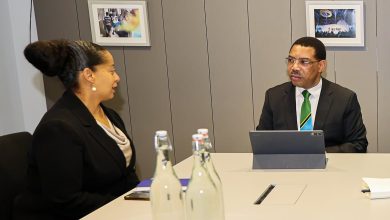
The agreement emerged during talks held at State House in Dar es Salaam yesterday, where the two leaders discussed the importance of solidarity among women leaders and creating opportunities for younger generations to take up leadership roles.
According to a statement released by the Directorate of Presidential Communications, the two leaders also exchanged views on how women leaders can play a greater role in decision-making, while promoting sustainable social development.
The discussions highlighted the need to nurture future women leaders through mentorship as African countries continue working to increase women’s representation in governance and public leadership.
Dr Kazibwe served as Uganda’s Vice-President from 1994 to 2003, becoming the first woman in Africa to hold the office.
President Dr Samia, Tanzania’s first female Head of State, has consistently advocated greater participation of women in leadership at national, regional and continental levels.
Despite gains over the past three decades, women remain underrepresented in political leadership across Africa. According to the Inter-Parliamentary Union (IPU), women occupy 27.1 per cent of parliamentary seats in Sub-Saharan Africa, while East Africa records one of the continent’s strongest performances at 32.1 per cent.
Progress at the highest levels of power remains slower. IPU and UN Women data show that, as of January 2025, women led only 25 countries worldwide as Heads of State or Government, while women held 22.9 per cent of cabinet minister positions globally, with men continuing to dominate key portfolios such as defence, finance and foreign affairs.
Against that backdrop, the meeting between President Samia and Dr Kazibwe, who became Africa’s first woman Vice-President in 1994, reflects the growing focus on mentorship as a way of expanding the pipeline of women entering senior leadership positions across the continent.
Since assuming office in 2021, President Samia has expanded women’s presence in senior decision-making positions through appointments to key state institutions.
Women now hold more cabinet positions than before her administration, including strategic portfolios such as Defence and Foreign Affairs, while their representation has also increased in Parliament and other top public offices.
UN Women says Tanzania ranks among Africa’s leading countries for women’s political representation, with women making up about 37 per cent of the National Assembly and around 36 per cent of cabinet positions.
Dr Kazibwe, meanwhile, broke one of Africa’s biggest political barriers when she became Uganda’s Vice-President in 1994, the first woman on the continent to hold the office.
During her tenure, she championed women’s participation in governance, reproductive health and girls’ education, becoming a prominent advocate for opening decisionmaking spaces to women long before gender parity became a mainstream continental agenda. Her trailblazing role continues to inspire younger generations of women leaders across Africa.