Why Z’bar’s history cannot be told without Tanzania’s founding father
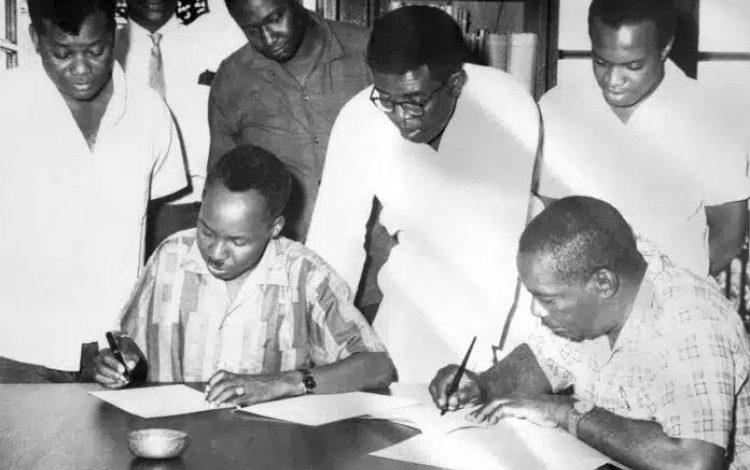
ZANZIBAR: AS Tanzania marks the anniversary of Mwalimu Julius Kambarage Nyerere’s death today, October 14, voices from Zanzibar reflect on his enduring legacy and influence on the Union, the 1964 Zanzibar Revolution and the formation of Chama Cha Mapinduzi (CCM).
More than two decades after his death, Nyerere remains a defining figure in Tanzania’s political history.
In Zanzibar, his legacy is particularly significant, closely linked to three pivotal developments that shaped the islands’ political trajectory: the 1964 Revolution, the Union between Tanganyika and Zanzibar, and the formation of CCM.
For many Zanzibaris, discussing the Union without mentioning Nyerere is almost impossible. His political relationship with Zanzibar’s founding president, the late Abeid Amani Karume, and his commitment to cooperation between the two territories helped shape the foundation of the United Republic of Tanzania on April 26, 1964.
Today 27 years after his death, historians and political figures from Zanzibar say his contribution continues to influence relations between the two sides of the Union, which has endured for more than six decades.
Veteran politician and historian of the Tanganyika African National Union (TANU) and Afro-Shirazi Party (ASP), Ali Mzee said Nyerere’s influence was instrumental in bringing Tanganyika and Zanzibar together following the January 12, 1964 Revolution.
He explained that the strong relationship between TANU and ASP during the struggle against colonial rule helped to establish the political foundation for the Union.
“The Union is fundamentally about unity and cooperation between the two sides in different areas for the benefit of their people,” Mzee said.
He added: “the founding vision was to bring the two populations together in pursuit of shared interests, including security and development.”
He said the Union had enabled closer interaction between citizens, allowing people to live and conduct economic activities on either side with fewer barriers, while joint institutions continued working to promote national development.
“When we reflect on the history of the Union, we must remember Mwalimu Nyerere, he is a founding architect alongside the late Karume,” he said.
From the Revolution to the Union
Nyerere’s relationship with Zanzibar went beyond the formation of the Union. Veteran politician Baraka Shamte said the history of Zanzibar’s political struggle could not be fully understood without recognising Nyerere’s support for Karume and the ASP.
According to Shamte, Nyerere supported Karume’s participation in political meetings and liberation activities, including engagements in Ghana, Malawi and Lancaster House in Britain, as the struggle for independence progressed.
He also said Nyerere provided assistance to the ASP, including professional expertise intended to strengthen the party’s organisation and its campaign against colonial rule.
For Shamte, these connections illustrate how the political struggles of Tanganyika and Zanzibar became linked before the Union was established.
The Revolution of January 12, 1964, ended the previous political order in Zanzibar.
Less than four months later, the Union joined the two territories, creating a new political arrangement whose significance continues to be debated, celebrated and examined by successive generations.
The Union’s survival has depended on institutions, political agreements and cooperation between the two governments, but the relationship between Nyerere and Karume remains central to understanding its origins.
The Union as an opportunity for Pemba
For residents of Pemba, Nyerere’s legacy is also associated with the opportunities the Union created for movement, employment and economic activity across the country.
The CCM chairman for North Pemba Region, Mberwa Hamad Mberwa recalled Nyerere’s first visit to Pemba as Union president in 1966, when he explained the importance of the new political arrangement to residents.
Mberwa said the Union had provided opportunities for people from Pemba to live and conduct business in mainland Tanzania, expanding their economic and social connections.
He argued that the opportunities remained relevant today, particularly for citizens seeking employment, education and business prospects beyond their home islands.
His reflections underline one of the practical dimensions of the Union: beyond constitutional arrangements and national institutions, its impact is also experienced through the everyday lives of citizens who cross between the two sides.
ALSO READ: Nyerere’s United States of Africa dream remains unfinished, still resonates
The difficult road to CCM
Another major part of Nyerere’s legacy in Zanzibar was his influence on the formation of CCM on February 5, 1977, through the merger of TANU and ASP.
Vuai Ali Vuai, a veteran CCM cadre and former deputy secretary-general of the party in Zanzibar, said the merger was a difficult political decision because both parties had played important roles in their respective liberation struggles.
In Zanzibar, the ASP held a particularly significant place in public memory because of its role in the Revolution and the islands’ political transformation.
Vuai said Nyerere advocated the creation of a single strong party that could unite citizens and pursue common economic and social development goals.
Although the merger required the two parties to relinquish their separate identities, he said Nyerere’s emphasis on unity and solidarity helped persuade their leaderships to proceed.
CCM was subsequently established as the ruling party of the United Republic, bringing together the political traditions of mainland Tanzania and Zanzibar.
For Vuai, Nyerere’s contribution remains an important part of the party’s history and its stated commitment to national unity.
Women and the wider liberation struggle
Nyerere’s influence also extended to political participation among Zanzibar’s women. Ms Khadija Jabir, chairperson of the CCM Elders Council, said Nyerere encouraged women in Zanzibar to become more actively involved in political mobilisation during the independence struggle.
She recalled that during one of his visits to Zanzibar, Nyerere was struck by the limited participation of women at a political meeting.
According to Jabir, he subsequently connected women in Zanzibar with TANU women leaders, including Bibi Titi Mohamed and Lucy Lameck, helping strengthen women’s involvement in political activities.
She said the experience contributed to closer cooperation between women’s political groups and the eventual establishment of a united national women’s organisation.
Her account highlights a less frequently discussed dimension of Nyerere’s legacy: his role in encouraging political participation beyond established leadership circles.
A legacy that continues to shape the Union
Today, cooperation between Zanzibar and mainland Tanzania continues through joint institutions, ministerial engagements and shared public services.
Union Deputy Vice-President Deogratius Ndejembi recently urged officials managing Union institutions based in Zanzibar to make greater use of economic, professional and financial opportunities available across the country.
He described the Union as a legacy of Nyerere and Karume, calling on institutions to strengthen cooperation for the benefit of citizens.
Zanzibar Minister of State responsible for Constitution, Legal Affairs, Public Service and Good Governance, Dr Haroun Ali Suleiman, has also highlighted cooperation between ministries and institutions on both sides, including efforts to improve access to legal aid.
Such examples demonstrate that the Union is not merely a historical agreement; it remains a working political and administrative framework whose effectiveness depends on continued cooperation.
Nyerere’s legacy, however, is not confined to official institutions or party history. It lives in the experiences of citizens who cross between the islands and mainland, in the political relationships forged during the liberation struggle, and in continuing discussions about the Union’s achievements and challenges.
As Tanzania remembers its founding father on October 14, the reflections from Zanzibar offer a reminder that the Union cannot be separated from the men who established it.
Nyerere and Karume brought distinct political histories together in a partnership that reshaped the country.
For Zanzibar, remembering Nyerere is therefore also an opportunity to reflect on the Union itself: its origins, its practical benefits, its unresolved questions and the responsibility of present and future generations to determine how it continues to serve the people of both sides.