Mwinyi hails students’ success, unveils scholarships
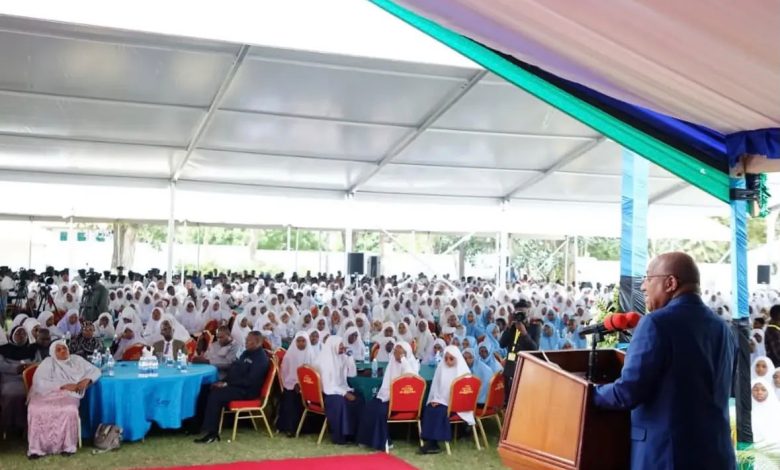
ZANZIBAR: THE excitement was unmistakable as Zanzibar President Dr Hussein Ali Mwinyi watched students confidently demonstrate their language skills, express their ambitions and celebrate academic achievements at State House.
For the President, the occasion was more than a ceremony to congratulate top performers; it was evidence that government investment, dedicated teachers, supportive families and partnerships with the private sector were beginning to deliver results in education.
His happiness grew as students who had excelled in national Form Four and Form Six examinations in 2024, 2025 and 2026 took turns addressing the gathering in different languages. He was particularly impressed by their confidence and fluency, praising teachers for helping young people acquire skills that would prepare them for opportunities beyond the classroom.
“I am very happy to see our young people speaking languages so fluently,” Dr Mwinyi said, expressing admiration for their command of languages, including English, French and Chinese. He was equally impressed by their confidence when speaking before an audience, describing it as an important quality for the future leaders of Zanzibar.
The President’s enthusiasm reflected the broader purpose of the gathering: recognising academic excellence while encouraging more students to work hard and assuring them that their achievements would be supported by opportunities for further education.
“I am always delighted by the Ministry of Education. They give us results, and when you work, you want to see results,” he said, applauding the ministry, teachers and students for the progress recorded in recent years.
The ceremony brought together students, education officials and other stakeholders to celebrate improvements in examination performance and highlight the importance of cooperation in raising educational standards across Zanzibar.
According to a report presented by the Ministry of Education and Vocational Training Permanent Secretary, Khamis Abdalla Said, the pass rate in Form Four national examinations increased from 82 per cent in 2024 to 92 per cent in 2025, surpassing the target set for 2030.
The number of Form Four students obtaining Division One also rose from 1,150 in 2024, representing 4.4 per cent of candidates, to 1,434 in 2025, equivalent to 6.9 per cent. At Form Six level, 5,098 students passed their 2026 examinations, representing 99.53 per cent of candidates, compared with 4,830 students, or 99.75 per cent, in 2025.
Although the overall pass rate declined slightly, the number obtaining Division One increased significantly from 992 in 2025 to 1,304 in 2026. The figures were encouraging for Dr Mwinyi, who said the progress demonstrated the value of sustained investment in education and collaboration among those responsible for teaching, supporting and guiding students.
“These achievements have not happened by chance,” he said, attributing the improvements to government investment, cooperation with stakeholders and the efforts of teachers and students. He said the government had continued to improve school infrastructure, strengthen teaching and learning environments, provide teacher training and improve teachers’ welfare.
He also recognised parents and guardians for their role in creating supportive home environments where children could develop discipline, a love of learning and a commitment to academic success. For the President, the achievements of the students were a reason for optimism about Zanzibar’s future.
He said education was essential to building a strong economy, reducing poverty, expanding employment opportunities and improving people’s welfare. Dr Mwinyi announced that 143 students who obtained the highest Division One results in the 2026 Form Six examinations would receive government scholarships through the Zanzibar government’s scholarship programme.
He also announced that, beginning in 2026, all students obtaining Division One with three to five points would receive government scholarships, regardless of their academic specialisation. The President said the government was also expanding financial support for higher education.
The budget for higher education student loans increased from 35 billion Tanzanian shillings in the 2025/2026 financial year to 45 billion shillings in 2026/2027, an increase of approximately 29 per cent. He further commended CRDB Bank for supporting the initiative by providing undergraduate scholarships to five high-performing students from disadvantaged backgrounds.
He urged financial institutions, companies and other privatesector organisations to follow the bank’s example by investing more in education through corporate social responsibility programmes. The call underscored a central message of the ceremony: improving education requires more than government action alone.
Schools, teachers, parents, financial institutions, development partners and communities all have a role to play in ensuring that talented students receive the support they need. Education Minister Lela Mohamed Mussa also highlighted the progress made in reducing the number of students who perform poorly in national examinations, describing it as evidence of the impact of government efforts to strengthen the education sector.
She said the proportion of Form Four students obtaining Division Zero had declined from 42.5 per cent in 2020 to 10 per cent in 2026. At Form Six level, the proportion fell from 1.1 per cent in 2021 to 0.47 per cent in 2026.
According to Ms Mussa, these improvements reflect investment in school infrastructure, modern learning facilities and better working conditions for teachers. She commended, Dr Mwinyi’s administration for prioritising education and urged high-performing students to view their achievements as the beginning of a journey towards becoming skilled professionals capable of contributing to national development.
However, the celebrations were not limited to congratulatory speeches and examination statistics. For many students, the occasion brought renewed hope that their hard work would open doors to higher education and help them pursue their ambitions.
Harith Suleiman Ally, Rahma Othman Shehe and Abdallah Kassim Omar were among the students who expressed happiness at visiting State House, meeting the President and receiving the opportunity to benefit from government scholarships.
Their excitement illustrated the importance of recognising young people’s efforts and linking academic achievement to practical opportunities for further study. For students with strong results, scholarships can reduce financial barriers and allow them to concentrate on developing their knowledge and professional skills.
The Permanent Secretary, Mr Said, reported that 4,000 laptops had been distributed to top-performing Form Four and Form Six students between 2023 and 2025. He also said the government was expanding access to higher education loans, with 12.5 billion shillings approved for the Zanzibar Higher Education Students’ Loans Board within one month, as part of efforts intended to benefit more than 11,000 students.
ALSO READ: Mwinyi cherishes China’s support in key sectors
He thanked government institutions, parents, school committees, education councils, civil society organisations, development partners and private-sector stakeholders for contributing to the progress recorded in education.
Dr Mwinyi urged teachers to maintain their professionalism, parents to continue guiding their children and students to uphold discipline and hard work. He said the government would continue creating opportunities for qualified students to advance to higher levels of education.
As the ceremony drew to a close, the President returned to the achievement that had brought everyone together: the growing number of young people performing well in national examinations.
He said he found great satisfaction in seeing the number of students obtaining Division One increase year after year, expressing confidence that continued investment and collective effort would enable even more Zanzibar students to succeed.
For the students who met him at State House, the occasion offered both recognition and encouragement. For Dr Mwinyi, their smiles, confidence and achievements were a reminder that investing in education is most meaningful when government, teachers, families and other partners work together to turn young people’s potential into lasting opportunities for personal and national development.