

Why timber is solution to urbanisation, carbon emissions
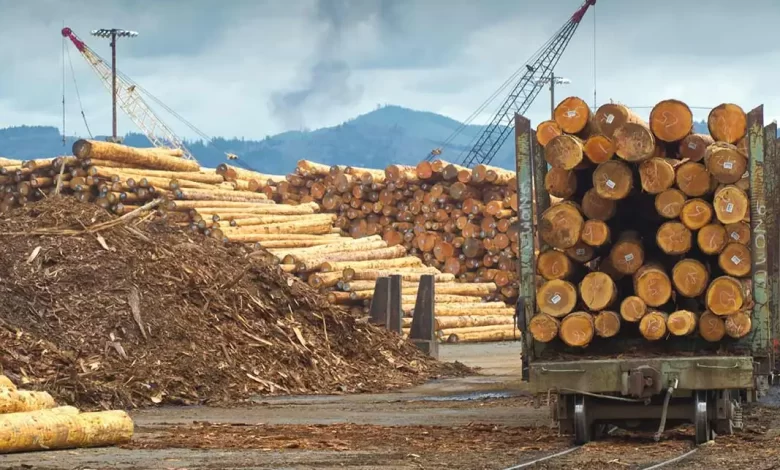
Timber can be the solution to the huge challenge of rapid urbanisation and carbon emissions facing the world today, the real estate developer- CPS Chief Executive Officer, Sebastian Dietzold said at the Wood Conference held in South Africa recently.
He said with rapid urbanisation, global warming and climate change, more sustainable ways of construction are required.
“We need to change how we build. If we continue building the same way we are today, our planet will die. That’s the simple message,” he said.
He argued that we need to grow, harvest and regrow trees to solve the carbon emissions challenge.
“Timber can turn this challenge into a massive opportunity for all. We estimate that the value chain from timber housing has the potential to become an 8-billion-dollar industry.
Therefore timber can turn the challenge we have with urbanisation into a fantastic opportunity for all of us. We want to do large-scale developments in Tanzania and we want to do it with timber,” he said.
Presenting on the topic, “The rise of a new circular economy from the tree to the house,” Mr Dietzold noted that urbanisation is occurring today in Africa faster than at any other time in human history, thus creating an affordable housing challenge.
“If we don’t change the way we build – the technology and materials we use in construction, this massive challenge from urbanisation will roll over us. So we need scalability, affordability and at the same time quality,” he said.
Today most of the biggest cities in the world are in Asia, but by the year 2100, that picture will change. Soon most of the biggest cities will be here in Africa, where cities like Lagos – Nigeria, Dar es Salaam in Tanzania and Kinshasa will have more than 60 million people.
Already Africa has a backlog of over 50 million residential units and this urban housing challenge must be turned into an opportunity to provide sustainable housing for all these people.
To conquer this massive growth of urbanisation, CPS is currently producing 300 to 400 housing units in Zanzibar. “We need 6,000, and in Dar es Salaam over 70,000 houses people can afford.
These affordable houses don’t have to look like refugee camps, they can be beautiful houses made from sustainable materials and that’s what we are doing,” the developer of real estate project, CPS Fumba Town, said.
Moreover, 38 per cent of global greenhouse gas emissions come from construction and construction-related industries, which calls for action.
Already there is massive potential for timber in Africa. Tanzania, for example, has about 260,000 hectares of sustainably managed forest and about 52 per cent forest cover and is producing about 1.58 million cubits of sawn timber per year.
If 10 per cent of the woods were allocated to sustainable forestry, we could produce 42 million cubic meters of sawn timber per year, enough to feed the world with timber.

939907 269478You created some decent points there. I looked on the internet for that issue and located many people will go in addition to with the web web site. 964718