

Why social security funds matter for stable, dignified life after work
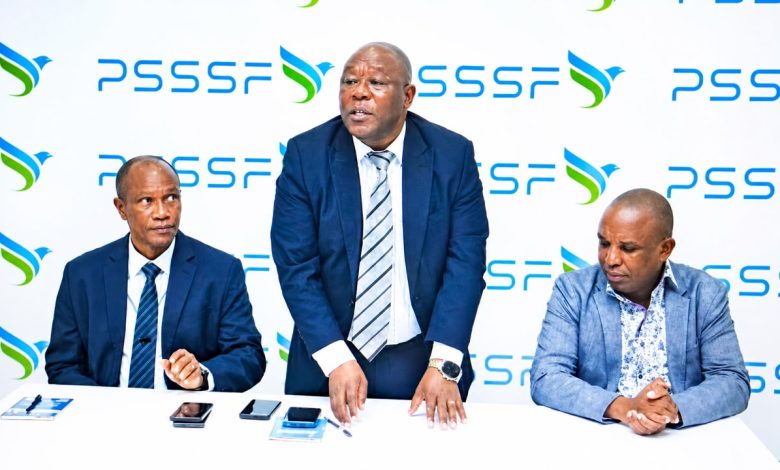
DAR ES SALAAM: EVERY month, the arrival of the 22nd brings a welcome sense of reassurance to pensioners across Tanzania as their monthly pensions are deposited into their bank accounts. For many retirees, the familiar notification on their phones is more than a routine banking message, it is a reminder that the years they spent contributing to social security continue to provide support in their lives after employment.
A regular pension can make a meaningful difference in meeting everyday needs, easing financial pressures and helping retirees maintain a measure of independence and dignity. It is also a tangible reflection of the importance of planning for life after work and the role social security funds play in providing financial protection when regular employment income comes to an end.
For veteran journalist Beda Msimbe, the 22nd has become a particularly reassuring date. “This pension helps me greatly in my daily life. After retirement, there are challenges in life, but I am happy to be a PSSSF member. Now I am a retiree receiving a pension every month. Whenever the 22nd of the month arrives, I receive a text message informing me that the money has been deposited into my account. Indeed, PSSSF is performing its role well,” he said.
Msimbe shared his experience in Dar es Salaam during a two-day training organised by PSSSF for journalists on social security matters.
The training, which began on August 17, 2026, sought to strengthen journalists’ understanding of social security services, members’ rights and responsibilities, and the benefits available through the Fund.
His testimony brought a human face to a subject that is often discussed in technical terms pension contributions, retirement benefits, eligibility and social security systems.
For workers still in employment, retirement can seem like a distant event.
But Msimbe’s experience illustrates why social security is not only about what happens at the end of a career; it is also about preparing for the years when a regular salary will no longer come.
PSSSF is the social security scheme responsible for collecting contributions and paying terminal benefits to employees in Tanzania’s public service.
It was established under the Public Service Social Security Fund Act, 2018. According to PSSSF, members can access a range of benefits, including retirement, unemployment, survivor, sickness, invalidity and maternity benefits, subject to the applicable qualifying conditions.
For retirement benefits, the statutory compulsory retirement age is 60, while voluntary retirement may begin at 55, although some employees may be governed by different retirement ages under their employment laws.
A member generally needs at least 15 years, or 180 months, of contributions to qualify for the retirement benefit.
These details, however, can be difficult for ordinary members to understand without clear communication.
Speaking on behalf of PSSSF Director General Fortunatus Magambo, PSSSF Kinondoni Zone Manager Costa Mpagike said the Fund wanted to strengthen its relationship with the media so that the public could receive accurate information about social security.
“As you know, this twoday training aims to build and strengthen a lasting relationship with the media and journalists, increase public and members’ understanding of PSSSF activities, as well as their rights and responsibilities through various training topics, promote the production of analytical articles and reduce the dissemination of misleading information,” Mpagike said.
He said the training was also intended to equip journalists with accurate knowledge so they could become ambassadors of social security information in newsrooms and communities.
“We will build your capacity so that you have accurate information about PSSSF and its services, which will make it easier for you to report the truth with greater professionalism and accuracy,” he stressed.
For journalist Zena Chande of Tanzania Standard (Newspapers) Limited (TSN), the training helped fill gaps in her understanding of retirement benefits.
“Basically, I have increased my understanding of how PSSSF carries out its responsibilities. The things we have learned here will help me perform my work better. Before this training, I did not have sufficient knowledge about the retirement lump-sum benefit, pension and the eligibility requirements for accessing these benefits, but now I have gained a much better understanding,” she said.
Her experience reflects a broader challenge in social security: Members may contribute to a fund for many years without fully understanding how their benefits are calculated, when they qualify or what procedures they need to follow when claiming them.
PSSSF provides members with access to services through its digital platforms, including the Member Portal.
The Fund has also been increasing the use of technology in service delivery and information management.
During the 2026 Saba Saba trade fair, PSSSF reported that members and pensioners were being guided on the use of PSSSF Kiganjani and the Member Portal to access services.
The Fund has also recently emphasised faster processing of retirement benefits through its “Tunalipa Jana” initiative.
PSSSF Director General Magambo said in July 2026 that the Fund had begun processing documents for workers approaching retirement in the 2026/27 financial year to help ensure eligible retirees receive their benefits promptly after leaving employment.
For a retiree such as Msimbe, such improvements are not merely administrative changes. They have a direct impact on everyday life.
Retirement can bring new financial responsibilities at a time when employment income has stopped. A regular pension can therefore help a retiree meet routine expenses and maintain some degree of financial independence.
Journalist Julieth Robert of ITV described the training as particularly valuable because journalists have a direct role in communicating with communities, including PSSSF members.
“These are highly beneficial training sessions for us journalists because we have a major role in communicating with the community, including PSSSF members,” she said.
Training coordinator Neville Meena agreed, stressing the importance of knowledge in accurate journalism. “If you do not know something, you cannot write about it accurately.
ALSO READ: Social Security funds open doors for self-employed Tanzanians
If you understand something, you will write about it accurately,” Meena said, adding that despite his years as a journalist, the training had introduced him to issues he had not previously understood.
The message emerging from the training was therefore broader than simply explaining PSSSF services. It was about connecting technical social security information with the lives of the people who depend on it.
Msimbe’s monthly phone message provides perhaps the simplest illustration. For a worker still earning a salary, retirement may appear far away. But for someone who has already crossed that threshold, the value of preparing for it becomes immediate.
And as Msimbe waits for that message each month, his experience offers a reminder to workers still in service: Retirement planning is not something that begins on the day employment ends.
It begins while one is still working. PSSSF’s stated mission is to provide reliable social security services using appropriate technology, competent and motivated staff, with the broader vision of becoming a leading provider of sustainable social security services in Africa and beyond.
For members, however, the ultimate measure of that mission is personal, whether the system is there when they need it.


A practical reference is most useful when it distinguishes visually similar marks by purpose, not just by appearance. For example, a list marker, a separator in a name, and a mathematical operator can all look like a dot while carrying different Unicode meanings. Dot Symbol helps make that choice clearer by grouping common variants and keeping them ready to copy, which is especially handy when formatting text across documents, social posts, and web interfaces.
A blank space can mean several different things in digital text: a conventional keyboard space, a non-breaking space, or another Unicode character that is not visibly rendered. Those distinctions matter when text is copied between editors, social platforms, and form fields, because each system may trim or interpret whitespace differently. Providing a way to generate a chosen amount and inspect it before use gives people a clearer basis for deciding whether the text will serve a formatting purpose or simply be removed.
Create an invisible name copy paste text for supported profiles, games, and social platforms using simple invisible characters.
Create a beautiful bathroom without exceeding your budget. Our affordable bathroom remodeling in fort myers, fl , fl focuses on smart upgrades, quality materials, and dependable results.
Give your condo a fresh, functional look with condo kitchen remodeling portland services designed for modern layouts, smart storage, and stylish finishes.
Keep your daily outfit simple and expressive with a tyler the creator t shirt , an easy piece to wear with jeans, shorts, joggers, or casual sneakers.