Why representing Tanzania means more than football
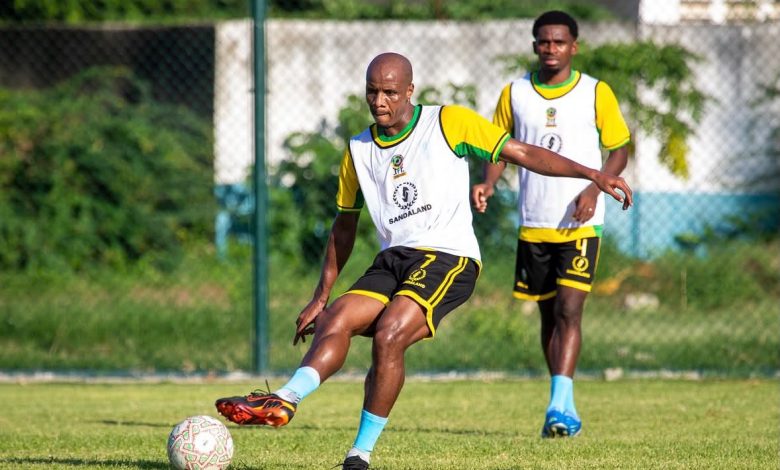
TANZANIA: WEARING the colours of Taifa Stars is never just another football assignment. It is the culmination of years of sacrifice, a badge of honour earned through persistence and a responsibility to those dreaming of following the same path.
For a group that made history at the 2025 AFCON, that responsibility carries even greater weight.
The challenge now is to build on that breakthrough, raise the bar and write the next chapter of Tanzania’s football story.
There is always something different about a national team camp. The familiar noise of club football falls away, along with the rivalries and routines that define the season.
Shirts change, badges change and players who spend much of the year competing against one another suddenly share the same dressing room, united by the same colours and the same objective.
For Taifa Stars, that sense of togetherness comes at an important moment. The memories of 2025 remain fresh, but so too does the expectation that followed them home.
Now, as the team prepares for the opening rounds of the CAF Africa Cup of Nations PAMOJA 2027 qualifiers, the task is not simply to return to the stage.
It is to build on what came before and show that the progress made was only the beginning. Tanzania will face Guinea-Bissau at home before travelling to meet Madagascar four days later.
Although the hosts Tanzania already have a guaranteed place at the 2027 finals by virtue of co-hosting the tournament with Kenya and Uganda, the qualifiers still provide a competitive stage for Miguel Gamondi’s side to measure itself, build momentum and demand more from a group that has already begun to change perceptions of Tanzanian football.
And perhaps nobody understands what it means to receive that call more deeply than Simon Msuva. The veteran winger has been part of the Taifa Stars journey for years.
His latest return to camp was not routine, even for a player accustomed to national-team football. “First of all, I am happy to be here again, but it is also a great joy for me to be part of the national team.
It does not matter that I am here regularly; representing my country is always a great honour.” For Msuva, the joy does not diminish simply because the invitation has become familiar. Being called to represent Tanzania remains a privilege.
That sense of responsibility is also visible in the way he speaks about the younger players around him.
There are new faces in camp, players hoping to establish themselves at international level and Msuva sees an important role for the senior members of the squad.
He believes the experienced players must support the newcomers, help them understand what the coach demands and give them the confidence to express themselves.
Taifa Stars have already made history at the AFCON.
At the 2025 tournament in Morocco, Tanzania reached the knockout stage for the first time, advancing from their group before their campaign ended with a 1-0 defeat to hosts Morocco in the Round of 16.
Msuva was central to that story.
His goal against Uganda took his AFCON tally to three, making him the first Tanzanian player to score at three separate editions of the tournament.
Yet history, he knows, is not a place to stop. With the 2027 tournament coming to East Africa, the senior winger sees an opportunity for the current generation to leave something behind.
“This year has to be used to make big history for us players,” he says.
The words carry weight because not every player knows how long a football career will last.
For some, this could be one of their final opportunities to play on the biggest African stage.
That reality, Msuva suggests, should sharpen rather than soften the team’s hunger.
The immediate task, however, remains much closer. Guinea-Bissau first.
Madagascar next. Msuva wants the Stars to approach both matches with the same ambition: compete, perform and win.
“We have to make these qualifiers count. We have to win every game.” It is the mentality of a player who has seen enough football to know that big ambitions are built through ordinary details.
One match. One performance. One result at a time. For Himid Mkami, the national-team environment carries a slightly different responsibility.
The Azam FC midfielder is among the experienced players expected to help the younger members settle into the demands of international football.
His advice is not to burden them with fear. Instead, he wants them to be free enough to show their ability while understanding the responsibility that comes with wearing the national shirt.
“They should be free, but they must also be responsible,” Mkami says.
It is a balance every young footballer eventually has to learn.
Freedom without discipline can become wastefulness.
Responsibility without confidence can become fear.
Mkami believes the current competition for places can help push Taifa Stars forward.
With players competing strongly for positions at their clubs and then carrying that competition into the national team, he sees the pressure for places as healthy.
The player who eventually earns the shirt, he argues, should be forced to earn it.
And for supporters whose strongest football loyalties often belong to Simba and Yanga, Mkami has an uncomplicated message when the national team takes the field.
“Let’s love our country and let’s love our national team too.” Then he adds the words that perhaps matter just as much to the players themselves: “Let’s support and love our players.” National-team football, after all, asks supporters to temporarily see beyond club colours.
The shirt is the same.
The badge is the same.
The responsibility is shared.
For Zidane Sereri, the feeling is more personal.
The Azam FC attacking midfielder and winger is still living a dream that began when he was a boy.
For him, the call to Taifa Stars represents the latest step in a journey that started far away from the international spotlight.
He remembers playing football in the streets of Kondoa in Dodoma before progressing into the lower divisions.
His talent eventually caught the attention of people in Dodoma, leading to trials with Dodoma Jiji’s Under-20 side.
From there, the road continued. It was not always smooth. The climb from youth football towards senior football brought periods when resources were limited and the future was uncertain.
Sereri recalls moments when it would have been easy to question whether the dream was worth pursuing. But encouragement from people around him kept the belief alive.
There were always voices telling him that he could go further. That mattered. Because football can be generous, but it can also be unforgiving.
Young players can spend years waiting for one opportunity, wondering whether somebody will notice them. Sereri’s experience offers a lesson to those still playing on dusty pitches and dreaming of stadiums.
Keep working. Keep believing. Keep moving. His own progression through the national-team age groups, from the Under-18 and Under-20 levels towards the senior side, has made the call-up feel even more significant.
“Playing for your national team is a huge honour and it is one of the biggest achievements you can have in your football career.”
There is pride in those words, but also perspective. The national team is not simply another club. It represents a country.
It represents the people who watched you before you were known, the coaches who gave you opportunities and the family and friends who believed in you when the next step was still uncertain.
For Sereri, the journey is proof that a beginning does not have to determine an ending. Kibu Denis knows that feeling too.
His own route to Taifa Stars did not begin in an academy built for producing international players. He came through the streets.
His first reaction when the nationalteam call arrived was disbelief. He had been playing football and chasing his own ambitions, but he had not expected the opportunity to come so quickly.
Then his brother sent him the message. “You have been called to the national team.” Suddenly, a dream that had existed somewhere in the distance became real.
Kibu remembers the excitement of arriving at camp and receiving confirmation from the club that he had indeed been selected.
For a young player still trying to establish himself, the moment carried enormous meaning. “Being called up to the national team is a great source of encouragement for a player’s career, especially for a young player like me who is still chasing my dreams.”
His story is also a reminder that talent can emerge in places that do not always have the structure of established academies.
But talent alone does not carry a player all the way. Kibu’s advice to youngsters who come through the same difficult route is built around two words: patience and discipline.
There will be setbacks. There will be periods when opportunities do not come. There will be people who doubt you. There may even be moments when you doubt yourself. But giving up closes the door before the opportunity arrives.
“If you believe that you can do it, you must have patience and discipline.” It is perhaps the most universal lesson from the camp. The national-team shirt may look like the destination, but for these players it is only another point on a much longer road.
That road has never been perfectly straight for Taifa Stars either. Tanzania’s AFCON history is modest compared with the continent’s traditional powers.
The team made its first appearance in 1980, returned in 2019 and 2023, and then produced its most significant tournament run at the 2025 edition by reaching the Round of 16 for the first time.
The progress is real. But so is the distance still to travel. That is where Gamondi’s message cuts through the excitement.
The Argentine coach is unwilling to let the atmosphere around a home AFCON tournament turn into unrealistic expectations.
He points towards the strength and depth of countries such as Nigeria, Senegal, Morocco, Egypt and Cameroon, whose players compete regularly at the highest levels of European football.
For him, ambition must be matched by realism. “We need to be realistic. We need to compete. We need to win the first game.”
That is the order of priorities. Not the trophy. Not the final. Not predictions about what Tanzania might achieve in 2027. The next game.
Then the one after it. Gamondi’s immediate objective is to win, qualify where necessary and improve. But his broader concern reaches beyond the national team itself.
He wants Tanzanian football to create more room for local players to develop. His argument is that if domestic clubs have limited space for Tanzanian youngsters because of the number of foreign players in the league, the pathway from Under-17 and Under-20 football into senior competition becomes harder.
That, in turn, affects the national team. “We need to improve Tanzanian football, and after that we can ask for results.”
It is a challenge that extends beyond one coach, one generation of players or one tournament. A stronger national team requires a stronger football ecosystem beneath it.
Gamondi also points to the lack of continental success among Tanzanian clubs as part of the wider picture. His view is that expectations of the national team must be connected to the development and competitiveness of the domestic game.
The message is blunt, but the principle is clear: improvement has to happen at every level. And that puts the responsibility not only on the players and coaches, but also on clubs, administrators, supporters and the wider football community.
For the players in camp, however, theory eventually gives way to the pitch. The stories of Msuva, Mkami, Sereri and Kibu are different, but they arrive at the same place.
One came through years of international football. Another has become an experienced voice in the dressing room.
Another is taking his first significant steps into senior international football after climbing through the youth ranks.
Another came from the streets and learned to survive the uncertainty that accompanies the dream. Their paths are different.
Their shirt is the same. And as Taifa Stars prepare to face Guinea-Bissau before travelling to Madagascar, the immediate challenge is not to imagine the final chapter.
It is to write the next one. The players know what the national shirt means. They know the sacrifices behind it. They know the disappointment of defeat, the frustration of missed opportunities and the satisfaction of seeing hard work rewarded.
They also know that football has a habit of changing quickly. A young player can be unknown today and a national-team regular tomorrow.
ALSO READ: Taifa Stars, let 2027 journey begin with a statement
A veteran can be preparing for his final major tournament without knowing it. A single goal can become part of national history.
Msuva already knows that feeling. Sereri is chasing it. Kibu has just begun to experience it. Mkami is helping others understand it.
And Gamondi wants all of them to remember one thing: history is not built by talking about the destination. It is built by winning the next game, improving the next performance and making sure that when the next generation arrives, they inherit a better football environment than the one they found.
For Taifa Stars, the journey towards 2027 is already underway. And this time, the journey is not simply about getting there. It is about becoming better before they do.
For years, seeing Tanzania compete on football’s biggest stages seemed like a distant dream. Today, that dream is steadily becoming a reality, driven by a deliberate investment in youth development and a long-term vision for the future of the national teams.
At the heart of that vision is the Tanzania Football Federation (TFF), which has been putting greater emphasis on identifying and nurturing young talent from as early as 15 years of age.
The process begins at the grassroots, with scouts watching school competitions at both primary and secondary levels in search of players with the potential to develop into future national-team stars.
Once identified, the promising youngsters are brought into the federation’s technical centre, where football development goes hand in hand with education.
Life at the centre is designed to give the players an opportunity to pursue their studies while receiving structured, highlevel football training, creating a pathway that develops both the player and the individual.
The results of that investment are beginning to show. The Serengeti Boys have provided one of the clearest signs of progress, reaching the final of the Africa Cup of Nations and securing a silver medal this year, while also earning qualification to the FIFA World Cup.
The Tanzanite Queens have similarly broken new ground by qualifying for the World Cup, further demonstrating the growing depth and ambition of Tanzania’s football programme.
For a country that has spent years aspiring to reach such stages, these achievements represent more than just results on the pitch.
They are evidence of what sustained investment in young players, proper structures and long-term planning can produce.
The push is also extending beyond the football federation. The government, through the Ministry of Information, Culture, Arts and Sports, is pursuing plans to designate special schools for sports, an initiative intended to create an environment where talented young athletes can develop their abilities while continuing with their education.
Together, these efforts point to a broader ambition: building a sustainable sports development system capable of taking Tanzanian athletes to the highest levels of international competition.
The journey is far from over, but the direction is increasingly clear. What once appeared impossible is now within sight, as Tanzania continues to build a generation of athletes capable of carrying the country’s flag onto some of the biggest stages in world sport.