Why peace, stability remain greatest competitive advantage
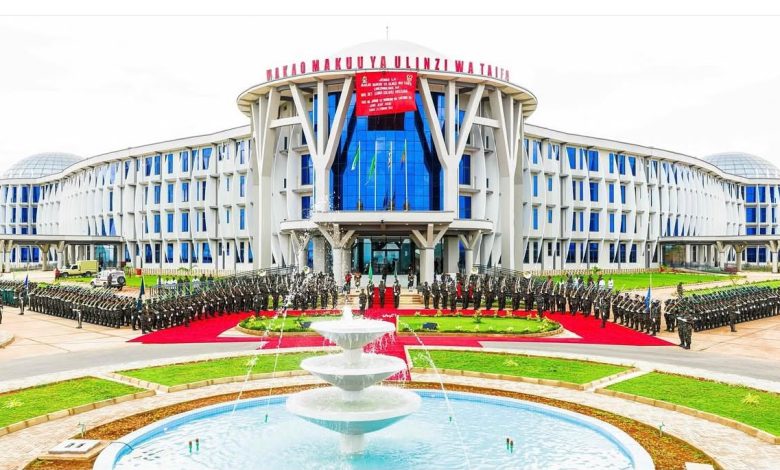
TANZANIA: AS Tanzania embarks on the first phase of implementing Dira 2050 (Development Vision 2050), attention is naturally focused on the country’s ambitious economic targets.
The vision speaks of a one-trillion-dollar economy, a highly skilled workforce, world-class infrastructure, technological innovation and a prosperous society of more than 118 million people by mid-century.
It paints the picture of a nation that is industrialised, knowledgedriven, globally competitive and increasingly influential across Africa. Yet, behind every economic ambition lies a more fundamental requirement.
A country cannot industrialise without stability. Innovation cannot flourish without security. Investors cannot commit capital without confidence.
And a growing youth population cannot become a productive force without skills, discipline and opportunity.
That reality is increasingly placing the Ministry of Defence and National Service at the centre of Tanzania’s long-term development conversation.
Traditionally viewed through the lens of national defence and territorial security, the ministry is now positioning itself as an important contributor to human capital development, technological innovation, food security, industrial growth and national resilience.
Its plans for the 2026/27 financial year reveal a broader understanding of security one that goes beyond military preparedness and extends to building the foundations of economic transformation.
Presenting the ministry’s budget estimates in the National Assembly, Defence and National Service Minister Dr Rhimo Nyansaho emphasised that peace, security and stability remain indispensable to the successful implementation of Dira 2050.
His message closely mirrors the philosophy underpinning the new national vision. Dira 2050 identifies governance, peace, security and stability as the foundation upon which all other development aspirations rest.
The document argues that strong institutions, national unity and a secure environment are not merely supporting conditions but essential ingredients for sustainable growth and prosperity.
The reasoning is straightforward. A nation seeking to become a leading industrial and investment destination must first guarantee the conditions that allow businesses, communities and institutions to thrive.
Factories cannot operate efficiently in an unstable environment. Investors cannot make long-term commitments where uncertainty prevails.
Communities cannot fully participate in development when security concerns undermine confidence. For decades, Tanzania’s reputation for peace and stability has been one of its greatest strengths.
The country has maintained social cohesion while many parts of the continent have experienced political instability, violent conflict and social unrest.
Dira 2050 recognises this legacy as one of Tanzania’s most valuable assets and identifies it as a competitive advantage that must be preserved and strengthened over the coming decades.
For the Ministry of Defence and National Service, protecting that advantage is no longer viewed solely as a military responsibility.
It is increasingly seen as an economic imperative. Building the workforce of the future Perhaps the clearest example of this broader approach is the government’s decision to expand the role of the National Service, commonly known as JKT.
For generations, JKT has played an important role in promoting patriotism, discipline, national unity and civic responsibility among young Tanzanians.
Today, the government wants the institution to play an even bigger role in preparing young people for the demands of a rapidly changing economy.
Dira 2050 identifies human capital development as one of the pillars that will determine Tanzania’s future success.
The document envisions a well-educated, skilled and learning society capable of competing in a knowledge-based global economy. It emphasises science, technology, innovation, entrepreneurship and workforce readiness as critical drivers of transformation. This is where JKT is increasingly expected to contribute.
According to Dr Nyansaho, more than 34,000 Form Six graduates underwent training through the Clean Energy Operation programme during the year under review.
Another 12,000 volunteers completed training under the Union at 60 programmes, while a further 12,000 remain in training.
The programmes combine military orientation with practical skills development, entrepreneurship training, civic education and leadership development.
Government officials believe the combination is helping prepare young people not only to become responsible citizens but also productive participants in the economy.
The expansion planned over the coming years is substantial. Current JKT facilities can accommodate more than 60,000 trainees.
The government now intends to increase that capacity to approximately 140,000 by 2031 through the construction of new facilities and expansion of existing camps.
The objective is to create sufficient capacity for all Form Six graduates to receive national service training. For policymakers, this investment is about more than numbers.
It is about addressing one of Tanzania’s most significant longterm opportunities and challenges: a youthful and rapidly growing population.
According to Dira 2050, Tanzania’s population is expected to exceed 118 million by 2050.
A large youth population can become a powerful engine of economic growth if equipped with the right skills, values and opportunities.
Without adequate preparation, however, demographic growth can place pressure on employment, social services and economic resources.
The government clearly sees JKT as one of the institutions that can help transform demographic growth into a development dividend.
The emphasis on patriotism, discipline, teamwork and self-reliance also reflects values deeply embedded in Tanzania’s development philosophy.
Dira 2050 repeatedly highlights the importance of building a cohesive, responsible and engaged society capable of contributing to national development.
Innovation and technology as strategic assets If human capital is one pillar of Tanzania’s future competitiveness, technology and innovation represent another.
Across the world, technological advances are reshaping economies at an unprecedented pace. Artificial intelligence, automation, digital technologies and advanced manufacturing are transforming industries, labour markets and global competition.
Dira 2050 recognises that countries that fail to embrace innovation risk being left behind. The document identifies science and technology, research and development, and digital transformation among the key catalysts expected to drive Tanzania’s economic transformation over the next quarter century.
The Ministry of Defence and National Service is seeking to contribute to this agenda through its specialised research institutions and technology centres.
One of the institutions receiving particular attention is the Tanzania Automotive Technology Centre. The centre continues conducting research aimed at improving vehicles, machinery and equipment used by both military and civilian institutions.
While such work may appear technical, its significance extends far beyond the defence sector. Building local technological capabilities can help reduce dependence on imported technologies, strengthen domestic innovation ecosystems and create opportunities for skilled employment.
The government increasingly views technology development not simply as a defence requirement but as a strategic national investment.
Research institutions under the ministry are also expected to support innovation and the practical application of scientific knowledge in productive sectors.
This aligns closely with Dira 2050’s call for stronger links between research, industry and national development.
The vision emphasises the need to increase investment in research and development, strengthen innovation ecosystems and encourage greater collaboration between academia, industry and government.
The goal is to build a knowledge-based economy capable of generating home-grown solutions to national challenges. Supporting industrial transformation Industrialisation remains one of the central ambitions of Dira 2050.
The vision seeks to transform Tanzania into an industrialised upper-middle-income economy capable of generating higher incomes, creating quality jobs and expanding exports.
Achieving this objective will require growth across multiple sectors, including manufacturing, logistics, agriculture, mining, financial services and technology.
The ministry believes defence industries can contribute to this broader industrial agenda. According to Dr Nyansaho, efforts are under way to strengthen defence manufacturing and expand production activities linked to the sector.
The strategy aims to increase local production capacity, promote technology transfer and create employment opportunities for skilled workers.
Globally, defence industries have often played a role in stimulating technological advancement and industrial development.
Innovations originally developed for military purposes have frequently found applications in civilian sectors, ranging from communications and transportation to engineering and manufacturing.
Tanzania hopes to leverage similar opportunities while strengthening domestic industrial capabilities. The government’s broader objective is to reduce dependence on imports, expand local manufacturing and encourage value addition within the economy.
Dira 2050 identifies industrialisation as one of the pathways through which Tanzania can achieve sustained economic growth and higher living standards.
Strengthening food security and resilience
Food security is another area where the ministry sees an opportunity to contribute to national development goals.
Agriculture remains one of Tanzania’s most important economic sectors, providing livelihoods for millions of citizens while supporting food security and export earnings.
Dira 2050 seeks to position Tanzania as a leading food basket in Africa and among the top ten globally. The ministry’s agricultural investments are intended to support this ambition while strengthening national resilience.
ALSO READ: Why peace remains Tanzania’s greatest strength
Through JKT, the government has continued investing in largescale farming projects aimed at increasing production and providing practical training opportunities for young people. Among the flagship initiatives is the Chita irrigation scheme.
The project is expected to become a major agricultural production centre supporting both JKT requirements and broader national objectives.
Of the planned 12,000 acres, approximately 2,500 acres have already been developed with irrigation infrastructure.
Rice, maize, beans and sunflower production continued during the reporting period. Officials say the project demonstrates how national service institutions can contribute to food production while providing hands-on agricultural experience to trainees.
The initiative also reflects Dira 2050’s emphasis on modernising agriculture, increasing productivity and strengthening food systems.
Food security is increasingly viewed not only as an agricultural issue but also as a national security issue. A country that can reliably feed its population is generally more resilient to external shocks and economic disruptions.
Protecting strategic investments The ministry’s contribution to Dira 2050 also includes safeguarding major national investments. Over the past few years, Tanzania has undertaken some of the largest infrastructure projects in its history. These include the Standard Gauge Railway (SGR), the Ju