Why Nyerere’s call for unity matters more than ever
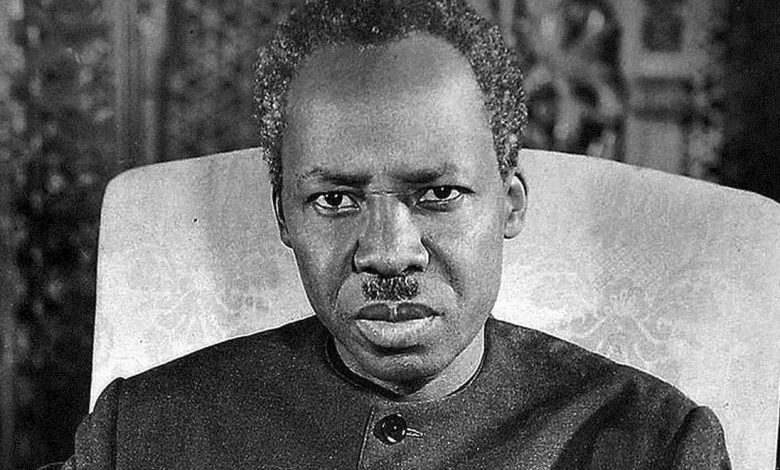
DAR ES SALAAM: IF Mwalimu Julius Nyerere were alive today, he would have turned 104 years old yesterday.
As Tanzania commemorates the birth of its founding father, his physical absence does little to diminish the enduring relevance of his ideas, particularly his unwavering call for unity, peace and national cohesion.
The commemoration comes at a critical moment, as the country continues to navigate the aftermath of the October 29, 2025 General Election.
In such a context, reflecting on Nyerere’s vision of a united and stable nation is not only timely, but necessary.
Neither his family nor contemporaries could have foreseen that their son would become a symbol of peace, unity and prosperity not only for Tanzania, but for Africa as a whole.
Born on April 13, 1922, in Butiama, Mara Region, Mwalimu, as he was fondly known, served the nation from independence until his voluntary retirement. Since his passing on October 14, 1999, his stance on unity remains more relevant today than ever before.
In a 1995 speech, delivered ahead of the country’s first multi-party elections, Mwalimu Nyerere underscored the importance of unity, peace and national cohesion as the foundation of a stable state.
“Despite our poverty, at least we have this quality: Tanzania is a peaceful country, striving for its people to see themselves as one, as Tanzanians, even though we are not perfect,” he said.
He urged citizens to safeguard unity, uphold patriotism and elect leaders who prioritise national interests over personal ambitions.
Mwalimu cautioned that individuals who fail to secure power through democratic means may resort to divisive tactics, exploiting ethnicity, religion or regional differences, actions he warned could undermine national cohesion.
He emphasised that leadership must unite people rather than divide them, insisting that those who seek power through division are unfit to lead.
These reflections resonate strongly in present-day Tanzania, where efforts are ongoing to strengthen social cohesion, including the establishment of a Commission of Inquiry to investigate the events of October 29, 2025.
Nyerere warned that for a developing nation like Tanzania, embracing divisive politics could lead to fragmentation and serious national crises.
Drawing lessons from Rwanda’s 1994 genocide, he noted that even societies with shared language and culture could descend into violence when leaders incite hatred.
“When hatred, whether ethnic or religious is allowed to take root, it knows no limits. People can turn against one another, and once it reaches that point, it becomes difficult to stop,” he warned.
He acknowledged that while Tanzania is not perfect, its challenges should never be exploited to incite division or undermine peace.
“Peace is the foundation of national unity and development, and once disrupted, it is not easily restored,” he emphasised.
As the nation marks the birth of its founding father, it is important not only to celebrate his legacy in securing independence but also to uphold the principles he championed: Unity, patriotism and self-reliance.
ALSO READ: Nyerere’s legacy must remain moral compass of nation
President Samia Suluhu Hassan has echoed similar sentiments, calling on citizens to protect and strengthen the values of peace, unity and solidarity.
She has repetitively maintained that Tanzania remains one nation, strong, peaceful and united built on the foundation laid by Mwalimu Nyerere.
Similarly, Principal of the Mwalimu Nyerere Leadership School, Professor Marcelina Chijoriga, recently in an interview with the ‘Daily News’ urged Tanzanians to honour his legacy through actions that promote accountability, peace and national cohesion.
“It is the duty of every citizen to uphold unity and contribute to sustainable national development,” she said. Born to Chief Nyerere Burito of the Zanaki, Mwalimu was educated at Tabora Boys’ Secondary School and Makerere University before pursuing further studies at the University of Edinburgh.
A teacher by profession, he founded the Tanganyika African National Union (TANU) in 1954, leading the country to peaceful independence in 1961.
He later became Tanzania’s first president following the 1964 Union between Tanganyika and Zanzibar.
Through the 1967 Arusha Declaration, he promoted Ujamaa, an African socialism model that emphasised self-reliance and equality.
Although it faced economic challenges, the policy significantly improved literacy, healthcare and national cohesion.
Mwalimu Nyerere remains widely respected for his integrity, modest lifestyle and his decision to voluntarily step down from power in 1985 setting a rare example among African leaders.