Why Inquiry’s findings may carry public confidence
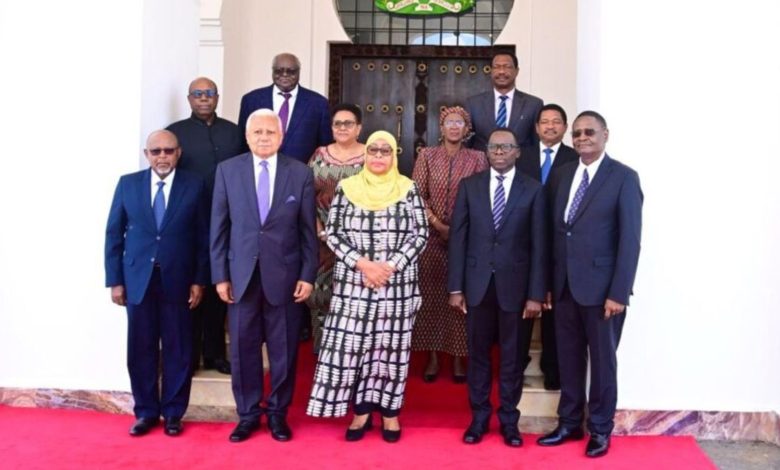
DAR ES SALAAM: AS Tanzania awaits the release of the Commission of Inquiry report today, attention has increasingly turned to the credibility of the team entrusted with examining the events of October 29, 2025.
In the months following the unrest, one message emerged clearly across public discussions and national conversations: most Tanzanians do not want a repeat of the violence.
Differences in opinion remain, as they do in every politically active society, but there has also been a growing sense that national stability, unity and dialogue must remain central to the country’s future. It was within this context that President Samia Suluhu Hassan established the Commission of Inquiry.
The decision reflected more than a response to a difficult national moment. It signalled a willingness to examine what happened, understand the underlying causes and identify measures that could help prevent similar events in the future.
However, the credibility of such a process depends not only on the existence of a commission, but also on the integrity, experience and professional standing of the individuals entrusted with the task. That is why the composition of the commission has attracted considerable public interest.
The commission is chaired by former Chief Justice Mohamed Chande Othman, a jurist whose career spans both national and international justice systems. Beyond serving as Tanzania’s Chief Justice between 2010 and 2017, he served as a Judge of Appeal and High Court Judge and later became deeply involved in international criminal justice processes.
ALSO READ: LNG deal draws closer
He worked as a prosecutor at the United Nations tribunal for Rwanda and participated in justice processes in post-conflict Timor-Leste.
He was also involved in United Nations investigations into human rights violations in Lebanon and Sudan, as well as the investigation into the death of former UN Secretary-General Dag Hammarskjöld.
His experience combines legal expertise with exposure to sensitive international investigations and institutional reform processes. Supporting him is former Chief Justice Professor Ibrahim Hamis Juma, whose tenure in the judiciary from 2017 to 2025 was marked by major reforms aimed at modernising the court system.
During his leadership, the judiciary introduced digitalisation initiatives and efficiency-driven reforms intended to reduce case backlogs and improve transparency.
Before becoming Chief Justice, he chaired the Law Reform Commission and played a significant role in strengthening judicial governance structures. From the governance and diplomacy sphere, Ambassador Ombeni Sefue brings extensive experience in public administration and state coordination.
As former Chief Secretary and Secretary to the Cabinet and National Security Council, he operated at the centre of government coordination and policy implementation. Internationally, he served as Tanzania’s ambassador to the United States and Permanent Representative to the United Nations.
His background gives the commission important expertise in governance systems, institutional performance and public sector management. From the security sector, former Inspector General of Police (IGP) Said Mwema contributes extensive operational experience in policing and national security.
During his tenure, he oversaw reforms linked to community policing and strengthened responses to organised crime and transnational security threats. His experience also extends regionally through leadership roles connected to INTERPOL operations in Nairobi.
The commission further benefits from the experience of Lieutenant General (Rtd) Paul Ignace Mella, whose military and peacekeeping background includes service as Force Commander of the United Nations mission in Darfur.
He has also participated in regional mediation efforts connected to the conflict in eastern Democratic Republic of the Congo. His experience provides practical understanding of crisis management, stabilisation and post-conflict recovery.
Ambassador David Kapya adds strong experience in diplomatic mediation and regional peace processes. He has been involved in negotiations linked to political crises in Sudan, Burundi, Zimbabwe and Côte d’Ivoire. His work reflects long experience in political dialogue and conflict resolution.
The commission’s composition is also strengthened by Ambassador Radhia Msuya, an experienced diplomat with extensive regional engagement, including within the Southern African Development Community framework. Another member, Dr Stergomena Tax, former Executive Secretary of the Southern African Development Community (SADC), brings regional governance and policy experience shaped by years of leadership in regional integration, peace and security affairs.