

Why Dar population slowed down
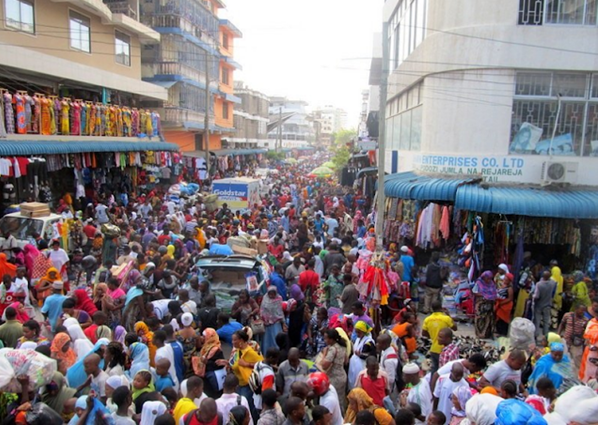
THE decline of the percentage share of population in Dar es Salaam city from 9.7 during the National Population and Housing Census (NPHC) 2012 to 8.7 in 2022 has been attributed to, among others, the shifting of the government from the commercial city to Dodoma.
Nevertheless, the results of the NPHC 2022 shows that Dar es Salaam is still the leading region with the highest population as compared to other areas with 5.3 million inhabitants.
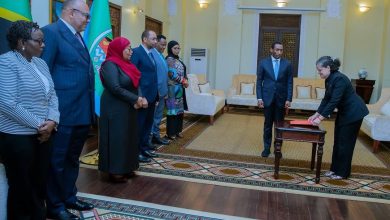
Launching the results of the NPHC 2022 at Jamhuri Stadium in Dodoma on Monday, President Samia said the population of Tanzania stands at 61,741,120 people with Dar es Salaam as the leading region with high population followed by Mwanza.
According to her out of that figure 59,851,347 were from the Mainland while the remaining 1,886,783 were from Zanzibar.
According to a press statement issued by the National Bureau of Statistics (NBS) late on Tuesday, the reason for the decrease could also be due to the small size of the commercial city which has forced some people working in Dar es Salaam to build their houses in the neighbouring Coast Region.
“It should be noted that after most of the government offices relocated to Dodoma their employees and some businesspersons also shifted to the new capital city,” the statement read in part.
It also noted that some regions recorded low percentage share of people compared to others due to fertility factors as well as migration from one area to another.
The national statistics agency elaborated on the other hand that the number of women has always been high during the entire past census conducted in the country due to the fact women tend to live longer than men.
The numbers show that women in the country constitute a larger population of 31,687,990 (51 per cent) compared to 49 per cent of their male counterparts (30,053,130).
“Demographically, women are always more than men in many communities and this is because of biological factors, where women live longer than men. At childbirth, many baby boys are born but they die before they reach five years,” it explained.
The statement noted further that there are a lot of results to be accrued from NPHC 2022, since the questionnaire had 100 questions, which were asked by census enumerators and they included a lot of information.
It explained as well that after the release of results of the first volume of NPHC 2022, there will be more results to be released on aspects such as social, economic, demographic and environment.
“Additional volumes containing more information and data will continue to be issued as time goes on and as per schedule of releasing results of the census,” the statement stated.
The bureau said the processing of the data will also determine the actual population of Tanzanians, since the head counting was conducted on all people who slept in the country on the eve of August 23, this year, regardless of their nationalities.
According to the results launched by President Samia on Monday, the population of people in the country has increased by 16.8 million people during the past ten years from 44.9 million people during the one conducted in 2012 to 61.7 million people this year.
As such, based on exponential population growth, the statistics agency said population growth has been at 3.2 per cent per annum during the past ten years.
Even as the population of women was high than men in almost all regions, the case was different in Manyara and Unguja South regions, which had more men than women.
“For these two regions, there was a possibility that women were migrating to other regions for economic factors,” the bureau explained in the statement.
After the release of the first volume, NBS said there will be more than 20 volumes to be published which will give more indicators from national, regional and local government authority level.
On Tuesday evening, the Statistician General Dr Albina Chuwa said that come March 2023, NBS would publish results of the number of Tanzanians after the ongoing assessment and verification exercise of the preliminary population and Housing Census Results.
“Next month (December), we expect to release the mid-figures of the first ever population and Housing Census Results that will give us the number of youth as per the country’s youth Policy, Children and the number of elders,’’ she said
Dr Chuwa further insisted that the figures that were released on Monday constitute the total number of people living in the country, regardless of their countries, adding that in March next year, his office would release the total number of Tanzanians out of 61.74 population.



241766 240239This web page is known as a stroll-by for all the data you wished about this and didnt know who to ask. Glimpse correct here, and youll positively discover it. 848502