When farmers lead, agroecology delivers food security and resilience
TANZANIA: ACROSS Africa, where millions of households depend on agriculture for food, income, and livelihoods, a quiet transformation is taking place.
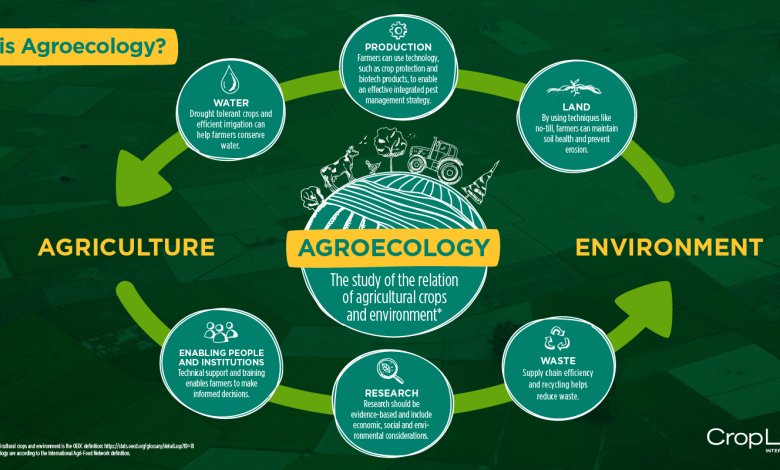
Farmers are increasingly turning to agroecology as a sustainable approach that combines ecological principles, local knowledge, and farmer innovation to build food systems capable of surviving climate shocks while improving productivity and incomes.
In Tanzania and across East Africa, where agriculture remains largely dependent on rainfall and highly vulnerable to droughts, erratic weather patterns, declining soil fertility, and rising production costs, agroecology is emerging as a practical pathway toward resilient, inclusive, and sustainable food systems.
Rather than relying heavily on expensive external inputs, agroecology promotes locally available solutions such as composting, mulching, crop diversification, organic pest management, agroforestry, and farmer-led innovation.
The approach seeks not only to increase production but also to protect ecosystems, strengthen household nutrition, improve farmer incomes, and empower communities.
Evidence from the Baridi Sokoni Project in Tanzania and the PARE-COVID Project in Burundi demonstrates that agroecology is not merely a theoretical concept, because it is already delivering measurable results for thousands of smallholder farmers.
Recent global research on agroecology
Recent evidence shows that agroecology can improve farmer incomes, climate resilience, food security, and environmental sustainability. A 2025 FAO TAPE assessment in Africa found that agroecological practices increased household incomes while strengthening environmental and social outcomes, as demonstrated by the Baridi Sokoni Project through agroecological production, cold chain development, and improved market systems.
For instance, the Food Systems Supply Services in Rural Tanzania (F3SRT) Project, popularly known as Baridi Sokoni, implemented by the Market Access and Advocacy Organization (MVIWATA), provides strong evidence of how agroecological approaches can transform rural economies.
Supported by the Global Agriculture and Food Security Program (GAFSP) through the African Development Bank, the US$5.35 million project operates in Morogoro, Njombe, Kilimanjaro, and Zanzibar. It targets 10,000 farmers, with women representing 65 percent of beneficiaries, through interventions focused on agroecological production, cold-chain infrastructure, and improved market systems.
The project has demonstrated that environmentally friendly farming practices can deliver both economic and climate benefits.
Among participating farmers, potato productivity increased from approximately 8–10 tonnes per hectare to 12–14 tonnes per hectare. Farmers achieved these gains through practices such as soil moisture management, composting, mulching, crop diversification, and reduced dependence on costly synthetic inputs.
For spice farmers in Morogoro, collective marketing strengthened their bargaining power and increased prices from approximately 13,000/- per kilogram to 20,000/- per kilogram. At the same time, production costs declined because farmers increasingly used locally available organic materials rather than expensive chemical products.
The project also strengthened women’s economic participation, enabling many women farmers to increase their income, contribute more actively to household decisions, and invest in education, healthcare, and agricultural activities.
Burundi experience shows agroecology builds pandemic resilience
The experience of the PARE-COVID Project in Burundi provides another example of how agroecology can strengthen communities against multiple crises, including health emergencies.
Implemented by the Confederation of Agricultural Producers’ Associations for Development (CAPAD) between 2023 and 2026, the project was designed to support smallholder farming families recovering from the economic effects of the COVID-19 pandemic.
With US$2.34 million support from GAFSP under the supervision of the International Fund for Agricultural Development (IFAD), PARE-COVID reached approximately 4,800 farming households and benefited more than 20,000 people across Burundi’s Ruyigi and Cankuzo provinces.
The project demonstrated that stronger agricultural systems can also strengthen community resilience during public health and economic shocks.
Through agroecological practices, farmers increased banana yields from around five bunches per harvest to approximately 20 bunches.
Bean productivity also improved significantly, increasing from about 8 kilograms to nearly 50 kilograms per 0.5 acres.
These improvements contributed directly to household nutrition.
Farmers reported moving from one or two meals per day to three meals daily, improving food security and dietary diversity.
The project promoted banana and bean intercropping, composting, mulching, agroforestry, contour farming, organic fertilization using locally available materials such as Tithonia, and integration of livestock to improve manure availability.
By reducing dependence on synthetic inputs, farmers lowered production costs while improving soil health and biodiversity.
A major lesson from both Tanzania and Burundi is that increased production alone is not enough.
Farmers also need access to reliable markets, storage facilities, financial services, and stronger organizations.
In Tanzania, Baridi Sokoni strengthened farmer marketing organizations, supported cold-chain infrastructure, and promoted collective marketing through farmercontrolled market systems.
In Burundi, PARE-COVID connected farmers to value addition opportunities through the SOCOPA banana processing factory, where bananas were transformed into juice and wine products. Between April and July 2025, participating cooperatives produced 172 tonnes of bananas, with significant quantities processed and marketed through farmer-controlled channels.
The project also expanded access to finance. More than 1,800 farmers accessed credit worth approximately BIF 550 million, allowing them to avoid distress selling and negotiate better prices.
These experiences demonstrate that farmer organizations can become powerful engines of rural transformation when supported with appropriate investments, training, and market connections.
Policy support will determine agroecology’s future
While farmers are already proving the effectiveness of agroecology, policy support and investment remain essential to scale these successes.
In Tanzania, important policy frameworks including the Tanzania Agriculture Master Plan 2050, the Tanzania National Ecological Organic Agriculture Strategy (NEOAS) 2023–2030, climate strategies, and regional agricultural investment frameworks, provide opportunities to integrate agroecology into national development priorities.
Extension services need to incorporate agroecological approaches, while coordination between institutions such as the Tanzania Official Seed Certification Institute (TOSCI), Agriculture Seed Agency (ASA), and farmer organizations like MVIWATA should be strengthened.
ALSO READ: Agroecology drive to boost food, nutrition security
At regional and continental levels, frameworks such as the East African Community Regional Agri-food Systems Investment Plan, the SADC Regional Agricultural Policy initiatives, and the CAADP Kampala Declaration provide important entry points for expanding sustainable food systems.
Climate finance also presents a major opportunity. Agroecology aligns with climate adaptation goals and can qualify for support through Nationally Determined Contributions, Green Climate Fund resources, and agricultural resilience financing mechanisms.
A new future for Africa’s food systems
Agroecology is increasingly recognized globally as a pathway for transforming food systems. The Food and Agriculture Organization introduced its 10 Elements of Agroecology in 2018, while global discussions have increasingly highlighted principles centred on resilience, biodiversity, farmer participation, fairness, and sustainability.
Africa’s experience shows that agroecology is not about returning to outdated farming systems. Instead, it combines traditional knowledge with modern innovation to create farming approaches suited to today’s challenges.
From Tanzania’s potato and spice farmers to Burundi’s banana and bean producers, evidence shows that agroecology can increase yields, strengthen incomes, improve nutrition, protect the environment, and empower communities.
The opportunity now is to move from successful projects to wider transformation. With stronger policies, targeted investment, and greater recognition of farmer organizations, agroecology can become a cornerstone of Africa’s journey toward resilient, inclusive, and sustainable food systems.
The future of farming may not depend only on producing more, but on producing smarter, with farmers, communities, and nature working together.