When diplomacy delivers development: Reflection on Singapore-Zanzibar engagement
ZANZIBAR: SOMETIMES diplomacy is best understood not through communiqués and formal agreements, but through conversations that reveal a shared vision for the future.
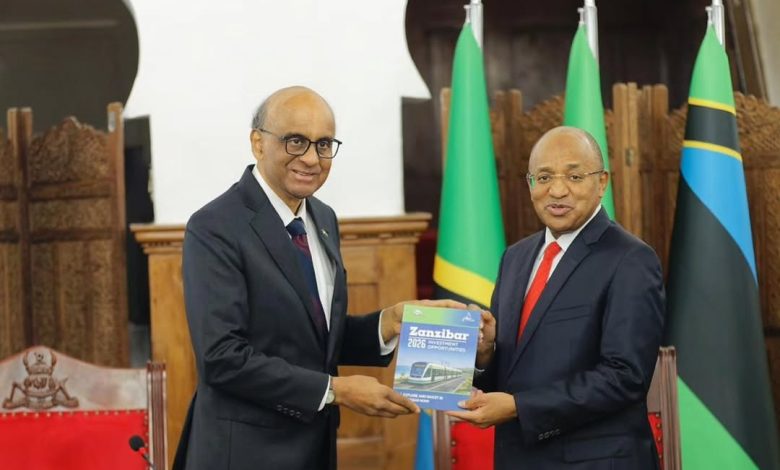
The recent engagement between Zanzibar President Dr Hussein Mwinyi and Singapore President Tharman Shanmugaratnam was one such moment.
It was a meeting that reflected not only the warmth of relations between Tanzania and Singapore, but also the growing importance of a holistic approach to foreign policy, one that places people, prosperity, innovation, and sustainable development at its core.
Listening to both leaders, one could not help but appreciate how closely Zanzibar’s development aspirations resonate with Tanzania’s broader foreign policy objectives.
President Mwinyi spoke passionately about Zanzibar’s Blue Economy agenda and the opportunities that lie in tourism, fisheries, seaweed processing, maritime transport, port development, renewable energy, digital transformation and value-added agriculture. These are not merely economic sectors; they are pathways to jobs, skills, innovation, and improved livelihoods for communities across the islands.
President Tharman’s response was equally encouraging. Drawing on Singapore’s remarkable development experience, he highlighted areas where practical cooperation can help transform ideas into tangible outcomes.
Whether in tourism development, logistics, digital governance, smart cities, energy solutions, skills training, or maritime services, the message was clear: partnerships succeed when they are built around mutual benefit and shared ambitions.
What made this engagement particularly significant was that it demonstrated the true breadth of modern diplomacy.
Foreign policy today is no longer confined to political dialogue between governments. It is increasingly about connecting businesses, universities, innovators, investors, city planners, entrepreneurs, and young people.
It is about creating opportunities for learning, facilitating technology transfer, expanding trade, attracting investment, strengthening institutions, and building bridges between societies.
This is precisely the direction Tanzania has pursued in recent years through economic diplomacy and strategic international partnerships.
As a Union Matter, foreign affairs serve the interests of the entire United Republic of Tanzania. This means that when Tanzania engages international partners, it does so with a view to advancing opportunities for both Mainland Tanzania and Zanzibar. The Singapore-Zanzibar engagement offers a powerful example of this principle in action.
Indeed, the discussions went beyond investment alone. They touched on human capital development through education and training, digital transformation in government service delivery, sustainable management of marine resources, clean energy solutions and urban development.
These are issues that directly affect the quality of life of ordinary citizens and demonstrate how foreign policy can become a catalyst for national development.
The emphasis on value addition was especially noteworthy. Zanzibar’s position as Africa’s leading producer of seaweed, its globally renowned spice industry, and its rich fisheries resources all present opportunities not only to export raw products but to create industries that process, package, brand and market Tanzanian products to the world.
This is where partnerships with countries such as Singapore can make a meaningful difference, through expertise, technology, logistics and market access.
Equally important was the discussion on connectivity. Zanzibar’s strategic location in the Indian Ocean gives it enormous potential as a maritime and logistics hub linking Africa to global markets. Singapore’s globally recognized experience in ports, shipping and logistics offers valuable lessons as Tanzania continues to strengthen its role as a gateway for regional and international trade.
Yet, perhaps the most important takeaway from the visit was the spirit in which the discussions were held. There was a clear recognition that development is not achieved through isolated projects, but through long-term partnerships built on trust, shared learning and mutual respect.
The future of Tanzania-Singapore relations will therefore not be measured solely by the volume of trade or investment flows.
ALSO READ: Mwinyi courts Singapore investors
It will also be measured by the skills acquired by young people, the businesses that emerge from new partnerships, the innovations adopted by institutions, the jobs created in local communities and the opportunities unlocked for future generations.
This is the broader purpose of diplomacy in the twenty-first century.
It is about ensuring that international engagement translates into real benefits for citizens. It is about creating connections that support national priorities while contributing to regional and global prosperity. Above all, it is about building relationships that help nations grow together.
The engagement between Presidents Mwinyi and Tharman serves as a timely reminder that when foreign policy is approached holistically, bringing together government, business, knowledge, technology, culture, and people, it becomes one of the most powerful tools available for sustainable development.
For Tanzania and Zanzibar alike, that is a vision worth pursuing.