What Tanzania learned at IPU meeting
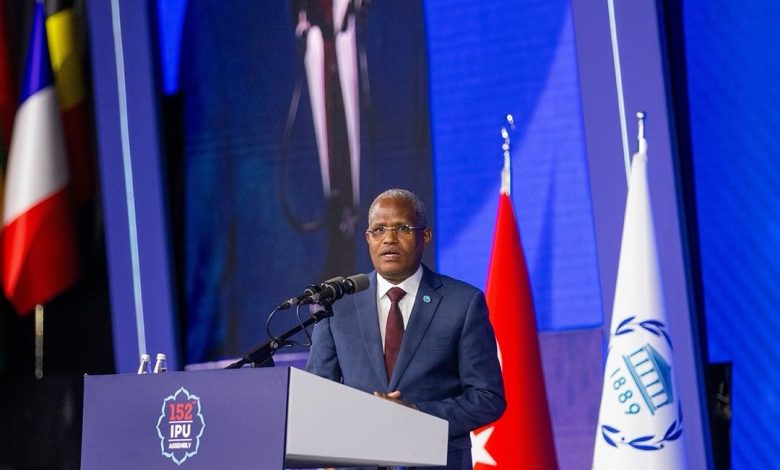
DODOMA: TANZANIA is gaining valuable insights from the 152nd Assembly of the Inter-Parliamentary Union (IPU) in Istanbul, Türkiye, as part of efforts to strengthen parliamentary performance and improve service delivery to citizens.
The global forum has brought together legislators from around the world to discuss key issues, including peace, democracy and the future of parliaments in the digital age.
Speaking during the Assembly over the weekend, National Assembly’s Deputy Speaker, Daniel Sillo, who is leading the country’s delegation, said participation in the forum provides an important opportunity to enhance parliamentary cooperation and learn from international best practices.
He noted that Tanzania’s Parliament continues to collaborate with other legislatures worldwide to improve its effectiveness in serving citizens.
“Our Parliament is strengthening cooperation with others and learning from global best practices to enhance our capacity to serve the people of Tanzania,” he said.
Mr Sillo added that discussions and exchanges at the Assembly will help improve legislative processes and the performance of parliamentary institutions.
“A strong Parliament builds a strong nation,” he said.
The Assembly has convened legislators from different regions to explore how parliaments can address emerging global challenges, particularly in strengthening democratic governance and leveraging digital technologies in parliamentary work.
Tanzania’s participation comes as the country prepares to host the 153rd IPU Assembly in Arusha in October 2026, expected to attract more than 2,000 delegates from 183 member parliaments.
Meanwhile, a member of Tanzania’s delegation, Dr Zeyana Abdallah Hamid, took part in a parliamentary network meeting that discussed ways to strengthen the health and well-being of women, children and youth during disasters and conflicts.
The meeting, organised by a Parliamentary Network supported by the Global Leaders Network for Women’s, Children’s and Adolescents’ Health, was held on Friday in Istanbul, alongside the main Assembly.
Dr Zeyana said parliamentarians have a responsibility to ensure essential health services continue uninterrupted, even during crises.
“Parliaments have a critical role in ensuring that reproductive health services, nutrition, immunisation and preventive care for women, children and youth are not disrupted during disasters and conflicts,” she said.
She noted that this can be achieved through supportive legislation, adequate budget allocations and strengthened parliamentary oversight to ensure effective implementation of health programmes.
Dr Zeyana reaffirmed Tanzania’s commitment to prioritising maternal and child health as a key national agenda.
“Tanzania’s position is clear; no one should be left behind. Reproductive health is a right, not a privilege,” she said.
Separately, parliamentary clerks from IPU member states met in Istanbul to exchange experiences and strategies for strengthening parliamentary performance.
Tanzania was represented by Daniel Eliufoo on behalf of the Clerk of the National Assembly.
He outlined steps taken to modernise parliamentary systems, including the development of the Online Parliament platform and the E-Parliament system, aimed at enhancing transparency, efficiency and accountability in line with the National Development Vision 2050.
“Tanzania continues to strengthen its parliamentary systems through digital transformation as part of efforts to improve efficiency, transparency and accountability,” he said.
At the same time, Tanzania is using the Assembly to promote the upcoming 153rd IPU Assembly to be held in Arusha.
Tanzania Tourist Board (TTB) Marketing Manager, Vivian Temi, said the country’s exhibition booth has attracted significant interest from delegates seeking information on tourism attractions and investment opportunities.