Wake up Konde Boy! Enjoy Sindimba with Miami Sound Machine
DAR ES SALAAM: IT baffled music fans in Tanzania when the popular Sindimba dance beat from South Tanzania opened Gloria Estefan’s smash hit, ‘Mi Tierra ‘, a few years after releasing her eponymous hits; “Dr Beat”, “Conga Beat” and “Rhythm Gonna Get You” with Miami Sound Machine.
It was the band’s conga player, Edwin Bonilla, who expertly played conga in “Mi Tierra”, the smash hit that also exposed Gloria Estephan as a musician with Cuban parentage and not pure American as most of her Tanzanian fans thought.
“Mi Tierra” (English: My Homeland) is the third studio album by Cuban-American recording artist Gloria Estefan, released in 1993.
Produced by her husband Emilio Estefan, it is her first Spanish-language album and pays homage to her Cuban roots.
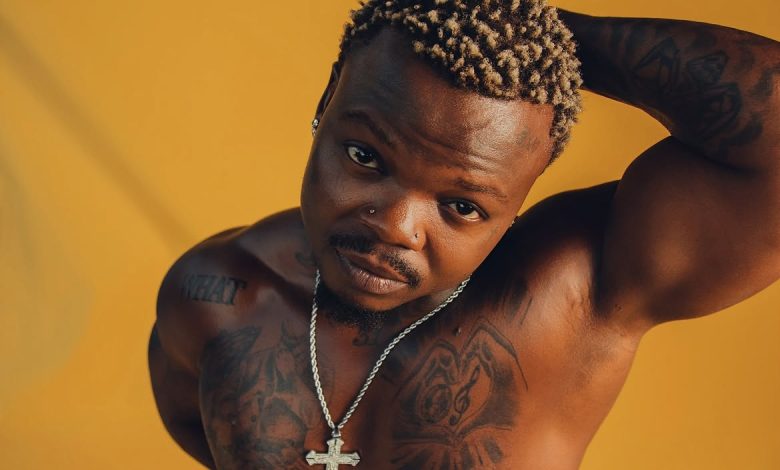
Konde Boy (Harmonize), the owner of the dance style along with Ida Nnole Masasi Group, Nchailla and Mitonga Jazz, was aged two years when Miami Sound Machine released Mi Tierra in 1993, a few years before the official birth of Bongo Flava.
Mi Tierra album features Afro-Cuban musical genres, including Boleros, Danzan and Son Montuno music.
To music analysts, notably Tanzanian music fans, finding a Sindimba-styled percussion in “Mi Tierra” looked a bit strange since the beat has never been heard in other countries besides Tanzania and the Kenyan coastal line where Makonde dance and carvings are widely practiced.
Tightly placed Sindimba beat is not even heard in many areas of Mozambique, a country whose northern provinces are closely related to the Southern regions of Tanzania, the home to Sindimba dance and its associated genres.
Hearing the Sindimba beat from the East African shoreline in the Spanish hit looked too strange, dwelling on the historical fact that Spain was not involved in enslaving East African people, only the Portuguese, whose majority of slaves were shipped in big numbers to Brazil, via their posts situated in Mozambique and Angola.
The connection would be at least understood if that beat were performed by musicians from Brazil.
Still, a close survey of Brazilian popular music acts, including the much-circulated Lambada dance, didn’t find anything closely associated with the Sindimba beat in the Lambada collection that the Kaoma band circulated worldwide from France.
Though Makonde people, the owners of the Sindimba dance, are found in Tanzania and the northern provinces of Mozambique, their dance and music styles have been widely practised in Tanzania and areas around Mombasa.
Though it was most often performed as just a traditional dance, Sindimba beat officially stormed into urban dance music after Mozambique’s independence in 1974.
Sindimba dance won huge acclaim in 1974 as the only rhythm that represented the people of Mozambique as the then majority Tanzanians thought Makonde are the dominant tribe in Mozambique without having knowledge that Makua, Sena, Shona and Tsonga are the dominant majority while minorities are Makonde, Swahili, Yao, Tonga, Chopi and Ngoni.
Jamhuri Jazz band from Tanga and Lucky Star Taarab group penned the earliest songs that hailed Samora Michel and his Frelimo party for their successful struggles for independence. But a non-political song with a fully coloured Sindimba beat was “Mariana” recorded in the mid-1970s by Orchestra Mitonga.
Halila Tongolanga’s “Kila Munu Ave na Kwao” (Everyone has his homeland) came a few years before Estefan’s “Mi Tierra” (My Homeland) and that hit made him the best performer of Sindimba-styled dance music.
It didn’t mean anything after Estefan’s “Mi Tierra” looked to have taken the Sindimba dance beat upon its release in 1993, but it means a lot today, especially this time when Bongo Flava music has won a huge number of global enthusiasts.
It is this fact that initiated a hunt for the national rhythm which will identify the country’s music worldwide and the process is still going on. Rhythm makers are not considered in popular music and no one takes an interest in them.
It should be known that from reggae to dancehall rage, from funk to R&B, from Sikinde to Zembwela, from Zouk to Ndombolo, rhythm guitar or rhythm section commands a pre-eminent role in supporting popular music.
For over six decades, rhythm has been the seed of all songs, the mother of all riffs, the core of all arrangements and in many cases, the hook that makes the hit happen; yet the soloist or a solo guitarist gets all the attention as it has seen many of the dance music era.
ALSO READ: Timmy Thomas ‘MSailor’ still sails on with Bongo Flava music
Miami Sound Machine’s conga player, Edwin Bonilla who teamed up Raphael Padilla in band’s hits such as “Dr Beat”, “Dance to the Conga” and “Rhythm Gonna Get You”, have never been mentioned as rhythm inspirations to what made Gloria Estephan, among the greatest world music divas.
Heading to co-host the African Cup of Nations in 2027, Bongo Flava music is poised to thrill visitors and football fans from countries participating in the event to be staged for the first time in East Africa.
Though it is well known globally, it is the Swahili poetry that dictate terms in the music’s vocal and dance styles.
Though incorporating traditional beats may sound unfriendly to Tanzania’s nationalist look, there are still several hits that opted to borrow from tribal rhythm, most notably “Huyu Hapa” by Mbosso.
Even during the Ujamaa era, certain elements of tribal rhythms were sparsely heard. Captain John Simon of JKT Kimbunga Stereo fame had a better lesson in creating it after he injected a traditional beat in “Cheza Rhumba Kimbunga”, which was the seminal hit for the band.
In it, Lizombe’s beat was never mentioned, but it was crystal clear for those conversant with dominant traditional music.
Though no one mentioned the contributors of the Kimbunga Stereo dance style of the mid-1970s, Mlimani Park Orchestra seemed to have the best answer to it when they snatched guitarists Henry Mkanyia and Muharami Said Remmy, while Vijana Jazz roped in Suleiman Mbwembwe after the release of that crafty song.
Under Captain John Simon, JKT Kimbunga Stereo released several smash hits, most notably ‘Majambazi’, ‘ Cheza Rumba ya Kimbunga’ and ‘Radhi Kwa Mtoto’, which was highly flavoured by virtuoso saxophonist Ally Moshi Mpomwa, guitarists Henry Mkanyia, Kiza Hussein, Vinyama Said and trumpeters Mathew Hozza and Matthew Mwanyasi.
The innovation that made JKT Kimbunga Stereo stand out, though many didn’t notice it, was the addition of Lizombe dance flavours to their songs; the most noticeable was the Sebene part of Cheza Rhumba Kimbunga.
Captain John Simon and JKT Kimbunga Stereo became Tanzania’s hottest acts in the late 1970s and early 80s.
Also worth considering is the Mwenge Jazz band hit, “Maana ya Pete”, whose rhythm section is meant to correspond with the traditional dance of a woman mentioned in the song, Mwana Mwaipasi.
The band’s key players of the rhythm section, Farahani Mzee, Duncan Njilima and bassist Mgoro Mohamed, thought it better to play the rhythm of the Mapenenga dance from the Wanyakyusa tribe.
Also deserving a mention as traditional beats that helped to build strong rhythms that beautified the dance music era included the Tabora Jazz creativity in fusing Kisonge and Hiari ya Moyo dances in their music and that was highly noticeable in “Mapenzi Hayana Maganga” and the ever-popular Dada Remmy.
Expertly sung by Nyota Waziri, Njenje Group’s “Gere” also spoke the best of artful Manyema rhythm and the hit has remained hot even today.
At Mlimani Park Orchestra, where percussionists Ally Jamwaka, Chipembere Said and Habib Jeff marshalled the rhythm section, “Tangazia Mataifa Yote” remains among the best works of guitarist Abel Baltazal during his tenure at the band.
The song helped the band to win the top prize in the Best Music Award gala in 1987.
Mheme and Nindo from the Wagogo tribe added a dimension to the beauty of that historic work. Most of the traditional beats are being widely used by Bongo Flava artistes.
Yamoto Band added the Lizombe beat in “Niseme” and “Nitakupwelepweta”, while Harmonize, Diamond, Rayvanny, and Mbosso preferred the Segere dance, which can be heard in Aiyola, Wacha Waoane, Happy Birthday and Nasema Nawe, being the most notable.