From flip-flops to gold medal: Tanzania’s 2006 Commonwealth Games hero
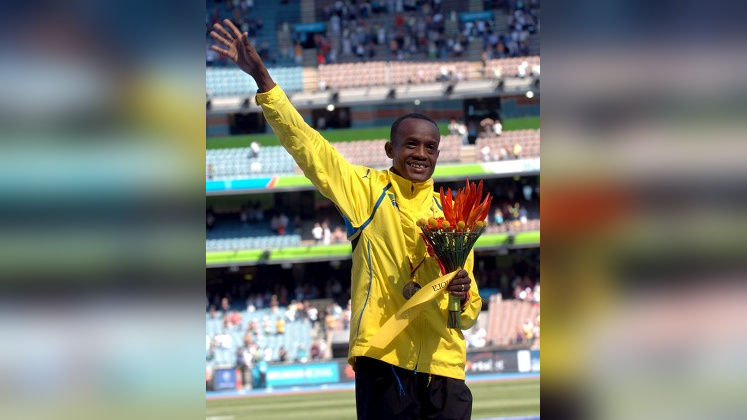
DAR ES SALAAM: IN March 2006, Tanzanian athlete Samson Ramadhani reached the pinnacle of his dream after he won a gold medal and became not only the pride of the nation but also recognised worldwide.
Samson won the gold medal for participating in a 42.195 km marathon in Melbourne, Australia, the last gold won by a Tanzanian in the Commonwealth Games.
He grew up in a pastoralist community at Mwankoko Village in Singida Region and his success story in athletes started at Mwankoko Primary School, where he studied.
At that time, he used to compete at the school, village, district, regional and national levels. The first prize he scooped was a pair of flip-flops after he excelled in a village race.
This was not just a prize to Samson, but something special he recalls to date and how he handled it with care.
Flip-flops are a type of sandals worn when a person goes to the bathroom or loo, but for Samson were special shoes.
“None was allowed to touch my pair of flip-flops, which I would wear when going to church on Sunday, after which I would clean, wait for the flip-flops to dry in the sun, then I would hide them in my room for the next Sunday,” recounts Samson.
His motivation to work conscientiously and achieve success comes from his childhood dream of becoming one of the best runners increased during a national HIV-AIDS campaign in the mid1980s.
He recalls a day when Mwankoko villagers were invited to a playground to watch an educational HIV-Aids movie, which showed how the deadly virus spreads from one person to another through sex and causes death.
It was followed by a short-recorded sports news report of Juma Ikangaa, a former Tanzanian runner, who competed in the Tokyo International Marathon in 1986 and won a gold medal.
“We were excited to see Ikangaa outshone his athlete-opponent,” says Samson.
After watching Ikangaa, who won with a record of two hours, eight minutes, ten seconds (02:08:10), a drunken villager, who later became a pastor, told Samson that he would one day be the best runner, but requested him not to outshine Ikangaa, their athlete idol.
“I laughed and didn’t take it seriously because the man was a drunkard. Coincidentally, a similar thing happened in Japan in February 2003. Like Ikangaa, I emerged the winner in the Beppu Oita Marathon.”
“My first gold medal in an international competition and my record was two hours, nine minutes and twenty-four seconds (2:09:24). I was very happy. I remembered the drunken man because although I won, I didn’t outshine Ikangaa’s record,” says Samson, while smiling.
On April 13 the same year, Samson participated in a London marathon, but that time he outshone Ikangaa’s record when he finished in two hours, eight minutes and one second (2:08:01) hours although he ended up in a fifth position.
Hunting for gold in a poverty-stricken environment
Most successful runners in Tanzania, John Akhwari, Gabriel Geay, Gidamis Shahanga, Francis Naali, Alphonce Simbu, Restituta Joseph, Ikangaa and others come from the regions of Singida, Manyara and Dodoma – all of which are found under the Great Rift Valley of East Africa.
There is a claim that those athletes possess genes that help them run faster than others, although there is no scientific evidence to corroborate the claim; numbers can say something.
To Samson, such a thing doesn’t exist; he believes that winning medals or being the best runner in the world is not easy, but it is possible through consistent training, and not inborn genes.
“If there are such genes, then all children of former runners also would be successful runners like their parents. If you ask for the secret of my success, I would say it is through consistent training with a belief that what I do will help me overcome poverty,” says Samson.
Samson explains that he started running barefoot with his peers in school and all village races. He still recalls his humble beginnings, especially the day he was competing in a local race barefoot before he was pierced by thorns, but he had to endure the pain until he finished the race, and emerged the best winner.
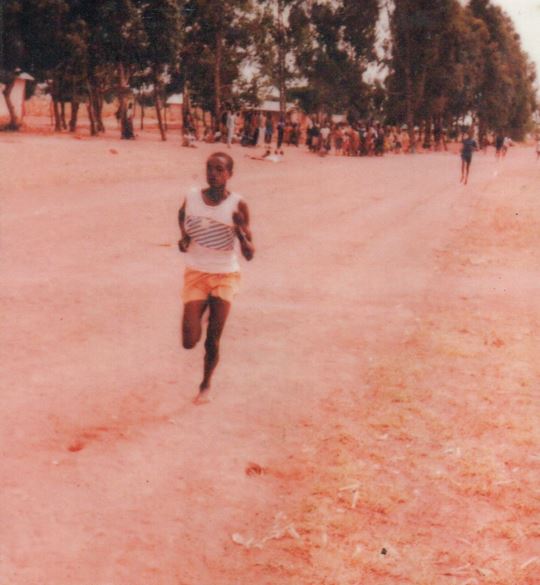
Since then, he started training, while wearing ‘katambuga’ (sandals made from discarded tyres), although during competitions he continued running barefoot, and almost always emerged the best winner.
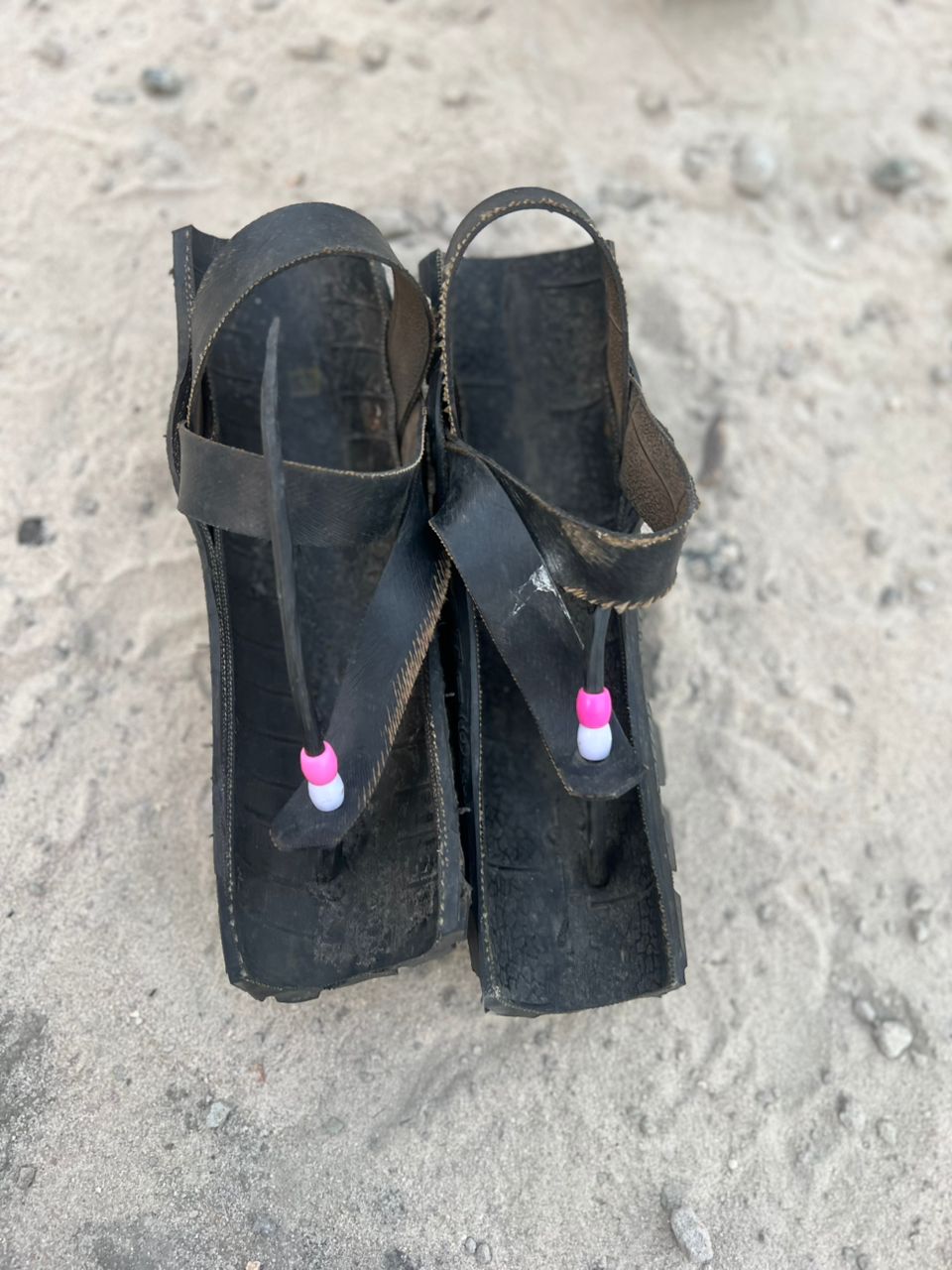
“Katambuga are popular in pastoralist communities, but are not suitable for sports at all. I used them to protect myself against thorns because I had no sports shoes,” he recounts.
Samson did not have sportswear, and sometimes he would wear trainingshorts when participating in local races before he got his first yellow shorts from a friend who plays football.
Since then, Samson became popular in the village with tire sandals and his pair of yellow shorts he would wear during training and competitions.
One day he participated in a local race, and wore a black pair of shorts. Although he won the race, he was not easily recognised by a crowd of onlookers because he was not in his normal pair of yellow shorts.
“When I put off my black pair of shorts and remained with my yellow shorts it was when my fellow villagers recognised me. They were overwhelmed by joy as they lifted me up, while singing, and dancing,” he narrates.
For Samson a lack of sportswear did not prevent him from realising his childhood dream. He recalls his first ever sports shoes he got from a friend of his in 1995.
“I was wearing my pair of wornout shoes, which I had repaired several times, and wore them during training. After that, I got a pair of sneakers. But before, I used to walk barefoot to church, to school and to other places I visited,” recounts Samson.
He acknowledges that even his schooling was disrupted by his ambition to become the best runner because he was not very attentive in class, and would skip off his lessons without telling anyone after being invited to participate in different races.
His main daily chore was to take care of family cattle from morning to evening, and the issue of school came later. He started primary school at age 12.
“I went to school not because it was important, but to protect family property. At that time, if a child failed to go to school, local law enforcers (mgambo) would go to his or her family house, and confiscate some property like tables, chairs, chickens or anything.”
To get back the property, he says, parents had to pay money as compensation in the office of the village chairman. “It was a system organised at the village level, so that is why I went to school.”
Another thing he recalls at school is about his age. One teacher looked at him and said he was born in 1975, so it could be before or after 1975.
Between school and taking care of family cattle, Samson never stopped exploring his dream of becoming the best runner, although he had to endure some difficulties like running barefoot, being pierced by thorns, running without sportswear and so on.
But things changed later. Whenever he won any competition and got some money, he used it for buying sportswear. From that he stopped training wearing ‘katambuga’ or competing barefoot, and started using sportswear.
He won races from village, district, regional and national levels in short distance categories from 1,500-3,000 to 5,000 metres before changing his focus, and started training for long distances, and winning more awards in local and international competitions.
Intensive training
To realise his dream, Samson had one secret. He believed consistent training pays off. So, he trained hard, and recalls his first coach, Joackim Mghwai.
“He engaged me and my peers in his training programme, sometimes he could buy us sugarcane to attract us. What I remember is that I never missed any of his training sessions.”
After realizing that he was gaining, Samson started asking for more training. He wanted to join older boys, but his coach at school refused. He told him to wait for a year because he was still too young.
“What I did was to count the distance they covered. They were running a distance of about 289 metres. I started running secretly to cover the same distance, and after a year, I was able to run 12 times a week in the same distance. When I joined the coach, he was surprised at me, and suspected that I had been training on my own, which I was doing,” says Samson.
He also recalls how his training sessions were from time to time distracted with his desire to generate some income for his daily needs, so he had to combine his training, and running a small business to make life easier.
“I would walk with a bag of charcoal for sale on my head from Mwankoko Village to Singida Town, a distance of about 16 km. After selling it I would return home running as part of my personal training practice.”
He did that twice a week. He says if he failed to get charcoal he would go to town with okra or sugarcane because his aim was ‘to kill two birds with one stone’ – getting some money he needed while also training hard to realise his dream.
In 2002, Samson registered himself for Mount Meru International Marathon in Arusha without telling his national team coach John Francis.
He was the second winner with the record of 2:14:45 behind a Kenyan runner, Joseph Rily, who was the best winner with the record of 2:14:18. His coach was unhappy with him, so he told him to not do it again.
A plate of gold on the table
In Tanzania, Ethiopian and Kenyan marathon runners are known to be favourites in international races, while Tanzanians are known as participants, and not contesters.
Samson changed the story in the Commonwealth Games in 2006. He outshone Kenyan Fred Mogaka to win the last gold for Tanzania with the record of 2:11:49.
It was not easy for him after covering a distance of 35 km, it was as if he started seeing a sign of a gold ahead of him. It was like a plate of gold on the table ready for him.
“After running for a distance of 35 out of 42 km, it was when I saw Mogaka. He was ahead of me for about a kilometre, and ahead of everyone, and to win the gold medal I had to beat him,” recounts Samson.
He says he noticed one thing in Mogaka; he was always looking behind his left shoulder to see if there was any competitor nearby. From there, Samson says, he increased the speed while running along the right-hand side of the road so that Mogaka wouldn’t see him.
After a few minutes, he was very close to Mogaka, and that was when he increased his speed, beating him, and Mogaka couldn’t catch him until the last point, where he finally finished the race and scooped a gold medal.
ALSO READ: Tanzania hails Gabriel Geay for winning bronze medal at BMW Berlin Marathon
In Tanzania, as people were watching live broadcasting on their TVs, hopes started growing when Samson was getting closer to Mogaka before he beat him.
Samson, the father of three children, retired from athletics in 2014 after experiencing knee problems. He is now a coach.
He is happy that his childhood dream has paid off. He is an employee with the Tanzania People’s Defence Forces (TPDF). He has built three houses in Arusha City and one in his home village.