VP rallies stakeholders behind skills-based education
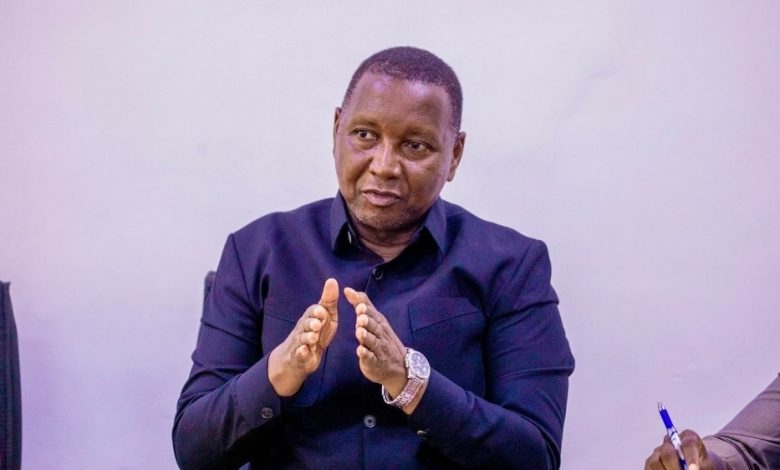
DAR ES SALAAM: VICE-PRESIDENT Dr Emmanuel Nchimbi has called for a high level of cooperation to push through major reforms to the nation’s education and training policy.
Dr Nchimbi said yesterday that the new curriculum will only work if the government, the community and the private sector all pull in the same direction.
Opening the three-day International Conference on Education Policy and Curricular Reforms in Dar es Salaam, Dr Nchimbi said the changes will ensure graduates have practical skills.
He said this helps them solve real life challenges and compete in the labour market, and for education to have a real impact, it must empower graduates to achieve personal goals and contribute to society.
“Education is a fundamental pillar of our nation’s economic and social progress. However, for it to have real impact, it must empower graduates to address real-life challenges, achieve personal goals and contribute to society,” Dr Nchimbi said.
He further said that the government has started comprehensive reforms from pre-primary school to higher learning, the focus is now on skills because the world is changing fast. However, he said that success depends on money, especially for buildings and teachers.
“Implementation of these reforms demands substantial investment in classrooms, laboratories and teaching materials, as well as increasing the number of qualified teachers,” Dr Nchimbi said.
He also said that strengthening technical and vocational education and training (TVET) is a big part of the plan. “This is a crucial step in addressing the employment challenge and ensuring that education delivers tangible benefits to society,” he said.
Minister for Education, Science and Technology, Professor Adolf Mkenda, speaking at the conference said that the reforms are anchored on the need to produce a competent workforce capable of adapting to global scientific and technological changes.
He said key measures include the introduction of compulsory 10 years of basic education, six years of primary and four years of lower secondary to provide learners with a strong foundation.
“Curriculum reforms are focusing on a competence-based approach aimed at developing 21st-century skills such as creativity, critical thinking, communication and digital literacy,” Prof Mkenda said.
ALSO READ: Tanzania adds extra skills to evaluation experts assessing ASDP II projects
He added that the system now offers two learning pathways, general and vocational streams, allowing students to pursue education aligned with their abilities and career aspirations.
“The government also continues to promote adult and non-formal education to reintegrate outof-school children and dropouts, in line with the policy of free and compulsory education,” he said.
Prof Mkenda further said that effective implementation will require close collaboration between the Ministry of Education, Science and Technology, the President’s Office—Regional Administration and Local Government (PO-RALG) and other stakeholders.
University of Dar Salam (UDSM) Vice-Chancellor, Prof William Anangisye said global trends, including technological advancement, changing labour market demands and globalisation necessitate continuous review of education systems.
“Education policies and curricula cannot remain static. They must be regularly reviewed and improved to keep pace with evolving societal and economic needs,” he said.
He said that by February this year, the university had reviewed 270 academic programmes, including 127 undergraduate and 143 postgraduate courses, with 242 submitted to the Tanzania Commission for Universities (TCU) for accreditation.
“Out of these, 76 programmes have already been accredited and some have started admitting students. About 45 per cent of the accredited programmes can be delivered online or through blended learning,” he said.
Prof Anangisye further said that 95 of the reviewed programmes fall under the Higher Education for Economic Transformation (HEET) project, aimed at enhancing the quality and relevance of higher education.
The conference ends on March 27. It is expected to give ideas on how to make Tanzania’s education system stronger for the future.