VP advances nuclear, anti-drug ties in Vienna
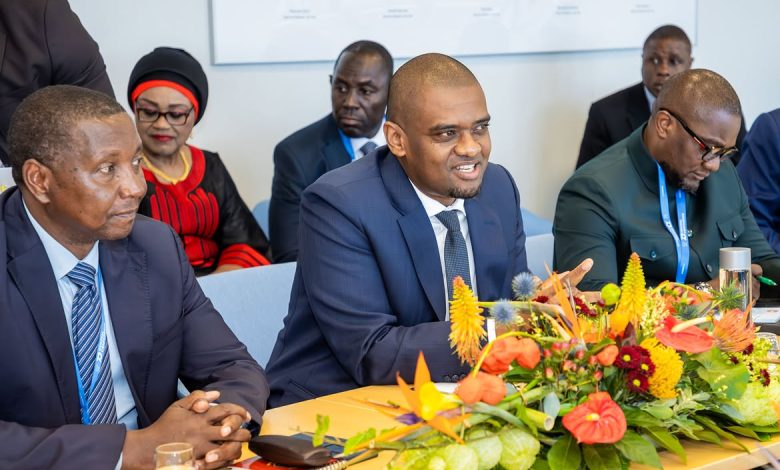
VIENNA: VICE-PRESIDENT Deogratius Ndejembi has held highlevel talks with global agency leaders in Vienna, Austria to advance Tanzania’s cooperation in peaceful nuclear technology applications and combat illicit drug trafficking.
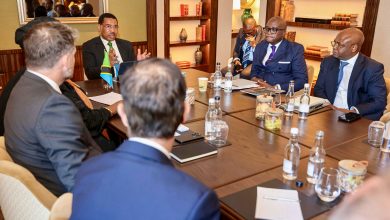
Representing President Dr Samia Suluhu Hassan at the 70th International Atomic Energy Agency (IAEA) General Conference, Mr Ndejembi met with IAEA Director-General Rafael Grossi and UNODC Executive Director Dr Monica Juma on the sidelines of the annual global assembly.
In his meeting with Mr Grossi, the Vice-President explored expanding bilateral cooperation beyond healthcare into agriculture, food security, nutrition and human resource development.
The leaders also reviewed Tanzania’s preparations to integrate nuclear energy into its future national electricity mix.
The discussions broadened Tanzania’s cooperation with the IAEA beyond healthcare to include agricultural applications, food security and development of specialised skills needed to support the country’s future nuclear programme.
The Vice-President also held talks with UNOV Director-General and UNODC Executive Director Dr Monica Juma, focusing on strengthening cooperation between Tanzania and the UN agency in efforts to combat illicit drugs.
The conference brings together leaders and representatives of IAEA member states to discuss the safe, secure and peaceful applications of nuclear science and technology.
Tanzania’s discussions with the IAEA build on growing cooperation in cancer care, particularly specialised services, training of health professionals and the use of advanced nuclear technologies in diagnosis and treatment.
Speaking at the IAEA Scientific Forum in Vienna on Monday, Mr Ndejembi said Tanzania had made significant progress in cancer prevention, early detection and specialised treatment.
“Under President Samia’s leadership, health remains a national priority, with progress recorded in cancer prevention, diagnosis and treatment from primary to specialised levels of care,” he said.
ALSO READ: Global anti-narcotics body praises Tanzania in fighting drugs
He said coverage of the single-dose human papillomavirus (HPV) vaccine among girls aged nine to 14 had increased from 58 per cent in 2018 to 98 per cent this year.
The number of centres providing radiotherapy had also increased from three in 2020 to six in 2026, raising access to the service from 14 per cent to 26 per cent and benefiting about 6,500 patients.
Mr Ndejembi said Tanzania planned to establish nine comprehensive cancer care centres across six strategic zones in Mainland Tanzania and Zanzibar by 2030 to bring specialised services closer to communities.
He said the expansion would be supported by increased investment in modern cancer diagnosis and treatment technologies.
Among the technologies is PET-Scan linked to a cyclotron, which enables the production of radioactive isotopes used in advanced cancer diagnosis.
Tanzania, he said, was among the first 10 countries in Africa to offer the service. Mr Ndejembi said between 2021 and 2026, the number of MRI machines had increased from seven to 28, LINAC machines from two to eight, CT scanners from 12 to 97, mammography machines from four to 20 and digital X-ray machines from 147 to 770.