Vijana Platform: Empowering Tanzania’s youth to shape future
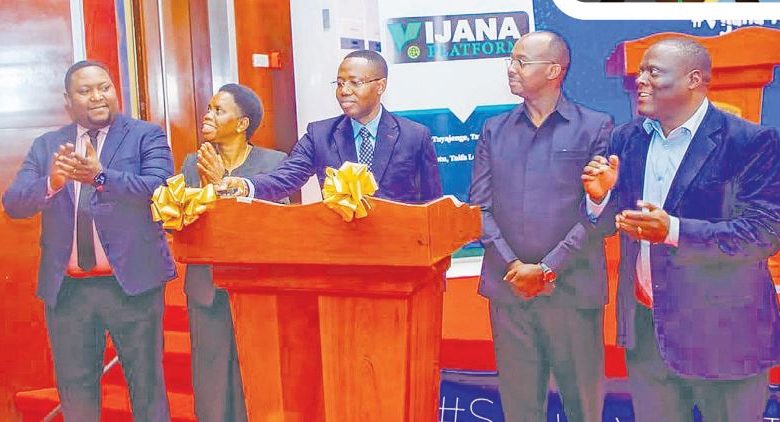
DAR ES SALAAM: TANZANIA is embarking on an exciting new chapter, where the energy, creativity and ambition of its young people are no longer on the sidelines but are driving the nation’s progress. With a renewed focus on harnessing the power of youth, the country is poised for a future shaped by innovation, determination and bold aspirations.
This is the dawn of a new era where the voices and contributions of young Tanzanians are at the very heart of the nation’s transformation. Under the visionary leadership of President Samia Suluhu Hassan, the sixth phase government has unveiled the Vijana Platform, a dynamic national space designed to unlock youth potential, amplify young voices and transform ideas into action.
More than just a forum, the Vijana Platform is a powerful representation of trust to the young people of Tanzania. It is where innovation meets opportunity, dialogue turns into solutions and patriotism is shaped through participation.
As the nation looks ahead to 2026 and beyond, this platform invites millions of young Tanzanians to rise, connect, innovate and cocreate a future driven by unity, skills and shared responsibility.
Speaking during the launch held recently in Dar Es Salaam, Minister of State in the President’s Office (Youth Development) Dr Joel Nanauka called upon young people and citizens at large to make 2026 a year of fully utilising available opportunities, strengthening unity and working together for the success of the nation.
He underscored that the Vijana Platform is not merely a dialogue forum, but a practical implementation of President Samia’s directive to strengthen youth participation in matters affecting their welfare, development and inclusion in national planning processes.
Tanzania has its ways of listening to, to its young population with all ears but now the government has come with a third ear to make sure no one will be left behind. According to the 2022 Population and Housing Census, young people constitute the majority of Tanzania’s population in which out of every 10 individuals, approximately 7 to 8 people are youth.
About 77.3 per cent of Tanzanians are below the age of 35, equivalent to approximately 46 million people. Of these, young people aged between 15 and 35 account for around 34.4 per cent of the total population, estimated at nearly 20 million, a clear indication that the future of the nation is inseparably linked to the well being, skills and productivity of its youth.
Furthermore, data from the National Labour Force Survey show that young people contribute approximately 55.6 per cent of the country’s total labour force.
According to Dr Nanauka, youth are actively engaged in various sectors of the economy, including agriculture, trade, services, manufacturing, arts and creative industries.
ALSO READ: Vijana platform goes live
“This reality positions youth as the backbone of the national economy, while also underscoring the need for targeted investment in education, skills development and an enabling environment that allows them to fully participate in socio-economic transformation,” said Dr Nanauka.
In recognition of this reality, the sixth phase government has continued to implement concrete strategies aimed at empowering young people. Dr Nanauka said one of the most significant interventions is the review of the National Youth Development Policy of 2007 and the launch of a new Youth Development Policy in 2024.
He said, the revised policy reflects contemporary social, scientific and technological changes, with a strong focus on innovation, creativity, the use of ICT, the digital economy, youth entrepreneurship and youth health, including mental health.
It also places emphasis on strengthening youth participation in decision-making processes from community level to the national level, as well as nurturing young leaders from grassroots to national leadership positions.
He added that the government is implementing the National Youth Skills Development Programme, which aims to equip young people with employable skills and competencies for self-employment.
Through this programme he said, thousands of young people benefit each year from vocational training, apprenticeships and entrepreneurship training provided by public and private institutions, including the Vocational Education and Training Authority (VETA).
The training focuses on high-demand sectors such as agriculture, construction, services, ICT, arts and tourism, thereby contributing to increased employment and selfreliance among young people. Economic empowerment has also remained a key priority.
The government continues to enforce the Local Government Authorities’ guideline requiring councils to allocate 10 per cent of their own source revenues to concessional loans, with four per cent specifically reserved for youth.
In the 2024/2025 financial year, youth groups across the country received interest-free loans amounting to 36.64bn/-, benefiting 2,827 youth groups.
These funds have enabled many young people to establish and expand income-generating activities in various economic sectors.
At the same time, the government has strengthened the implementation of public procurement regulations that require at least 30 per cent of the value of public procurement to be reserved for special groups, including youth, women and persons with disabilities.
As a result, during the 2024/2025 financial year, 299 youth-owned groups and companies, involving 2,226 young people, secured government tenders worth 10.8bn/- .
This initiative has helped young entrepreneurs to access the formal economy and grow their businesses sustainably. In response to the growing importance of the digital economy, the government has invested in strengthening ICT infrastructure and digital learning systems.
Efforts have focused on expanding online learning platforms, promoting digital skills training and enhancing ICT facilities in schools, colleges and training centres.
These initiatives aim to prepare young people for innovation, creativity and entrepreneurship in a rapidly evolving digital landscape. According to the minister, Tanzania has begun implementing Youth Special Economic Zones under the Tanzania Investment and Special Economic Zones Authority (TISEZA).
This initiative is specifically designed to empower young people in investment, industrial production, agriculture, trade and the creative economy by providing a more conducive environment for production and investment.
The government targets the establishment of approximately 20,000 youth-led companies within these zones by addressing long-standing barriers to youth investment. To support this agenda, Youth Investors Resource Centres have been established in Dodoma, Pwani, Mara, Ruvuma and Bagamoyo.
These centres provide critical services to young investors, including access to information and guidance on land acquisition, capital and financial services, entrepreneurship training, market linkages, suppliers and access to raw materials.
Recognising that policies and programmes cannot succeed without listening to young people themselves, the government has established the Vijana Platform as a formal, inclusive and sustainable engagement mechanism.
Through this platform, young people are given space to express their views, share ideas and provide recommendations on issues directly affecting them, including employment, business opportunities, health, innovation, technology and broader social concerns.
The government intends to use feedback from the Vijana Platform to refine policies and implementation frameworks so that they better reflect the realities and aspirations of today’s youth.
Importantly, the platform is designed to operate from national level down to regional and local government levels, ensuring inclusivity for both urban and rural youth.
In essence, the Vijana Platform represents more than dialogue, it is a strategic tool for accountability, patriotism and meaningful youth participation in shaping Tanzania’s future.
It is an open invitation for young people to take ownership of their development journey and actively contribute to building a prosperous and inclusive nation.