Why Mwinyi’s reforms are changing public servants’ lives
ZANZIBAR: AT dawn in a quiet corner of Unguja, Khadija Omar, an office cleaner and mother of three, counts every shilling before heading to work. For some years, her pay barely stretched to cover rent, school supplies and food. But this year, she says, “things feel different.” The promise of a higher minimum wage has given her something she had almost lost: breathing space and hope.
Khadija’s story mirrors that of thousands of workers across Zanzibar, whose lives are increasingly at the centre of government policy. From wage reforms to expanded social protection and job creation, the administration of President Hussein Ali Mwinyi is positioning labour as the engine of both economic growth and social stability.
Workers, whether in the formal or informal economy, remain the backbone of production and service delivery. Economists agree that productivity, efficiency and national prosperity are deeply tied to the quality of the workforce, working conditions, and policies that safeguard workers’ welfare.
ALSO READ: Zanzibar hosts key rights review ahead of UN assessment
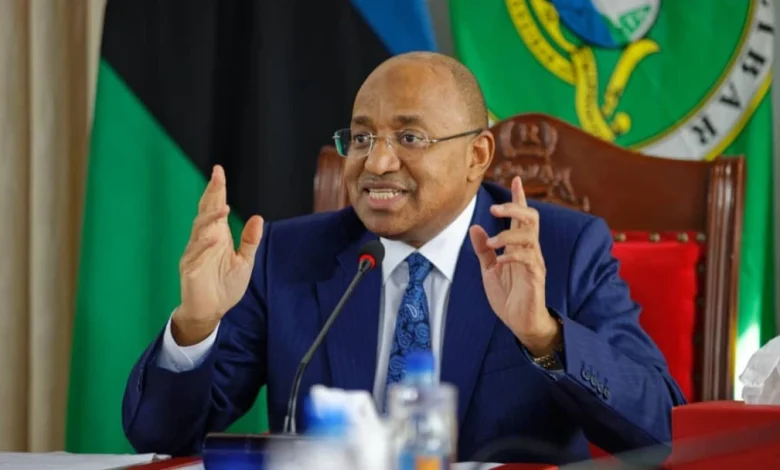
It is against this backdrop that the Eighth Phase Government has rolled out a series of reforms aimed at transforming livelihoods. Speaking during May Day celebrations, President Mwinyi announced a significant increase in the minimum wage for public servants—from 300,000/- to 500,000/-.
The new rates are expected to take effect in the third quarter of the upcoming financial year. He said the decision reflects prevailing economic realities, the rising cost of living, and the need to motivate workers.
“This is not just about wages,” he said. “It is about improving working conditions and ensuring employees receive their rightful benefits on time.” The President also directed the Ministry of Labour to finalise and officially announce revised minimum wage structures for the private sector, following the completion of a comprehensive review.
Beyond the immediate adjustment, Dr Mwinyi pledged that the government would continue conducting regular salary reviews to ensure workers’ incomes remain aligned with economic conditions and citizens’ needs.
Addressing employment challenges, particularly among youths, the government has allocated 7,500 new job opportunities in the current fiscal year, alongside improvements in employee benefits.
“It is not only the minimum wage that will increase,” Mwinyi emphasised. “Salary increments will apply across all levels in accordance with public service guidelines.” He also outlined reforms in the social security system, including streamlining contributions to the Zanzibar Social Security Fund (ZSSF).
Instead of multiple submissions by different institutions, contributions will now be consolidated to reduce errors and delays in processing retirement benefits.
“The current system causes delays and mistakes that affect retirees,” he said. “We are introducing a unified system to address this.” Additionally, the government has finalised draft legislation addressing long-standing concerns, including gratuity payments for voluntary retirees. “Once this law is passed, there will be no deductions for early retirees,” Mwinyi assured.
Since taking office in 2020, the government says it has made notable progress in improving workers’ welfare. These include salary adjustments, review of allowances, strengthened social security benefits, and the introduction of health insurance schemes for employees and their families.
The President highlighted efforts to expand employment through investment projects targeting youths, while also promoting entrepreneurship through interestfree loans. Since March 2022, the Zanzibar Economic Empowerment Agency (ZEEA) has disbursed 53.9bn/- in interest-free loans to 32,369 beneficiaries under programmes such as ‘Inuka,’ ‘Abu Dhabi Fund,’and special groups initiatives. Recognising that productivity depends on skills, Mwinyi stressed the importance of continuous training.
“Efficiency at work depends on quality education and skills,” he said, urging workers to pursue further learning. While acknowledging workers’ rights, Mwinyi reminded employees of their responsibilities. “Rights and duties are inseparable twins,” he said. “Each must be given equal weight.” He commended workers for their contribution to economic growth and service delivery, noting that national progress is driven by their discipline, integrity and patriotism. “The economic transformation we are witnessing is a result of your hard work,” he told workers.
He reaffirmed the government’s commitment to working closely with trade unions to gradually address challenges facing workers. Minister for Labour and Investment, Mr Sharif Ali Sharif, pledged continued support in implementing the President’s directives. He revealed that out of 29 labour-related challenges received, 24 have already been resolved, with four in the final stages of resolution, thanks to strengthened “social partnership” mechanisms.
“The President’s directives have significantly improved how we resolve workers’ challenges,” he said.
On the union side, Zanzibar Trade Union Congress (ZATUC) Secretary General Mr Khamis Mwinyi Mohammed described May Day as one of the most important national events after the Zanzibar Revolution anniversary. He acknowledged progress made, including the implementation of 11 out of 14 demands submitted last year, while three are under government review.
However, he pointed out persistent global challenges such as low wages, workplace discrimination, and exploitation.
“These issues still exist. The struggle must continue,” he said.
ZATUC submitted seven new proposals, including further salary increases, harmonisation of pay across public institutions, improved hardship allowances, and better rural and island working conditions. International Labour Organisation East Africa representative Mr Admound Moshi praised Zanzibar’s commitment to decent work, linking it to the island’s Vision 2050 development agenda.
He noted that steady economic growth, rising investment, and job creation signal positive momentum.
“Decent work is central to inclusive and sustainable growth,” he said.
He urged stronger collaboration with the private sector to address skills gaps and boost employment in emerging sectors such as the blue economy, tourism, infrastructure, digital transformation and agriculture.
Mr Salahi Sahim Salahi, Director of the Zanzibar Employers Association (ZANEMA), emphasised that improved rights must go hand in hand with responsibility.
“Better conditions come with accountability,” he said, expressing confidence in continued cooperation between employers and workers for national development. The significance of May Day traces back to 1889 in the United States, where workers protesting poor conditions were met with violent repression, leaving many dead and injured. The tragedy sparked global solidarity and led to the recognition of May 1 as International Workers’ Day.
Today, the day is marked with celebration, reflection, and renewed commitment to labour rights. For workers like Khadija, policy shifts are more than statistics, they are life-changing. A higher wage means better meals, school fees paid on time, and perhaps a small saving for emergencies.
As Zanzibar pushes forward with reforms, the message is clear: investing in workers is investing in the nation. The recent wage increase is not just about income—it is about dignity, motivation and shared prosperity.