Unlocking Tanzania’s Youth Economic Potential: How Budget 2026/27 Transforms Regulation into Opportunity
AS an economist, I have examined the 2026/2027 national budget with an eye to identifying opportunities for young people, particularly in light of the minor changes proposed in the 2024 road traffic regulations and the broader issue of online content service fees.
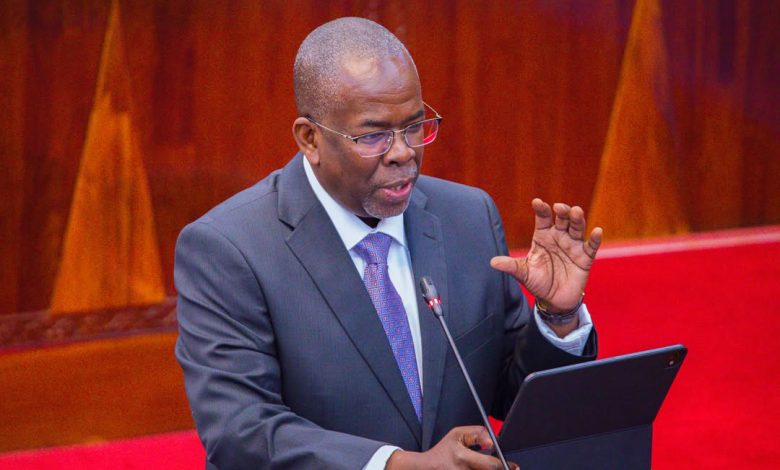
While awaiting the parliamentary debate on the 2026-2027 budget’s sectoral impacts, Minister for Finance Ambassador Khamis Mussa Omara’s speech to the National Assembly last Thursday, indicates that the budget is likely to support the Tanzanian youth economy, generate employment, boost competitiveness, and set the stage for digital-era jobs.
Significantly, it highlights how regulatory reforms could create thousands of new jobs for young people, and presents a budget that recognises youth as vital economic assets.
For many years, Tanzania has faced the challenge of harnessing its rapidly growing youth population to become a productive force that can boost economic growth.
Each year, hundreds of thousands of young people enter the labour market, seeking jobs, business opportunities, and pathways to economic empowerment.
However, access to finance, skills, markets, and business opportunities has often been limited. The 2026/27 national budget signifies a significant shift in policy.
It moves away from viewing youth merely as beneficiaries of government programmes to recognisng them as vital contributors to economic transformation.
The budget introduces fee reforms detailed in The Road Traffic Regulations, 2024, found on pages 123 and 125 (English).
It also addresses online content service fees on page 125 (English), emphasising the digital economy, local government funding loans, business formalisation, infrastructure development, and private-sector support, among other areas.
These initiatives create new opportunities for young Tanzanians to become entrepreneurs, innovators, content creators, investors, and skilled workers.
As Tanzania implements its Fourth Five-Year Development Plan (FYDP IV) and works toward Vision 2050 goals, the youth will play a vital role in determining if the country can achieve its target of becoming a highly productive and competitive middle-income economy.
The 2026/27 budget, therefore, in my view, represents much more than a fiscal document.
It is increasingly becoming a framework for youth opportunities that will fuel the future economy. One of the most significant aspects of the 2026-2027 budget is its acknowledgement of the expanding digital economy and its goal of creating new opportunities for an emerging generation.
Across Tanzania, many young people are earning income through various technology-driven services like online content creation, digital marketing, graphic design, software development, social media management, and ecommerce.
However, regulatory costs and compliance requirements frequently act as barriers for many young innovators.
The 2026-2027 budget suggests reforms aimed at lowering certain barriers and fostering a more supportive environment for engaging in the digital economy.
This is especially significant because the digital sector provides job opportunities that often need less initial investment than traditional industries.
Reducing compliance costs can encourage more young content creators on platforms such as YouTube, TikTok, Facebook, Instagram, and emerging digital spaces to engage more actively and pursue greater innovation.
The digital economy creates multiplier effects because each successful content creator relies on photographers, video editors, graphic designers, social media managers, marketers, and tech service providers. Consequently, one digital business can support numerous jobs.
As internet penetration expands and mobile technology becomes more accessible, Tanzania’s youth are increasingly positioned to participate in global markets without leaving their communities.
The 2026/2027 budget emphasizes transforming informal hustles into sustainable businesses, supported by both anecdotal and statistical evidence indicating that many young Tanzanians run informal enterprises.
ALSO READ: Yas, Meridian Bet partner to empower youth economically
Although these businesses generate income, they often face difficulties in accessing formal financing, obtaining government procurement opportunities, or attracting investors.
The 2026/27 budget introduces measures to support business formalisation, including tax incentives for newly registered firms and initiatives to simplify compliance procedures, with the goal of reducing entry barriers for young entrepreneurs into the formal economy.
For the young people, the 2026-2027 national budget forms a crucial reform. A young entrepreneur who registers a business gains access to opportunities that are often unavailable in the informal sector.
These include access to bank loans, participation in government tenders, legal protection, business development services and partnerships with larger firms.
The 2026-2027 budget acknowledges that formalisation goes beyond just a tax matter. It serves as a strategy for economic empowerment. As more youth-owned businesses formalise, they can expand their operations, create jobs, and play a larger role in economic development.
Access to finance remains one of the main challenges for young entrepreneurs. Many have innovative ideas but lack collateral, financial history, or enough capital to launch and expand their businesses.
The 2026-2027 budget enhances local government financing by increasing the share of own-source revenues allocated to loans for youth, women, and persons with disabilities.
I believe this reform could create new opportunities in various sectors such as agribusiness, manufacturing, transport, tourism, retail, and technology services.
Access to affordable financing allows youth entrepreneurs to transition from survival-oriented businesses to sustainable enterprises that create long-term jobs. Importantly, youth financing should not be seen merely as social support; it is an investment in future economic growth.
In this context, every successful youth-led enterprise adds to national output, increases tax revenues, and promotes job creation. Infrastructure investment continues to be a vital element of the 2026/27 budget.
The proposed budget emphasizes spending on roads, railways, airports, energy infrastructure, and urban development, which will create both direct and indirect job opportunities for young people.
Construction projects rapidly generate employment for engineers, technicians, artisans, machine operators, and service providers.
Additionally, infrastructure development boosts productivity throughout the economy. Reliable electricity enables manufacturing growth at various levels.
Better roads improve market access for farmers. Modern transport systems reduce logistics costs. Improved connectivity expands access to digital services.
These enhancements generate sustainable employment opportunities well after the construction phase. For young job seekers, investing in infrastructure serves as both an immediate and a lasting driver of growth.
The presented budget recognises that agriculture remains one of Tanzania’s largest employers, yet many young people have traditionally viewed the sector as unattractive due to low productivity and limited profitability.
Reading the 2026/27 budget, one sees how the government seeks to change this perception by supporting value addition, agribusiness development, and market-oriented agricultural production. Modern agriculture provides opportunities that extend well beyond traditional farming.
Young people can get involved in agro-processing, logistics, storage solutions, agricultural technology, packaging, export marketing, and financial services.
As Tanzania enhances its agricultural value chains, it is expected that youth engagement will grow considerably.
One of the strongest messages from the 2026-2027 budget is the recognition that government alone cannot create sufficient jobs for Tanzania’s growing population. The private sector must become the primary engine of employment creation.
Through improvements in the business environment, the reduction of regulatory burdens, and the encouragement of investment, the budget 2026-2027 seeks to stimulate private-sector expansion. As businesses grow, they hire workers.
When investors establish factories, they create jobs. When small enterprises expand, they generate local opportunities. This is why the 2026-2027 budget’s focus on investment promotion is particularly important for young people.
A dynamic private sector provides the scale of job creation needed to absorb Tanzania’s expanding labor force. One important clear picture emerging from the proposed budget is that it recognizes that the nature of work is changing globally.
The budget recognises that future employment opportunities will increasingly require digital literacy, technical competence, creativity and innovation.
The budget’s focus on digital transformation, industry, and technology adoption encourages skills development aligned with what the future labor market requires.
Young people interested in technology, engineering, digital services, entrepreneurship, and innovation can gain greatly from these new opportunities.
It is essential that economic policy supports future skills needs to keep long-term competitiveness. The creative economy is emerging as one of the most promising sectors for youth employment.
Music, film, content creation, digital entertainment, animation, and the cultural industries are increasingly important contributors to economic activity.
Hence, regulatory reforms and reduced barriers to digital content services in the 2026-2027 budget will encourage more young Tanzanians to participate in these industries.
The creative economy, which appeals to more young people, provides distinct benefits because it mainly depends on talent, innovation, and intellectual property rather than substantial physical capital investments.
And, given that global demand for African content continues to grow, Tanzanian youth, in line with a few reforms proposed in the 2026 budget, have unprecedented opportunities to build internationally competitive creative enterprises.
Any assessment of the proposed 2026-2027 youth employment and opportunities budget—whether it’s about private sector job creation, skill development, or funding for young people, yields the same result: the budget is focused on investing in Tanzania’s most valuable resource.
This makes the true significance of the 2026/27 National Budget lies not only in its allocations or fiscal measures but in its recognition that Tanzania’s greatest economic asset is its people, particularly its youth.
By promoting entrepreneurship, supporting digital innovation, expanding access to finance, improving infrastructure, encouraging business formalisation and stimulating private sector growth, the 2026-2027 national budget lays the foundation for a more inclusive and opportunity-driven economy.
A successful implementation will depend on efficient institutions, ongoing reforms, and ongoing investment in skills development. Nonetheless, the overall direction remains clear.
The 2026/27 budget is not simply financing government activities. It is helping create an environment where young Tanzanians can build businesses, create jobs, embrace innovation, and become central actors in the country’s economic transformation.
If implemented successfully, this could become the budget that turns Tanzania’s youth from job seekers into job creators and from economic participants into leaders by removing barriers to enterprise and driving future growth.