

UNEP: Ocean protection needs regional action
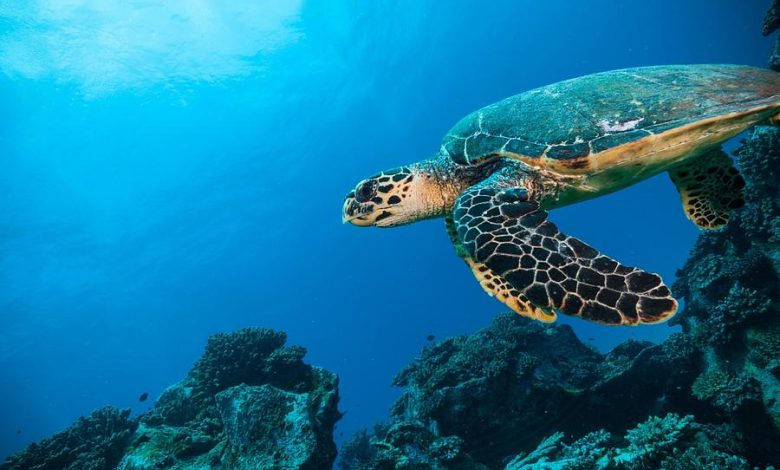
DAR ES SALAAM: THE United Nations Environment Programme (UNEP) has stressed the importance of regional cooperation among Western Indian Ocean countries, saying the shared nature of the ocean makes joint action essential in tackling climate change, biodiversity loss and pollution.
UNEP Deputy Executive Director, Ms Elizabeth Mrema, made the remarks yesterday while addressing the 12th Conference of the Parties (COP12) to the Nairobi Convention, which is marking 40 years of regional cooperation in managing and protecting the Western Indian Ocean.
The four-day meeting has brought together representatives from 10 contracting parties and various stakeholders to address challenges affecting the Western Indian Ocean and advance the sustainable use of marine and coastal resources.
The conference is being held under the theme: “Towards a Sustainable Blue Economy in the Western Indian Ocean for People and Nature: A 40-Year Journey.” Ms Mrema said no single country could address the interconnected threats facing marine and coastal ecosystems in isolation because oceans transcend national boundaries. “The ocean knows no political boundaries and therefore safeguarding marine and coastal ecosystems of the Western Indian Ocean requires a unified regional effort,” she said.
Ms Mrema said the region was meeting at a defining moment for the planet, with climate change, biodiversity loss and pollution increasingly putting pressure on marine ecosystems and coastal communities. She said rising sea temperatures, sea levels and ocean acidification, coupled with increasingly severe extreme weather events, were threatening coastal communities and fragile marine habitats.
Ms Mrema also cited the degradation of coral reefs, mangroves and seagrass meadows, which she said serve as natural shields for coastal communities and important carbon sinks. She said pollution, particularly from land-based sources, plastic waste and nutrient runoff, was further damaging marine food webs and threatening human health.
“Unfortunately, no single nation can address these interconnected crises in isolation. Ocean health is planetary health and protecting it requires structured, cohesive and collaborative actions,” she said.
Ms Mrema said the Nairobi Convention had demonstrated the value of regional cooperation by providing a platform for countries to develop common approaches to marine and coastal environmental challenges. She cited the convention’s work on integrated coastal and ocean governance, landbased sources of pollution, marine protected areas and coastal water-quality monitoring as examples of how regional frameworks could translate into national action.
She said the regional action plan on marine litter had informed national marine litter action plans in five countries, while the strategic framework for coastal water-quality monitoring had supported improvements in national monitoring across eight countries in the Western Indian Ocean.
Ms Mrema said the convention had also strengthened transboundary collaboration through joint management of shared marine ecosystems and common approaches to pollution and protected areas. She called for regional cooperation to be translated into concrete action that delivers benefits to people and nature.
“As we look towards the next decade and beyond, the decisions which will be taken here at this 12th Conference of the Parties need to match the scale of the challenges before us,” she said.
ALSO READ: Govt urges citizens to seek legal aid
Ms Mrema also urged countries to deepen partnerships by involving youth, civil society, the private sector, indigenous peoples and local communities in efforts to protect marine ecosystems. She further called for innovative financing mechanisms to secure long-term investment in marine ecosystems across the Western Indian Ocean region.
Ms Mrema said the region needed to scale up ocean financing through mechanisms such as blue finance, natural capital accounting and dedicated trust funds to ensure sustainable investment in marine ecosystems.
“We must be able to scale up innovative ocean financing including blue, natural capital accounting and trust funds to ensure that sustainable investment in our marine ecosystems is guaranteed,” she said.
Ms Mrema said the financing push was necessary as countries confronted interconnected challenges of climate change, biodiversity loss and pollution, which were increasingly threatening marine and coastal ecosystems.


Hello, i think that i saw you visited my website so i came to “return the favor”.I am trying to find things to improve my website!I suppose its ok to use a few of your ideas!!
Very interesting topic, regards for posting. “Genius is of no country.” by Charles Churchill.
시알리스의 성분인 타다라필과 효과, 지속시간, 5mg·10mg·20mg 차이를 알아보세요. 복용 방식, 부작용, 함께 복용하면 안 되는 약, 처방과 가격 확인 방법을 정리했습니다.
비아그라 구매 전 알아야 할 국내 처방 절차와 약국 이용 방법, 가격 확인 기준을 안내합니다. 실데나필 성분, 정품 확인 시 주의점, 복용 전 상담사항과 자주 묻는 질문을 확인하세요.
Absolutely pent subject material, Really enjoyed examining.
I’ll right away snatch your rss feed as I can not find your email subscription hyperlink or newsletter service. Do you’ve any? Please let me know in order that I could subscribe. Thanks.
팔팔정의 성분과 효과, 50mg·100mg 차이, 복용 시간과 부작용을 확인하세요. 처방 및 가격 확인 방법, 함께 복용하면 안 되는 약, 자주 묻는 질문까지 안내합니다.
강릉출장안마로 장거리 출장이나 여행의 피로를 풀어보세요. 강릉 전 지역 어디든 찾아가는 전문 아로마 마사지·스포츠 마사지 서비스를 제공합니다. 비즈니스 출장객, 관광객, 강릉 지역 주민 모두 편리하게 이용할 수 있는 강릉출장안마 서비스입니다. 지금 문의하세요.
I do agree with all of the ideas you’ve offered for your post. They are really convincing and will certainly work. Still, the posts are too quick for newbies. May just you please prolong them a little from subsequent time? Thanks for the post.
I went over this website and I believe you have a lot of great info , saved to fav (:.
Thank you for another excellent post. The place else may just anybody get that kind of info in such a perfect approach of writing? I have a presentation subsequent week, and I am at the look for such info.
강남구구단 방문을 준비하고 있다면 가격 구성, 이용 방식, 예약 절차와 위치 확인사항을 살펴보세요. 인원·시간에 따른 상담 항목과 자주 묻는 질문을 한곳에 정리했습니다.
As soon as I detected this web site I went on reddit to share some of the love with them.
Very interesting info!Perfect just what I was looking for!
Hi, just required you to know I he added your site to my Google bookmarks due to your layout. But seriously, I believe your internet site has 1 in the freshest theme I??ve came across. It extremely helps make reading your blog significantly easier.
Very good blog! Do you have any tips and hints for aspiring writers? I’m hoping to start my own blog soon but I’m a little lost on everything. Would you recommend starting with a free platform like WordPress or go for a paid option? There are so many options out there that I’m completely overwhelmed .. Any tips? Thank you!
Woah! I’m really enjoying the template/theme of this site. It’s simple, yet effective. A lot of times it’s tough to get that “perfect balance” between user friendliness and appearance. I must say you’ve done a great job with this. In addition, the blog loads extremely fast for me on Safari. Superb Blog!
I just couldn’t go away your web site before suggesting that I actually enjoyed the standard info a person supply for your visitors? Is going to be again regularly to check up on new posts
Great blog! Is your theme custom made or did you download it from somewhere? A design like yours with a few simple tweeks would really make my blog jump out. Please let me know where you got your design. Thanks a lot
I simply couldn’t leave your site before suggesting that I extremely enjoyed the standard info an individual provide to your guests? Is going to be again frequently in order to investigate cross-check new posts
I went over this web site and I believe you have a lot of fantastic information, bookmarked (:.
Those are yours alright! . We at least need to get these people stealing images to start blogging! They probably just did a image search and grabbed them. They look good though!
Great items from you, man. I’ve bear in mind your stuff prior to and you are just too excellent. I actually like what you have obtained right here, really like what you are saying and the way in which through which you are saying it. You make it entertaining and you continue to take care of to keep it sensible. I can not wait to read far more from you. That is actually a wonderful website.
Thank you for some other informative web site. The place else could I am getting that kind of info written in such a perfect method? I’ve a undertaking that I am just now running on, and I’ve been at the look out for such information.
I am not sure where you are getting your info, but good topic. I needs to spend some time learning much more or understanding more. Thanks for wonderful information I was looking for this information for my mission.
Hi there! I just wanted to ask if you ever have any trouble with hackers? My last blog (wordpress) was hacked and I ended up losing months of hard work due to no backup. Do you have any solutions to protect against hackers?
The next time I read a blog, I hope that it doesnt disappoint me as much as this one. I mean, I know it was my choice to read, but I actually thought youd have something interesting to say. All I hear is a bunch of whining about something that you could fix if you werent too busy looking for attention.
Merely wanna input that you have a very decent internet site, I enjoy the style and design it actually stands out.
Good day very nice site!! Guy .. Beautiful .. Amazing .. I’ll bookmark your website and take the feeds also?KI’m satisfied to seek out so many helpful info here in the submit, we need work out extra strategies on this regard, thank you for sharing. . . . . .
I would like to thnkx for the efforts you have put in writing this blog. I am hoping the same high-grade blog post from you in the upcoming as well. In fact your creative writing abilities has inspired me to get my own blog now. Really the blogging is spreading its wings quickly. Your write up is a good example of it.
whoah this blog is magnificent i love reading your posts. Keep up the good work! You know, a lot of people are hunting around for this information, you can help them greatly.
That is really fascinating, You are an excessively skilled blogger. I’ve joined your rss feed and look ahead to searching for more of your excellent post. Additionally, I’ve shared your web site in my social networks!
Thank you for some other fantastic post. Where else may anybody get that kind of info in such a perfect approach of writing? I’ve a presentation subsequent week, and I’m at the look for such info.
I’ve been exploring for a bit for any high quality articles or weblog posts on this sort of area . Exploring in Yahoo I eventually stumbled upon this website. Studying this info So i am satisfied to exhibit that I’ve a very good uncanny feeling I discovered just what I needed. I so much certainly will make certain to don’t forget this website and give it a look regularly.
Hello there! Do you know if they make any plugins to protect against hackers? I’m kinda paranoid about losing everything I’ve worked hard on. Any recommendations?
I’d must test with you here. Which is not something I normally do! I enjoy studying a put up that may make people think. Also, thanks for allowing me to remark!
wonderful post, very informative. I wonder why the opposite specialists of this sector do not realize this. You must proceed your writing. I’m confident, you’ve a great readers’ base already!
The subsequent time I learn a weblog, I hope that it doesnt disappoint me as a lot as this one. I imply, I know it was my option to learn, but I truly thought youd have one thing attention-grabbing to say. All I hear is a bunch of whining about something that you could possibly repair should you werent too busy searching for attention.
Somebody essentially help to make seriously posts I would state. This is the very first time I frequented your web page and thus far? I surprised with the research you made to create this particular publish incredible. Excellent job!
I really enjoy looking through on this site, it has got excellent posts. “We find comfort among those who agree with us–growth among those who don’t.” by Frank A. Clark.
I very delighted to find this site on bing, just what I was searching for : D besides saved to bookmarks.
Oh my goodness! a tremendous article dude. Thanks Nevertheless I am experiencing situation with ur rss . Don’t know why Unable to subscribe to it. Is there anyone getting equivalent rss drawback? Anyone who is aware of kindly respond. Thnkx
I do accept as true with all the ideas you have offered to your post. They are really convincing and can certainly work. Nonetheless, the posts are too short for starters. Could you please prolong them a bit from next time? Thank you for the post.
늑대닷컴을 검색하며 궁금했던 웹툰 정보와 작품 찾는 방법을 정리했습니다. 연재·완결 구분, 무료 회차와 미리보기 차이, 주소 정보 확인 기준, 모바일 이용 팁과 자주 묻는 질문을 확인하세요.
구미오피를 검색하며 구미 지역 일반 마사지·스파를 알아보는 분들을 위한 안내입니다. 프로그램 선택, 관리 시간과 비용, 시설·위생, 주차, 예약 전 확인사항과 자주 묻는 질문을 정리했습니다.
밤토끼가 어떤 사이트였는지, 과거 이력과 현재 검색 정보를 구분하는 방법을 정리했습니다. 예전에 보던 웹툰 찾기, 공식 연재처 확인, 무료 회차와 대여·소장 차이, 자주 묻는 질문까지 한 번에 확인하세요.