Africa’s betting boom more than addiction problem, researcher argues
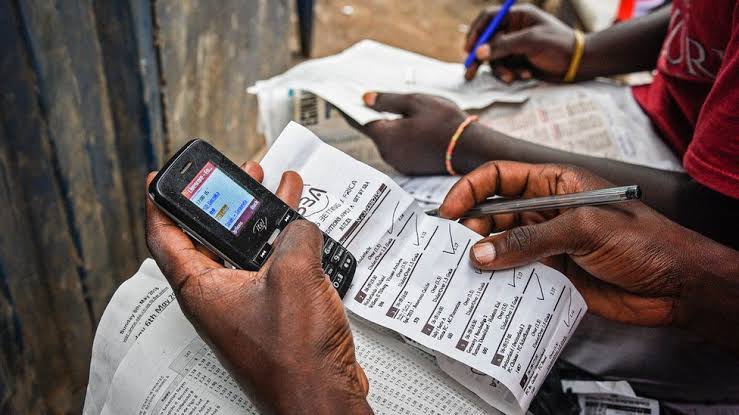
AFRICA: AFRICA’S gambling industry is growing quickly, driven by smartphones, mobile money and football.
Public debate often reduces this to a question of individual addiction, but a public health researcher says that framing misses the larger picture.
The argument comes from Franklin Glozah, an Associate Professor of Behavioural Science in Health at the University of Ghana.
A public health psychologist, he studies psychosocial risk and protective factors behind adolescent mental health and health behaviours, including gambling, substance use and violence.
He teaches in the university’s School of Public Health, and earned his PhD at the University of Essex in the UK.
His gambling research includes a survey of 770 Ghanaian young people, published in 2021, which found sports betting was the most common form of gambling.
He is also a co-author of a 2023 paper in the Journal of the British Academy that set out a research agenda on young people and gambling in sub-Saharan Africa.
Africa: How Football, Smartphones and Mobile Money Drive Youth Sports Betting in Africa He was part of a team that reviewed existing research across sub-Saharan Africa, identified gaps in what is known and proposed a broader way of understanding the problem.
His central argument is that gambling should be treated as a product of its environment, not only as a behavioural disorder.
A market expected to multiply
Industry estimates suggest annual betting revenue on the continent could rise from US$3.5 billion in 2021 to US$19.4 billion by 2030. South Africa, Nigeria and Ghana are among the largest markets.
According to Glozah, the biggest change of the past decade is ease of access. Betting no longer requires a visit to a shop.
A young person with a smartphone, internet access and mobile money can place a bet almost anywhere, at any time. Football dominates. In his Ghana study, sports betting was the most common form of gambling, and more recent surveys suggest the pattern holds.
A 2026 survey of 2,866 people in Ghana, Kenya, Nigeria, South Africa, Tanzania and Uganda found that 64 per cent of respondents in Kenya, 60 per cent in Ghana and 54 per cent in Nigeria had bet on football in the previous year.
Among active bettors, 95 per cent used a mobile device and 67 per cent said football was what they bet on most.
The survey is not nationally representative, so the figures describe those sampled rather than whole populations.
Glozah suggests football’s popularity, frequent matches, heavy media coverage and betting promotions help explain why it attracts so much wagering.
Betting has become tied to everyday digital life and football culture, making it easy for young people to encounter.
ALSO READ: Stakeholders urge responsible approach to gambling
Harms, and why young people bet
The risks are documented. A 2024 global study estimated that 8.7 per cent of adults who gamble online experience problematic gambling. Harms include financial difficulty, psychological distress and strained relationships.
Glozah’s research cautions against assuming young people see betting as simple entertainment. For some, it looks like a source of income.
On a continent with a very large youth population and uncertain job prospects, the prospect of turning a small stake into a large sum can be attractive. But gambling is not a dependable livelihood, and losses fall on money that may already be scarce.
Social context also matters. Young people’s attitudes toward gambling are linked to the support they receive from family, friends and teachers.
Those who face conflict or little support at home tend to view gambling more favourably, while those who feel valued show less interest.
This is consistent with his wider work, in which young Ghanaians with more social support reported lower stress and better health and wellbeing. He argues this makes it unwise to simply blame young people.
The industry and the regulatory gap
Researchers know a good deal about problem gambling and individual risk factors, Glozah says, but far less about the companies selling betting products: how they advertise, how they link betting to football, how technology keeps gambling available around the clock, and whether regulation has kept up.
The industry includes local businesses and international operators, some headquartered outside Africa and working through subsidiaries, partnerships or locally licensed firms.
They have expanded through football sponsorships, advertising, online platforms and mobile technology. Research also points to a link between mobile money use and gambling participation.
A study by Glozah and colleagues of regulation in 49 African countries found gambling was legally regulated in 41. Approaches differed widely.
Only 15 of those 41 had legislation explicitly covering online gambling, and 18 had laws on gambling advertising.
Some had dedicated regulators, while others left oversight to government departments, and public reporting was very limited in many countries.
The result, Glozah argues, is a contradiction: young people are asked to gamble responsibly while surrounded by an environment where betting is easy to reach and heavily commercialised.
What he proposes
Glozah calls for governments to examine how gambling is advertised and promoted, including its ties to football and other sports, and to make age restrictions work in practice.
Regulators also need better data on who gambles, how much they spend and what harm results.
He adds that regulation alone cannot remove the pull of betting if young people see few other ways to improve their finances. Gambling policy, he says, should be paired with measures that address youth unemployment and economic insecurity.
The analysis points to a convergence of football, technology, money and the search for opportunity. Any serious response, Glozah argues, must address all four.