Transport integration to spur Dira 2050
DAR ES SALAAM: TANZANIA is seeking to develop an efficient and integrated multimodal transport system connecting railways, roads, ports, airports and waterways to enhance regional and international connectivity as part of efforts to achieve the ambitions of Dira 2050.
The move is aimed at ensuring that investments in different transport modes operate as one connected network, helping to reduce logistics costs, shorten cargo transit times, facilitate trade and strengthen Tanzania’s position as a regional transport and logistics hub.
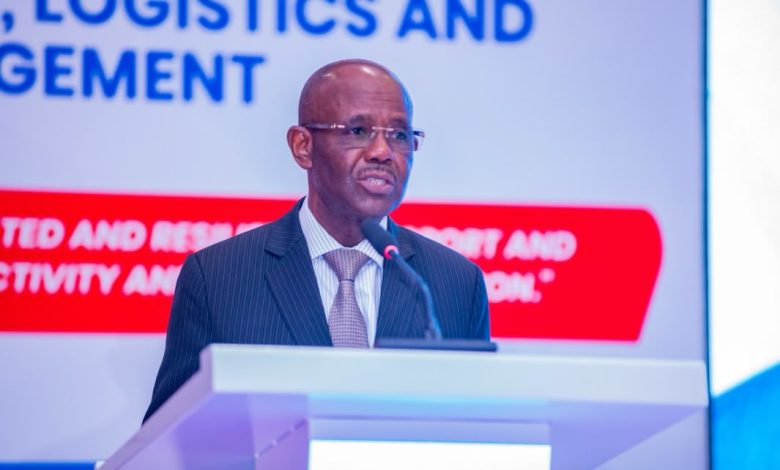
Minister for Transport Professor Makame Mbarawa said this in Dar es Salaam yesterday, when officiating at the fourth International Conference on Transport, Logistics and Management (ICTLM), organised by the National Institute of Transport (NIT).
The two-day conference brings together academia, industry and policymakers to present research, share practical experiences and explore innovative solutions in transport, logistics and supply chain management.
The conference is themed “Towards Smart, Green, Integrated and Resilient Transport and Logistics for Seamless Connectivity and Trade Facilitation.”
Prof Mbarawa said the approach was critical to achieving the country’s long-term ambition of building a competitive, industrialised and knowledge-driven economy under Dira 2050.
He said Tanzania had made major investments in different modes of transport, including the Standard Gauge Railway (SGR), ports, roads, aviation, Bus Rapid Transit (BRT) and maritime transport.
He said the focus should now be on ensuring that the investments operated as an integrated system rather than as separate infrastructure projects.
“Our objective is not simply to build infrastructure but to develop an efficient and integrated multimodal transport system connecting our railways, roads, ports, airports and waterways,” Prof Mbarawa said.
He said the conference theme was timely and relevant, noting that the future of transport would increasingly be shaped by digitalisation, artificial intelligence, automation, technology and climate resilience.
“We can no longer plan roads, railways and airports independently. They must operate as one integrated transport and logistics system.
As we implement Tanzania Development Vision 2050, this integration will become even more important,” he said.
Prof Mbarawa said an integrated network would strengthen the country’s strategic position as a transport and logistics gateway serving Eastern, Central and Southern Africa.
He said achieving the ambition would require efficient supply chains, competitive logistics, sustainable urban mobility and strong regional and international connectivity.
“Transport must not simply respond to economic growth. It must help drive that growth,” he said.
The minister said building infrastructure alone was not sufficient, arguing that the country must ensure existing infrastructure performed efficiently and delivered tangible economic benefits.
ALSO READ: Tanzania moves to transport larger cargo by rail in a move to reduce transportation costs
“We must reduce logistics costs, shorten cargo transit times, improve safety and reliability, embrace technology and provide better transport services to our people and businesses,” he said.
He also challenged researchers attending the conference to develop practical solutions to challenges facing the transport sector, saying research should directly inform government policies, industry practices and investment decisions.
Prof Mbarawa urged researchers to focus on improving the efficiency of ports and railway systems, reducing logistics costs, shortening cargo transit times, strengthening transport safety and developing infrastructure capable of withstanding climate change.
“Research must ultimately translate into action and measurable results,” he said. He said research should not remain confined to academic journals and conference proceedings, but should help the government and industry address real challenges affecting the movement of people and goods.
NIT Governing Council Chairperson Professor Ulingeta Mbamba said the gathering served as a platform for knowledge creation and development of innovative solutions for the transport industry.
He also highlighted the institute’s strategic role in supporting national economic growth and the country’s long-term development vision.