The wonderful birds of Rubondo Island National Park
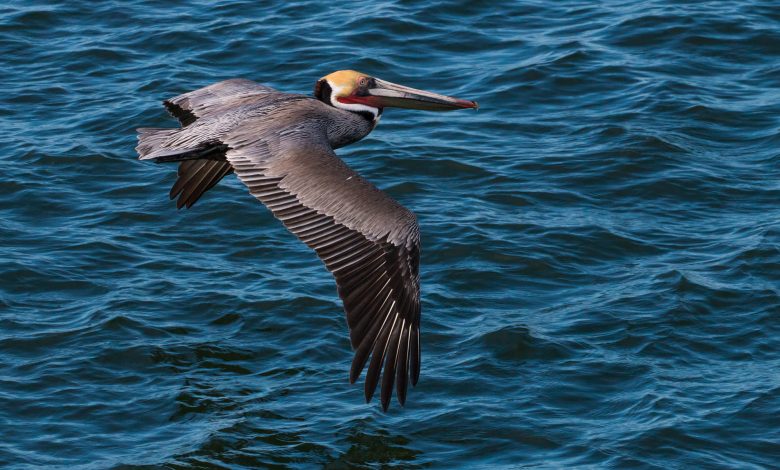
MWANZA: THE United Republic of Tanzania is a beautiful country in East Africa that is home to two unique national parks located within Lake Victoria.
These are Saanane National Park, a small island reserve just offshore Mwanza, and Rubondo Island National Park, a much larger island park in the lake’s southwest.
Rubondo is especially known for its populations of chimpanzees and the rare sitatunga antelope. Besides the chimpanzees, Rubondo island national park hosts native savannah forest species of elephants, giraffes, hippos, crocodiles, bushbucks, monitor lizards, and pythons.
Rubondo Island National Park is also well known for several species that were introduced between the 1960s and 1970s. These include suni, black-and-white colobus monkeys, vervet monkeys, and giraffes, which were originally translocated from other national parks in Tanzania.
The park is also renowned for its abundant birdlife, with prolific waterbirds such as African grey parrots, African fish eagles, pelicans, and cormorants commonly found around the island and its shores.
Rubondo Island National Park covers about 457 square kilometres whereby the main island covers about 240 square kilometres plus 11 smaller islets in the southwest corner of Lake Victoria. The beautiful national park is uninhabited, heavily forested and found about 150 kilometres west of Mwanza.
The park lies at 1,200 meters above sea level and, gets 900 to 1,300 millimetres of rain a year mainly from December to April. Rubondo Island National Park is a renowned birding hotspot, with more than 300 bird species recorded in the park. Waterbirds and migratory species thrive in the extensive papyrus beds along the shores of Lake Victoria.
ALSO READ: Global call grows to protect forests, natural resources
These include African fish eagles, pink-backed pelicans, egrets, herons, stilts, and various species of kingfishers. Forest patches hold palm‑nut vultures, bat hawks, Hamerkops, honeyguides, and sunbirds. Endemic and notable species in the park include the African grey parrot and the red-chested cuckoo, while Palearctic migratory birds visit the park between October and March.
The park’s rich birdlife is influenced by its ecological connections to the Central African and Congolese forests, as well as the Nile Basin, which contribute to its diverse mix of species.
Unlike many other areas, Rubondo Island National Park is dominated by pink-backed pelicans rather than other pelican species. Visitors can often spot these birds roosting in trees along the lakeshore or gliding low over the park’s sheltered bays.
They typically nest in colonies on the smaller surrounding islets, feeding on fish from the nutrient-rich waters of Lake Victoria. Their presence is an important indicator of healthy fish populations and adds to the park’s classic wetland landscape.
Zoologists describe pelicans as large waterbirds distinguished by a prominent throat pouch that acts like a net for scooping up fish. They have long bills, fully webbed feet, and broad wings that allow them to soar effortlessly over water.
In Rubondo Island National Park, the pelicans seen are mostly pink-backed pelicans, which are medium-sized and characterised by a gray-brown body, a pink-tinged back, and their well-known expandable pouch.
They nest in colonies, often on small islets or in lakeshore trees, and depend heavily on the rich fish populations of Lake Victoria for food. A defining feature of pelicans is their throat pouch, a stretchy sac of skin that hangs from the lower bill. When a pelican dives or skims the water’s surface, it opens its bill and expands the pouch to scoop up water along with fish.
The bird then lifts its bill, drains the excess water, and swallows the catch. Zoologists note that in larger pelican species the pouch can hold up to three gallons of water. In addition to catching prey, the pouch also helps regulate body temperature, as pelicans can cool themselves by fluttering the skin and blood vessels in the pouch.
Historians and paleontologists suggest that the ancestors of modern pelicans evolved about 36 million years ago in regions that today include northern Africa, near what is now Egypt.
Fossil evidence supports this early origin. For example, a 30-million-year-old fossil discovered in France shows that the pelican’s distinctive long bill and throat pouch were already well developed, indicating that this feeding adaptation was established early in their evolutionary history and has changed very little since.
Scientists believe this is because the design is highly efficient for scooping fish and supporting strong flight. Some researchers propose that pelicans first emerged in the Old World—particularly across Asia, Europe, and Africa—before later spreading to the Americas, where they eventually diverged into OldWorld and New-World lineages.
The relatively small changes in their body structure over millions of years are often cited as an example of evolutionary continuity, suggesting that once the pouch-and-bill feeding system proved successful, there was little evolutionary pressure for major redesign.
Around 36 million years ago, the Earth’s climate was generally warmer than it is today. Sea levels were higher, and lush forests extended far toward the polar regions.
Antarctica had recently drifted over the South Pole and was beginning to develop ice sheets, but large parts of Europe, Africa, and North America were still dominated by subtropical woodlands, providing rich habitats for early bird species such as the ancestors of modern pelicans.
During this period, ancient mammals were rapidly diversifying, early whales had begun inhabiting the oceans, and the first recognisable pelicans were already flying over ancient lakes and coastal waters. These early birds occupied environments rich in aquatic life, which supported their specialised feeding habits.
ALSO READ: The gods of rain are awake in this city
In the late Eocene, global sea levels were somewhat higher and the continents were arranged differently from today. Africa was slowly moving northward toward Eurasia, gradually closing the ancient Tethys Sea. At the same time, large epicontinental seas extended across parts of North America and Eurasia, while many extensive lakes dotted the landscape.
Because coastlines reached farther inland, shallow marine waters and wetlands were widespread, providing ideal habitats for early pelicans.
Scientists suggest that wherever coasts, river deltas, and large lakes persisted, the ancestors of pelicans were able to specialise in fish-scooping feeding strategies, favouring the evolution of the expandable throat pouch and efficient soaring flight. In contrast, arid inland regions lacked sufficient aquatic prey, keeping pelicans closely tied to wetlands.
Over time, changes in sea levels and river systems likely influenced their migration, spread, and eventual diversification, reinforcing a body design perfectly adapted to environments rich in fish and other aquatic resources.
Different studies suggest that the pelican’s pouch likely began as a slightly stretchable area of throat skin that helped the bird hold slippery fish after capture. Individuals with even a modestly expandable sac would have been able to catch and retain more prey, increasing their chances of survival and reproduction.
Over millions of years, natural selection gradually amplified this feature, expanding the skin and its network of blood vessels into the large, highly elastic throat pouch seen in modern pelicans. In Rubondo Island National Park, both pink-backed pelicans and cormorants are prominent waterbirds, each highly adapted to their feeding strategies.
Pelicans rely on surface or near-surface water, using their long bills and expandable throat pouches to scoop fish, drain water, and swallow prey whole. They have totipalmate webbed feet, buoyant, waterproof plumage, and strong necks that coil and stretch like shock absorbers for plungefeeding.
On land, pelicans are awkward, but in water they swim powerfully, using their webbed feet as paddles and rudders. Cormorants, in contrast, are smaller and more slender, with less water-repellent plumage that allows them to dive efficiently.
They chase fish underwater using powerful foot strokes, neck twists, and wing adjustments. Their long, hooked bills act like tweezers rather than nets, and a small gular pouch helps swallow fish whole. Cormorants can stay underwater for 20–40 seconds, sometimes longer, aided by oxygen stored in their muscles and blood and by denser bones that reduce buoyancy.
Both species share parental care, incubating eggs and feeding chicks by regurgitation, though pelicans are noisier, producing grunts, groans, and bill clatters at busy colonies.
Within Rubondo, the two species interact in complex ways: cormorants may displace pelicans at nesting sites, while pelicans sometimes follow cormorants to steal fish, showing both competition and opportunistic feeding.
Pelican and cormorant populations include resident and migratory individuals. Migration is more common among northern populations, with pelicans moving south in winter and cormorants travelling to warmer coasts and rivers.
The best birdwatching period in Rubondo is during the wet season (November to May), when migratory birds arrive, peaking in November– December and January–February. Dry months (June–October) are better for general wildlife viewing, though pelican activity remains noticeable. Email: rstanslaus@yahoo.