The power of one voice: Lessons from WHO-FCTC COP11 for Tanzania’s global engagement
JIM Rohn, an American entrepreneur and one of the most influential personal development thinkers of the 20th century, often used simple examples to explain complex truths.
He once observed that an apple a day makes you healthy, but eating only apples every day is a problem.
It is a simple idea, but one with profound implications for public policy, especially in sectors where truth is not singular, but contested.
In policy, as in life, balance matters. For Tanzania, that lesson is becoming increasingly urgent, not only in what we negotiate globally, but in how we show up to negotiate.
Nowhere is this clearer than in international forums such as the WHO Framework Convention on Tobacco Control (FCTC) Conference of the Parties (COP11), where countries are not just represented, they are heard, interpreted and judged by the coherence of their voice. In such spaces, one truth stands out: a country that speaks in many directions is rarely heard in any.
At COP11 in Geneva, Tanzania’s delegation reflected commendable diversity.
It brought together officials from health, agriculture, finance, trade and labour, recognising that tobacco is not just a health issue, but also an economic, agricultural and social one.
Yet diversity alone is not enough. The deeper question remains: did these voices speak as one? International negotiations do not reward the number of participants; they reward clarity of position.
Listening to those present, coordination was limited and the absence of a clearly articulated national position weakened the country’s influence.
As one participant reflected, “We lacked a clear national position and teamwork and therefore could not fully utilize the opportunity.”
The challenge Tanzania faces is not a lack of expertise. It is coordination.
Coordination goes beyond attending meetings. It requires a shared understanding of what the country stands for, what it is willing to negotiate and what it cannot concede.
Without this, even technically strong delegations become fragmented. Health may prioritise disease prevention.
Agriculture may focus on farmer livelihoods. Finance weighs revenue implications.
Trade sees market opportunities. Each perspective is valid, but without alignment, they cancel each other out.
A strong delegation is not defined by how many ministries are present, but by whether they orbit a single centre: a clear national position.
And that position must be built at home, not improvised abroad.
Building a unified position requires deliberate engagement across ministries, sometimes involving difficult conversations where competing priorities are openly addressed.
What should Tanzania prioritise: health outcomes, export earnings, or both? How fast should transitions happen? What protections are non-negotiable for farmers? What commitments are realistic internationally? These are not questions to be settled in Geneva.
Without prior agreement, delegates do not negotiate, they improvise.
In international diplomacy, inconsistency has consequences. Mixed signals weaken alliances, create uncertainty and reduce negotiating power.
By contrast, countries that arrive with clear, unified positions, even complex ones, are respected as coherent actors. And in diplomacy, predictability is power.
ALSO READ: From local roots to global ambition: The rise of tobacco in Tanzania’s growing economy
Unified messaging is not about eliminating differences; it is about resolving them before engagement.
Once in global forums, a country must speak not as ministries, but as one nation. This is what gives weight to a country’s voice. Not volume.
Not numbers. But alignment. The lesson from COP11 is therefore not that Tanzania lacked representation, but that representation without alignment is not enough.
This lesson extends beyond tobacco policy. It applies to climate negotiations, trade agreements, health diplomacy and regional cooperation.
Every international platform requires the same thing: coordination, clarity and unified national messaging. Without these, even strong arguments lose force. With them, even complex positions gain respect.
If Tanzania is to strengthen its influence globally, three shifts are essential:
(1). Institutionalised Coordination Pre-negotiation platforms that bring ministries together not as a formality, but as decision-making spaces.
(2). Defined National Positions Clear, documented positions to guide delegates and ensure consistency. And (3).
Strategic Messaging Alignment in how Tanzania communicates its priorities internationally. Adam Kahane, a global expert in conflict resolution, offers a useful perspective.
Having worked on complex transitions such as South Africa’s, he argues that progress does not come from eliminating opposing views, but from engaging them constructively, what he calls “collaborating with the enemy.”
His insight complements Rohn’s philosophy. Progress lies not in extremes, but in balance.
In the context of tobacco policy, this means recognising that livelihoods (SDG 1 & 8), food security (SDG 2) and economic stability must be considered alongside public health (SDG 3) and environmental sustainability (SDGs 12, 13 and 15).
A one-sided approach, whether purely economic or purely health-driven, risks creating new problems while solving others. Balance is not compromise. It is strategy.
When reached for comments on how the Ministry of Health is working with the Ministry of Agriculture and other relevant ministries to ensure that Tanzania’s position reflects both public health priorities and economic realities of rural communities that depend on tobacco farming as Tanzania participates in the WHO FCTC discussions, the Ministry of Health through Dr Ubuguyu, whom this reporter was referred to by the Chief Medical Officer Dr Grace Magembe, responded by emphasising the importance of a coordinated, multisectoral approach.
The Ministry noted that the WHO FCTC, adopted in 2003 and ratified by Tanzania in 2007, is an evidencebased treaty that promotes public health while allowing context-sensitive implementation.
Tanzania is currently implementing the Health Sector Strategic Plan V alongside the National Strategic Plan for Prevention and Control of Non-Communicable Diseases (2021–2026).
Importantly, the Ministry clarified that the Convention does not call for a total ban on tobacco production, but encourages regulation and protection of people, livelihoods and the environment, particularly under Articles 17 and 18.
Government efforts are therefore anchored in policy coherence across sectors, health, agriculture, finance and labour, ensuring that both public health and economic realities are reflected.
Recognising that tobacco is largely produced for export, Tanzania aims to protect population health while sustaining productivity and development.
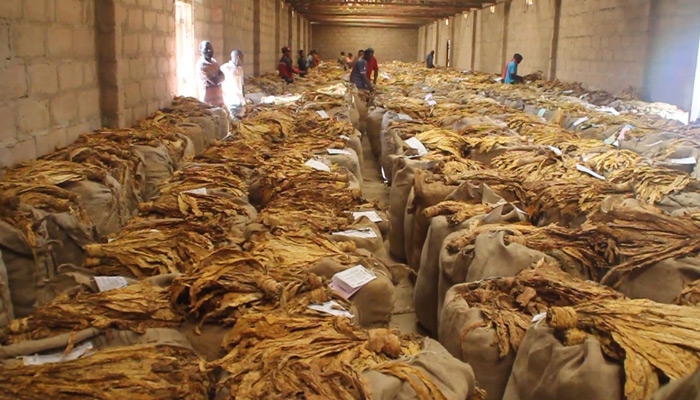
Practical measures include improving working conditions and supporting gradual diversification into alternative crops. The Tanzania Tobacco Board echoes this balanced view.
According to the Board, global FCTC processes are already shaping demand, regulatory standards and market access.
Stricter tobacco control measures may reduce demand over time, while increasing requirements for sustainability, traceability and labour compliance. Buyer preferences are also shifting toward responsibly produced tobacco.
“Tanzania’s approach is not about resisting global tobacco control, but about adapting responsibly, ensuring that public health goals are met while protecting the livelihoods of farmers who depend on the crop. The transition must be gradual, inclusive and grounded in local realities.” said the Tanzania Tobacco Board Executive Director, Stanley Mnozya.
However, the Board emphasises that Tanzania remains competitive if it improves quality, strengthens compliance and targets stable markets. The key is gradual adaptation, not abrupt transition.
The Board also highlights mechanisms for ensuring farmer representation, including stakeholder consultations, international participation and institutional channels such as cooperatives and industry bodies.
Its advisory role focuses on balancing public health objectives with economic realities, highlighting the sector’s contribution to employment, foreign exchange and rural livelihoods while supporting compliance with international obligations.
Looking ahead, efforts are focused on sustainable production, regulatory strengthening, value addition and diversification.
The longterm vision is a competitive, responsible tobacco sector that adapts to global changes while supporting rural communities.
The experience of COP11 offers a clear lesson. Tanzania did not lack representation; it brought diverse expertise and perspectives. But global influence is not built on presence alone. It is built on coherence.
At COP11, discussions spanned environmental responsibility, farmer livelihoods, regulation and health.
These are complex, interconnected issues that demand both balance and collaboration. The challenge and opportunity for Tanzania is to align its internal diversity into a unified national voice.
Because when a country speaks with clarity, it earns respect. When it speaks with coordination, it builds alliances.
And when it speaks with one voice, it shapes outcomes. Tanzania does not need fewer voices. It needs those voices to speak clearly, confidently and together.