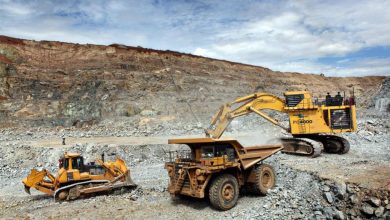
The mining agenda fuelling Tanzania’s rise in global minerals race
DODOMA: TANZANIA’S mining sector has undergone profound transformation, evolving from a struggling industry into the primary engine powering the nation’s economic growth, courtesy of strategic reforms unlocking record-breaking investment and revenue.
Government revenue from mining has grown from 526bn/- in 2020/2021 to over 1.4tri/- in 2025/2026, surpassing the annual target by 16 per cent.
The sector’s contribution to GDP rose from 9.1 per cent in 2023 to a record 10.1 per cent in 2024 and has since averaged 11.9 per cent to 12 per cent.
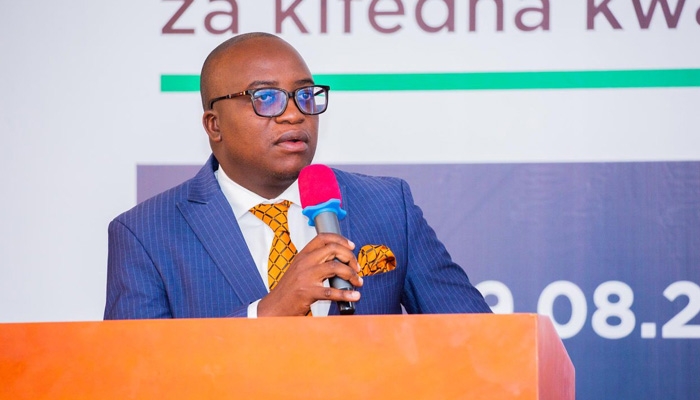
Presenting his docket’s 2026/27 budget estimates in the National Assembly in Dodoma, Minister for Minerals Anthony Mavunde emphasised the massive opportunities awaiting investors.
“Tanzania is no longer just a gold story. We are the future of the global green energy transition. Our regulatory environment is optimised for profitability and absolute security, which is why the Fraser Institute ranked us fourth in Africa for investment attractiveness,” he said.
Total Foreign Direct Investment (FDIs) stock in the mining sector climbed to 9.79 billion US dollars (about 25.9tri/-) in 2024 from 9.15 billion US dollars (about 24.2tri/-) in 2023.
It was against this backdrop that President Dr Samia Suluhu Hassan made Tanzania’s mining ambitions clear to the global business community, listing mining and mineral beneficiation among the country’s top five investment priorities, when she spoke at the St Petersburg International Economic Forum in June 2026.
“Our national policy is clear. We intend to move steadily from being a producer of raw materials to a producer of finished products,” she said, adding that Tanzania intends to maximise returns from its vast mineral wealth.
President Dr Samia invited investors to establish processing industries and industrial parks that support mineral beneficiation.
“Tanzania is open for business. Tanzania is ready for new ideas and innovation,” she said, noting that foreign direct investment had increased to about 5 billion US dollars in 2025 from nearly 3 billion US dollars in 2021.
Beyond gold: Critical minerals for a green future
While gold remains Tanzania’s traditional economic backbone, generating 4.75 billion US dollars (about 12.6tri/-) in export earnings in 2025, the strategic focus.
has widened. Tanzania sits atop world-class deposits of critical minerals essential for electric vehicles and renewable energy, including massive reserves of nickel, graphite, cobalt, lithium and rare earth elements.
Life zone Metals is advancing the Kabanga Nickel Project, containing over 209 million tonnes of proven nickel deposits.
Australian explorers such as Volt Resources are securing multimillion-dollar equity financing to accelerate processing at the Bunyu Graphite Project.
Local content: Empowering Tanzanians
Through revisions to the 2018 Mining Regulations, the government has ensured employment and procurement primarily benefit Tanzanians.
The number of Tanzanians employed in mines rose from 6,668 in 2018 to over 18,800 by 2024, accounting for more than 97 per cent of total mining jobs.
Local purchasing increased to 88 per cent by 2024, up from 62 per cent in 2018. Mwanza-based Logistics Consultant Anicet Rwekaza pointed out the impact.
“Today, thanks to strict local content enforcement under President Dr Samia’s administration, Tanzanian firms are managing complex global supply chains, operating heavy machinery and securing multi-million-dollar subcontracts,” he said.
Strategic minerals deals
The government signed a landmark agreement with Panda Hill Tanzania Limited to accelerate the production of niobium, a strategic metal used to strengthen steel and produce high-performance alloys.
Panda Hill General Manager Dennis Cook said, “The company intends to secure a Special Mining Licence and update key project work-streams to reflect current conditions.”
For Tanzanian businesses, Panda Hill projects 70 per cent local procurement and a 1.77 billion US dollars (about 4.7tri/-) life-of-mine local procurement spend.
The project is expected to support more than 1,600 jobs during construction and about 600 permanent jobs, with total direct and indirect beneficiaries estimated at around 7,000.
Empowering artisanal miners
The artisanal and small scale mining sector, supporting over six million Tanzanians, has been positioned as a driver of grassroots economic transformation.
The government has procured 15 modern rock-drilling machines, issued 511 mining licenses and facilitated 187bn/- in financing.
Small-scale miners now contribute nearly 40 per cent of all gold collected nationally, up from approximately 5 per cent before the 2017 Mining Act amendments.
Assistant Lecturer at the University of Dar es Salaam’s School of Mines and Geosciences Dismas Kalitenge said, “If we invest in processing plants, research, innovation and skills development, we can integrate into global value chains instead of remaining suppliers of raw minerals.”
A nation transformed
Mineral exports accounted for roughly 50-55 per cent of total national exports in 2025, with earnings estimated between 4.4 billion US dollars (about 11.6tri/-) and 4.7 billion US dollars (about 12.45tri/- ).
High gold prices helped boost foreign exchange reserves to approximately 6.6 billion US dollars (about 17.5tri/-), providing more than five months of import cover.
During the past few years, the mining sector has evolved into a powerhouse for employment, rural development and national transformation.
“Tanzania is no longer just a gold story. We are the future of the global green energy transition,” Mr Mavunde said. The message to global investors is clear: Tanzania is open for business.